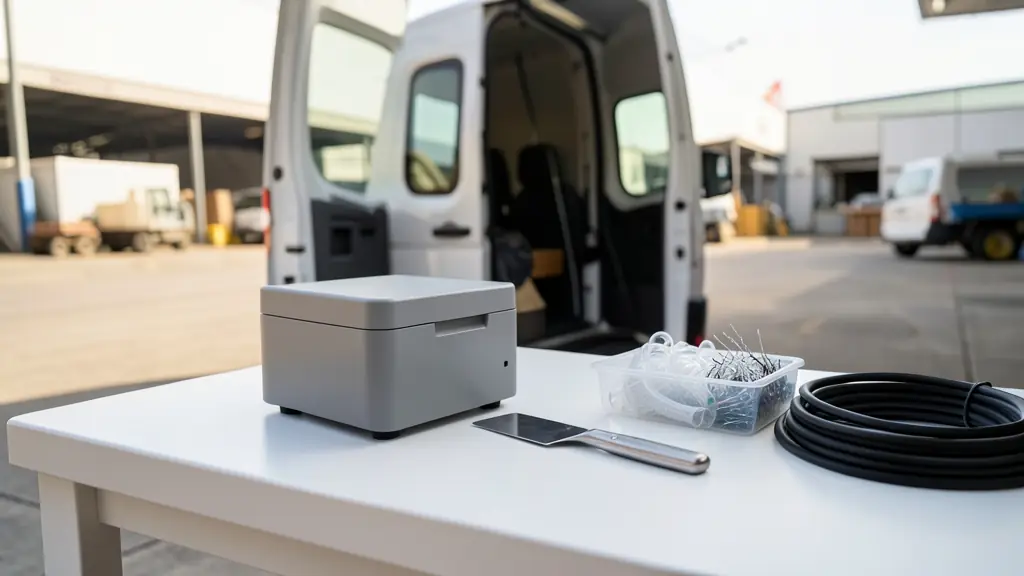
A fusion splicer joins two fibres by lining up their ends and welding them with an electric arc. Done well, the joint has very low loss, often under 0.1 dB, and lasts as long as the cable. The splicer is the costly part of a splicing kit, but it only works as well as the cleaver, the stripping and the cleaning that come before it. Whether you are buying a fibre splicing machine for a new team, hiring one for a weekend job or checking a used one, here is what matters and what drives the price.
Core alignment, cladding alignment and ribbon
Core alignment splicers line up the fibre cores themselves, giving the lowest loss: the choice for backbones, long routes and operator work. Cladding alignment (V-groove) splicers line up the outside of the fibre in a fixed groove; they are cheaper and fine for FTTH, drops and most private links. Ribbon splicers fuse 12 fibres at once on ribbon cable and suit high-count work in exchanges and data centres. Splicers also differ in size, splice and heating times, holders for different fibre coatings, and how well they cope with wind and dust in the field.
The kit around the splicer
A splicer needs a precision cleaver that cuts the fibre flat, strippers, alcohol and lint-free wipes, a heater (usually built in) that shrinks the splice protection sleeve, often 40 or 60 mm, over the joint, spare electrodes, batteries, a charger and a case. A splicing tent or van keeps out wind and dust. Cleaver blades wear and need turning or replacing; electrodes wear out after the number of arcs the maker sets. Battery life decides how many splices you get between charges on a pole or in a manhole, so ask about it and about spare batteries. Keep a sharps container for fibre offcuts.
Buying new, buying used or hiring
A new splicer comes with the maker's warranty and support through its local agent. A used splicer can be good value, but check the arc count and electrode condition, the last service and calibration date, the cleaver blade, that the motors and heater work, and that the seller will let you make test splices. Ask for the accessories and case to be listed. Hiring by the day or week suits a one-off job; or hire a splicing team that brings its own splicer, cleaver and OTDR. Fusion splicer machine prices depend on the alignment type, the kit included and whether it is new or used, so compare quotes that list the same items.
Servicing and calibration
Splicers and cleavers need regular cleaning of the V-grooves, lenses and clamps, electrode changes, and a periodic service and recalibration by a workshop that knows the model. A splicer that starts making more failed or higher-loss splices, or arcs unevenly, is due. The splicer's own loss estimate is a guide; the OTDR trace from fibre testing confirms it.
What to put in your request
- Buy new, buy used or hire, and for how long
- Core or cladding alignment, or ribbon
- Kit needed: cleaver, strippers, sleeves, case
- Type of work: FTTH, backbone or repairs
- Service, calibration and support wanted
Fusion Splicers for estates, offices, factories, mines, farms and more
- Houses and home offices: not needed at home, as a splicing contractor brings one for a private link
- Estates, complexes and body corporates: used by the estate's fibre contractor for drops, closures and repairs
- Offices, business parks and shops: brought in by cabling installers to splice pigtails in panels
- Factories, warehouses and plants: owned by some plants' maintenance departments or hired for new links
- Mines, quarries and heavy industry: kept on many mines for fast repairs of cut or damaged links
- Farms, wine estates and lodges: brought by a contractor for farm links, rarely owned
- Schools, campuses, hospitals and municipalities: brought in by the cabling contractor for campus links
- Data centres and server rooms: ribbon splicers for high-count trunks and ODF work
- Network operators, ISPs and contractors: core alignment splicers in every operator and wireless ISP splicing van
Frequently asked questions
What does a fusion splicer machine cost?
Is it better to hire a splicer or a splicing team?
How do I check a used fusion splicer?
Do you sell or hire out fusion splicers yourselves?
Fusion Splicers by province and city
- Johannesburg
- Pretoria
- Centurion
- Midrand
- Sandton
- Randburg
- Roodepoort
- Krugersdorp
- Randfontein
- Germiston
- Boksburg
- Benoni
- Kempton Park
- Alberton
- Vanderbijlpark
- Vereeniging
- Durban
- Pinetown
- Pietermaritzburg
- Richards Bay
- Newcastle
- Ladysmith
- Gqeberha (Port Elizabeth)
- East London
- Kariega (Uitenhage)
- Mthatha
- Cape Town
- Bellville
- Paarl
- Stellenbosch
- George
- Worcester
- eMalahleni (Witbank)
- Middelburg
- Secunda
- Mbombela (Nelspruit)
- Rustenburg
- Brits
- Klerksdorp
- Potchefstroom
- Mahikeng
- Polokwane
- Tzaneen
- Kimberley
- Upington
- Bloemfontein
- Welkom
- Sasolburg