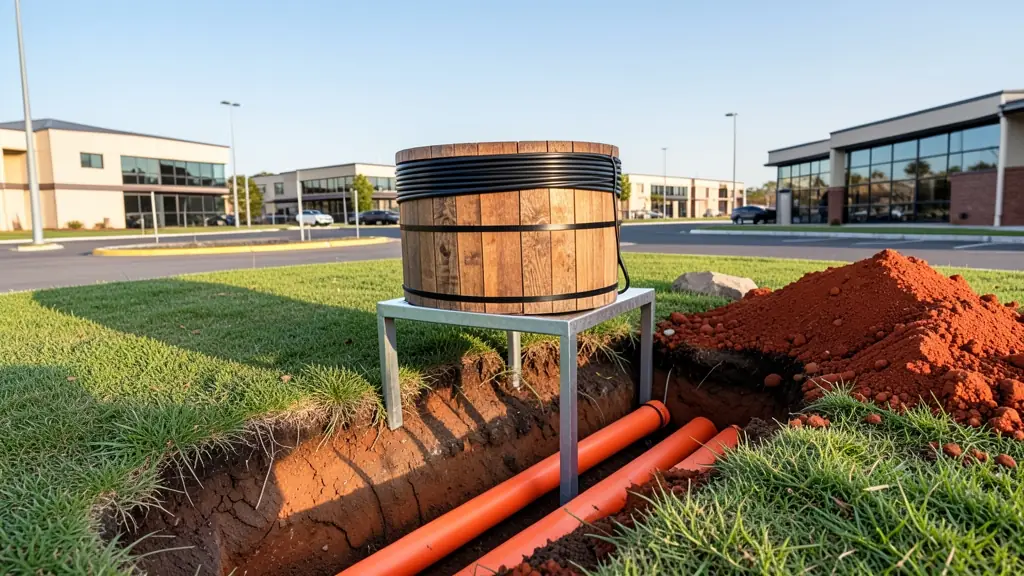
Fibre installation is more than pulling a cable from A to B. A proper job starts with a walk along the route, then a design, the civils or pole work, the cable itself, splicing or termination at each end, testing and a set of as-built drawings you keep. It is the same process whether you are linking a warehouse 200 metres from the office, running fibre to a cellar and pump house on a farm, or wiring an estate's gatehouse cameras. This page explains each step, what moves the price and what a written quote should cover. Send one request and installers near you quote directly.
The steps of a fibre installation
A good installer works through the job in order:
- Site survey: walking the route, checking existing ducts, poles, building entries, rack space and power at each end.
- Design: the route, the fibre type and count with spare cores, closures, panels and a loss budget.
- Civils or aerial work: trenching, ducts and handholes, or a pole route with the pole owner's permission.
- Pulling or blowing the cable, never past its pulling tension or minimum bend radius from the datasheet, with slack loops at each end and in handholes.
- Splicing or termination into panels, then testing, labelling and as-built drawings.
Indoor, outdoor and between buildings
Inside a building, fibre usually runs as tight buffered or indoor loose tube cable in trays and conduit, often with an LSZH jacket where fire safety calls for it, ending in a rack-mount panel. Outdoors it runs as loose tube cable in HDPE duct, as armoured cable where rodents, termites or direct burial are a concern, or as ADSS on poles. Between buildings fibre has a real advantage over copper: it carries no current, so it avoids the earth potential and lightning surge problems that damage switches at each end. Allow spare cores. Fibre is cheap compared with digging the route again.
What affects the cost
The cable is a small part of most jobs. The cost is driven by the route: its length, the ground (sand, clay or rock), hard surfaces to cut and reinstate, road and driveway crossings that may need HDD, and wayleaves. Then come the fibre count and construction, the number of splices and panels, testing, travel to site and any after-hours work. Cable is priced per metre, splicing per splice and trenching per metre, so two quotes for the same link can differ a lot if one assumed duct is already there and the other did not. The planner on this page gives a rough cable, drum and loss estimate as a guide, not a design.
What a written quote should include
Ask for the survey findings, the cable type and core count, the route and method, the number of closures and panels, splicing, Tier 1 or Tier 2 testing with a report per fibre, reinstatement, as-built drawings, VAT and who supplies the materials. See choosing a fibre contractor for what else to ask.
What to put in your request
- Route length and what lies along it
- Fibre type and number of cores, with spares
- Existing ducts, poles or building entries
- Equipment and rack space at each end
- Testing and as-built drawings you need
Fibre Installation for estates, offices, factories, mines, farms and more
- Houses and home offices: a fibre link from the house to a granny flat, workshop or gate camera
- Estates, complexes and body corporates: duct and fibre to the gatehouse, clubhouse, cameras and estate offices
- Offices, business parks and shops: backbones between floors and links between buildings on a business park
- Factories, warehouses and plants: armoured links from the office to warehouses, workshops and plant rooms
- Mines, quarries and heavy industry: long armoured links between shafts, plants, workshops and control rooms
- Farms, wine estates and lodges: fibre to a cellar, pump house, packing shed or lodge across the farm
- Schools, campuses, hospitals and municipalities: links between school blocks, hospital wards and municipal buildings
- Data centres and server rooms: trunks between halls, meet-me rooms and customer suites
- Network operators, ISPs and contractors: backbone and distribution routes built for operators and wireless ISPs
Frequently asked questions
Do you install fibre yourselves?
Can you install fibre internet at my house?
How long does a fibre installation take?
Why does the installer need to visit before quoting?
Fibre Installation by province and city
- Johannesburg
- Pretoria
- Centurion
- Midrand
- Sandton
- Randburg
- Roodepoort
- Krugersdorp
- Randfontein
- Germiston
- Boksburg
- Benoni
- Kempton Park
- Alberton
- Vanderbijlpark
- Vereeniging
- Durban
- Pinetown
- Pietermaritzburg
- Richards Bay
- Newcastle
- Ladysmith
- Gqeberha (Port Elizabeth)
- East London
- Kariega (Uitenhage)
- Mthatha
- Cape Town
- Bellville
- Paarl
- Stellenbosch
- George
- Worcester
- eMalahleni (Witbank)
- Middelburg
- Secunda
- Mbombela (Nelspruit)
- Rustenburg
- Brits
- Klerksdorp
- Potchefstroom
- Mahikeng
- Polokwane
- Tzaneen
- Kimberley
- Upington
- Bloemfontein
- Welkom
- Sasolburg