
Understanding Fibre Optic Cables
Definition of Fibre Optic Cable – Explaining what fibre optic cable is and its basic components
Imagine a world where data speeds are so rapid, they seem almost invisible—almost like magic. This is the realm of fibre optic cables, the backbone of modern communication networks. But what’s fibre optic cable, exactly? At its core, it’s a slender strand of glass or plastic designed to transmit data as pulses of light rather than electrical signals. This fundamental shift allows for unprecedented bandwidth and minimal signal loss over vast distances.
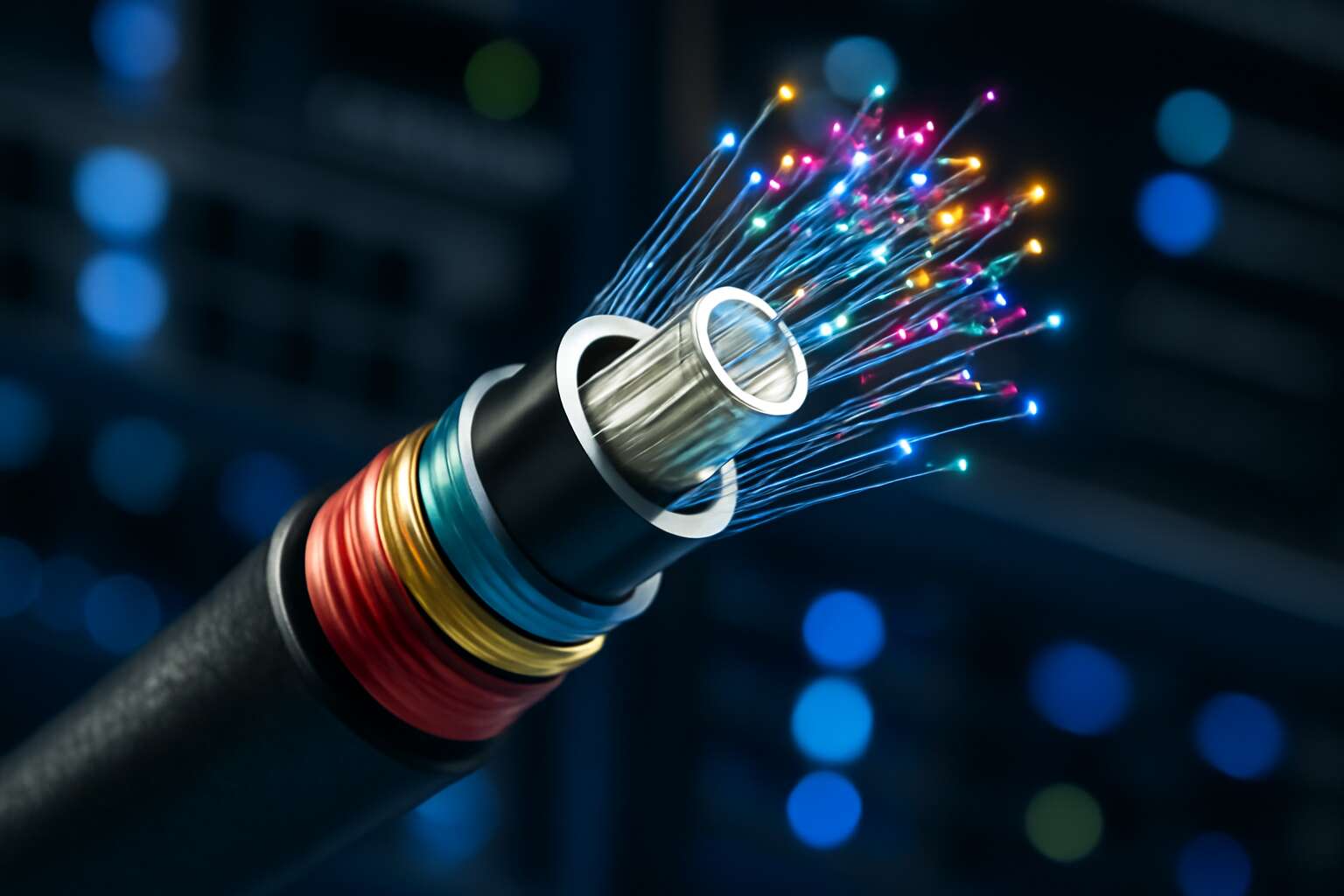
The basic components of a fibre optic cable include the core, cladding, and protective jacket. The core, often just a few microns thick, is where light travels, while the cladding surrounds it, reflecting the light back into the core to prevent signal escape. The outer jacket shields the delicate internal structure from environmental hazards, ensuring reliability and durability. Understanding what’s fibre optic cable is essential to appreciating how it revolutionises connectivity—offering speed, security, and efficiency that traditional copper cables simply cannot match.
Historical Development – Brief history and evolution of fibre optic technology
The journey of fibre optic technology is a testament to human ingenuity and relentless pursuit of progress. Since its inception, the evolution of fibre optic cables has transformed how we communicate, bringing the world closer in ways once thought impossible. Early experiments in the 1960s hinted at the potential of light transmission, but it wasn’t until the 1970s that practical, reliable fibre optic systems truly emerged.
Initially, the technology was limited to specialised military and scientific applications, but rapid advancements soon made it accessible for commercial use. The development of low-loss glass and innovative manufacturing techniques paved the way for faster and more durable cables. Today, fibre optic cables are the backbone of global networks, facilitating everything from streaming services to critical infrastructure. This remarkable evolution underscores what’s fibre optic cable capable of—connecting us with astonishing speed and security, across vast distances, with minimal signal degradation.
Importance in Modern Communications – Role of fibre optic cables in telecommunications and data transfer
In the vast symphony of modern communication, fibre optic cables serve as the silent maestros, orchestrating the seamless flow of information across continents with unparalleled precision. Their role in telecommunications and data transfer is nothing short of revolutionary, turning the intangible into tangible streams of light that traverse the globe at the speed of thought. The question many ponder is, what’s fibre optic cable, and why does it hold such paramount importance?
At its core, a fibre optic cable is an elegant conduit for transmitting data through pulses of laser light, encased within ultra-fine strands of glass or plastic. These cables are the veins of the digital age, carrying vast quantities of information with minimal signal loss. Their capacity to support high bandwidth and long-distance transmission makes them indispensable for everything from streaming high-definition content to enabling critical infrastructure that sustains our interconnected world.
Recognising the significance of fibre optic technology, some systems employ
- multiple light pathways for redundancy
- extremely low latency
- resilience against electromagnetic interference
—features that elevate their performance beyond traditional copper cables. Truly, in the realm of data transfer, fibre optic cables are the luminous arteries pulsing with the future’s promise, illuminating the path to a more connected tomorrow.
How Fibre Optic Cables Work
Principles of Light Transmission – Use of light to transmit data through the core
Imagine a slender thread of glass or plastic, so transparent it almost seems to vanish into the ether. This is the heart of what’s fibre optic cable—a conduit where the magic of light transmission transforms the way we connect across distances. At its core, light pulses carry data with astonishing speed, bouncing within the cable’s reflective walls in a dance of total internal reflection. This principle is what makes fibre optic technology so revolutionary, enabling data to zip through kilometres of cable with minimal loss.
The process relies on the fundamental physics of light behaviour, where photons are guided through the core by a phenomenon known as total internal reflection. This allows the light signals to travel in a straight, uninterrupted path, even around curves and bends. To facilitate this, the fibre’s cladding—an outer layer with a lower refractive index—acts as a mirror, reflecting the light back into the core. It’s this elegant mechanism that empowers what’s fibre optic cable to deliver high-speed internet, crystal-clear HD video, and critical communication signals seamlessly across the globe.
- Light signals are injected into the fibre at one end using a laser or LED source.
- The light travels through the core, reflecting internally without escaping.
- The signals reach their destination with minimal attenuation, ready to be decoded.
Components of Fibre Optic Cables – Core, cladding, buffer, jacket, and connectors
Understanding what’s fibre optic cable involves appreciating its intricate yet elegant architecture. At its core, the fibre optic cable is a slender strand of glass or plastic designed to transmit data via light signals. This core is the heart of the system, guiding pulses of photons with remarkable precision. Surrounding the core is the cladding—an essential component with a lower refractive index—that acts as a mirror, reflecting light internally and preventing signal loss. Together, these layers work in harmony to ensure that data travels swiftly and securely across vast distances.
Beyond the core and cladding, the fibre optic cable includes several protective and connective elements. The buffer layer safeguards the fragile core from physical damage, while the outer jacket shields the entire assembly from environmental hazards. Connectors at the ends of the cable facilitate seamless integration into networks, ensuring minimal signal degradation. For a clearer picture, consider this simplified breakdown:
- Core: Transmits data via light pulses.
- Cladding: Reflects light inward, enabling total internal reflection.
- Buffer: Provides mechanical protection to the core and cladding.
- Jacket: Offers environmental resistance and durability.
- Connectors: Enable secure and efficient connections to devices and networks.
Each component plays a vital role in the remarkable journey of data through a fibre optic cable, exemplifying the marvels of modern communication technology. When you ask what’s fibre optic cable, you’re uncovering a sophisticated symphony of materials designed to transmit information at the speed of light, bridging distances and connecting the world with unprecedented efficiency.
Total Internal Reflection – Explanation of the mechanism that enables light to travel through the fiber
At the core of fibre optic technology lies a fascinating phenomenon—total internal reflection—that transforms a slender strand of glass or plastic into a conduit of unimpeded light transmission. This principle is the backbone of how data travels at extraordinary speeds through fibre optic cables, making them indispensable in modern telecommunications. When light pulses enter the core at a precise angle, they are reflected internally with unwavering fidelity, bouncing along the length of the fibre without escaping or losing strength. This process creates a continuous, invisible pathway for information, effectively shielding data from external interference.
Understanding what’s fibre optic cable involves recognising this delicate interplay of physics and materials. The cladding surrounding the core has a lower refractive index, acting like a mirror that ensures the light remains confined within the core. The elegance of this mechanism is that it allows for minimal signal attenuation over vast distances—something that traditional copper cables struggle to match. Because of total internal reflection, data encoded in light pulses can traverse hundreds of kilometres with astonishing clarity, revolutionising global communication networks.
Types of Fibre Optic Cables
Single-mode Fibre Optic Cables – Characteristics, advantages, and typical applications
Among the myriad types of fibre optic cables, single-mode fibre optic cables stand as the epitome of precision and clarity in data transmission. Designed with a slender core—typically around 8 to 10 microns—these cables channel light signals over vast distances with an almost ethereal grace. Their ability to maintain signal integrity across hundreds of kilometres makes them the preferred choice for transcontinental telecommunications and high-capacity networks.
What’s fibre optic cable? It’s a marvel of modern engineering that employs a solitary light path, minimising signal dispersion and loss. The characteristic feature of single-mode cables is their tiny core, which facilitates the transmission of laser-optimised light, ensuring high-speed data transfer without interruption. The advantages are clear: enhanced bandwidth, lower attenuation, and increased resilience against electromagnetic interference. These qualities render single-mode fibre optic cables indispensable for applications demanding the utmost in reliability and speed—be it undersea links or fibre-to-the-premises deployments.
Typically, they are used in long-haul communications, connecting continents and cities with sublime efficiency. The delicate dance of photons within the core, guided by the principle of total internal reflection, sustains a luminous flow that feels almost poetic in its elegance. In essence, single-mode fibre optic cables embody the pinnacle of high-performance data transfer—an elegant conduit for the digital age’s relentless march forward.
Multi-mode Fibre Optic Cables – Differences from single-mode, uses, and benefits
While single-mode fibre optic cables are celebrated for their capacity to carry signals over extraordinary distances, the counterpart — multi-mode fibre optic cables — offers distinct advantages for shorter, high-bandwidth connections. But what’s fibre optic cable in this context? Multi-mode cables feature a larger core, typically around 50 or 62.5 microns, allowing multiple light modes to traverse simultaneously. This design enables the transmission of data at impressive speeds, particularly within data centres, enterprises, and local area networks (LANs).
What sets multi-mode apart from single-mode is primarily its ease of installation and cost-effectiveness for shorter distances. The broader core facilitates the use of LED light sources, which are more affordable and easier to maintain. However, this comes with some trade-offs—namely higher modal dispersion, which limits the maximum transmission distance compared to single-mode fibres. Nevertheless, for applications where data needs to be transmitted over a few kilometres, multi-mode fibre optic cables provide an optimal balance of performance and affordability.
- Shorter distance transmission, ideal for business campuses or data centres.
- High bandwidth capacity for multimedia and high-speed data transfer.
- Lower installation costs due to simpler connectors and less precise alignment requirements.
In essence, understanding what’s fibre optic cable often involves recognising the nuanced differences between types—each suited to specific networking demands. Multi-mode fibre optic cables exemplify versatility, delivering high-speed data with a level of simplicity that is often preferable in localised environments. They embody a fascinating interplay of engineering choices, reflecting the social and economic fabric of modern telecommunications—where speed, reliability, and cost-effectiveness converge in the luminous dance of photons.
Categories Based on Construction – Simplex, duplex, ribbon fibres
Understanding the different categories of fibre optic cables based on construction reveals a world of specialised design — each tailored to specific networking needs. Among these, simplex, duplex, and ribbon fibres stand out for their unique configurations and applications. These types are not just technical variations; they embody the very essence of how data travels through the vast, luminous corridors of modern telecommunications.
Simplex fibre optic cables feature a single core, making them ideal for one-way data transmission where space and simplicity matter. Duplex cables, on the other hand, contain two cores and facilitate bidirectional communication — essential in high-speed data exchanges. Ribbon fibres, often packed with multiple cores in a flat array, dramatically increase capacity and are commonly used in data centres, where large volumes of information need to flow seamlessly.
When considering what’s fibre optic cable, these construction categories underscore the adaptability of fibre optics in diverse environments. Whether for building backbone infrastructure or connecting servers, choosing the right type can transform a standard network into a conduit of relentless speed and reliability. The architecture isn’t just about physical design; it’s about unlocking the full potential of light-driven data transmission in today’s hyper-connected world.
Advantages of Fibre Optic Cables
High Data Transmission Speeds – Speed capabilities compared to traditional cables
In a world increasingly driven by rapid information exchange, the true marvel of technology lies in the remarkable speed of fibre optic cables. Unlike traditional copper wires, fibre optic cables harness the power of light to transmit data at blistering speeds, transforming the landscape of modern communications. This isn’t just about faster internet; it’s about pushing the boundaries of connectivity, enabling real-time data transfer across continents in milliseconds.
When considering what’s fibre optic cable, one cannot overlook its unparalleled ability to handle high data transmission speeds. These cables can transmit terabits of data per second, making them indispensable for applications demanding immense bandwidth—think cloud computing, streaming services, or critical business operations. Their speed capabilities far surpass those of conventional cables, facilitating seamless, high-fidelity communication that keeps the digital world turning.
What’s more, fibre optic cables are inherently more reliable and less susceptible to interference. This means that the high data transmission speeds are not just a fleeting advantage but a consistent, robust feature, ensuring that information flows unhindered. The real strength of fibre optics lies in their capacity to meet the ever-growing demands for speed and efficiency in a digitally interconnected society—an essential component of our future infrastructure.
Long-Distance Communication – Minimal signal loss over extended distances
Fibre optic cables have revolutionised long-distance communication, showcasing an extraordinary ability to transmit signals over vast expanses with minimal signal degradation. Unlike traditional copper cables, which suffer from significant attenuation over distance, fibre optics maintain their integrity even across hundreds of kilometres. This capability is crucial for telecommunications providers, data centres, and global networks that demand consistent, high-quality data flow without interruption.
The secret lies in their inherent design: the use of light to carry information through the core, relying on the principle of total internal reflection. This mechanism ensures that data travels swiftly and securely, unaffected by electromagnetic interference that commonly hampers copper wires. As a result, fibre optic cables excel in scenarios requiring reliable, high-speed connectivity over extensive distances.
- Minimal signal loss: Fibre optics can transmit data across long distances with only negligible loss, reducing the need for signal repeaters and boosting overall efficiency.
- Enhanced security: Since data is transmitted via light, it’s incredibly difficult to tap into, providing a higher level of security for sensitive information.
In essence, understanding what’s fibre optic cable reveals its unparalleled advantage in bridging continents and connecting cities seamlessly. Its ability to uphold high data transmission speeds over extended distances makes fibre optic technology indispensable for today’s interconnected world, where every millisecond counts.
Immunity to Electromagnetic Interference – Stability and reliability in various environments
Fibre optic cables are the backbone of our interconnected world, but their true strength lies in their immunity to electromagnetic interference. Unlike traditional copper cables, which can suffer from signal disruptions caused by nearby electrical devices or radio waves, fibre optics remain remarkably stable regardless of environmental noise. This resilience ensures a consistent and reliable data transmission, even in highly electromagnetic environments such as industrial zones or data centres.
This immunity translates into superior stability and reliability across various settings. Whether installed in bustling urban infrastructures or remote rural areas, fibre optic cables maintain their high performance without the need for frequent adjustments or signal boosters. For anyone asking, “what’s fibre optic cable,” the answer lies in its ability to deliver unwavering connectivity where other cables falter.
- Uninterrupted data flow, even amidst electromagnetic disturbances
- Reduced downtime and maintenance costs
- Enhanced security, as interference cannot be exploited to compromise data integrity
In essence, fibre optic technology offers a robust solution for environments demanding unwavering stability. Its immunity to electromagnetic interference not only safeguards data quality but also ensures peace of mind in critical communication networks.
Enhanced Security – Difficult to tap into for unauthorized access
In the shadowed corridors of modern communication, where data flows like whispers through the night, fibre optic cables stand as silent sentinels of security. Their intricate threads of glass or plastic are inherently difficult to tap into, offering a fortress-like barrier against unauthorised access. Unlike traditional copper cables, which can be compromised with relative ease, fibre optics are virtually impervious to interception, making them the preferred choice for sensitive transmissions.
This formidable security advantage is rooted in their design. The light signals within fibre optic cables are confined tightly within the core, thanks to principles like total internal reflection. Attempting to breach this barrier is akin to trying to grasp a shadow — elusive and challenging. For those questioning what’s fibre optic cable, the answer lies not only in its speed but in its ability to safeguard information from prying eyes.
- Inherent difficulty in tapping into the signal without detection
- Reduced risk of data breaches and espionage
- Enhanced confidentiality for critical communications
Such qualities elevate fibre optic technology beyond mere data transfer; it becomes a guardian of privacy. As the digital realm grows darker and more perilous, the security advantages of fibre optic cables shine brighter, offering peace of mind in a world fraught with unseen dangers.
Flexibility and Durability – Physical robustness and adaptability
Fibre optic cables are renowned not only for their impressive speed but also for their exceptional physical robustness. These slender strands of glass or plastic are crafted to withstand the rigours of real-world environments, making them ideal for both urban and rural settings. Their durability ensures reliable data transmission even in harsh conditions, from extreme temperatures to physical stress.
One of the key advantages of fibre optic technology is its adaptability. Whether it’s installed underground, underwater, or through challenging terrains, fibre optic cables can be customised to fit diverse needs. Their flexibility allows for easy routing around obstacles and through tight spaces, reducing installation costs and time. To enhance their resilience, many cables feature reinforced jackets that protect against crushing, bending, and environmental damage.
Moreover, fibre optic cables are built with longevity in mind. Their resistance to corrosion and electromagnetic interference means they maintain high performance over decades without degradation. This combination of durability and flexibility not only safeguards your investment but also guarantees consistent, high-quality connectivity—truly a marvel of modern communication technology.
Applications of Fibre Optic Cables
Telecommunications – Internet, telephone, cable TV
In an era where digital communication shapes our very existence, understanding what’s fibre optic cable is crucial. These slender strands of glass or plastic are the backbone of modern telecommunications, enabling instant connectivity across continents. Their application in the realm of internet, telephone, and cable TV services revolutionises how we interact, consume media, and stay informed. The unparalleled speed and reliability of fibre optic cables make them indispensable for data transfer, especially in high-demand settings.
For instance, telecommunications infrastructure relies heavily on fibre optic technology to deliver seamless, high-quality signals. Here are some key applications:
- High-speed internet services that support streaming, gaming, and remote work without lag
- Reliable telephone connections that maintain clarity over vast distances
- Enhanced cable TV experiences with crystal-clear visuals and fewer interruptions
In essence, understanding what’s fibre optic cable unlocks a glimpse into the future of digital communication—where speed, security, and durability are no longer optional but essential. As we push the boundaries of connectivity, fibre optic technology remains at the heart of this evolution. Its role in telecommunications is not just vital but transformative, shaping the way humans connect in an increasingly interconnected world.
Data Centers – High-speed data transmission and networking
In the bustling world of data centres, fibre optic cables are nothing short of the arteries that keep digital life flowing seamlessly. Their capacity for high-speed data transmission transforms the way servers communicate, ensuring rapid, reliable connectivity across vast networks. When exploring what’s fibre optic cable, it’s fascinating to discover how these slender glass or plastic strands enable lightning-fast transfer of information, supporting everything from cloud computing to real-time analytics.
Advanced data centres leverage fibre optic technology to achieve unparalleled network performance. Their high bandwidth capabilities allow for the simultaneous handling of enormous data volumes, which is crucial in today’s data-driven landscape. Moreover, the robust nature of fibre optic cables ensures minimal signal loss over long distances, making them ideal for interconnecting multiple data hubs across continents.
- Supporting ultra-fast data transfer speeds essential for modern enterprise applications.
- Facilitating secure, tamper-proof connections that safeguard sensitive information.
- Enabling scalable, flexible networks that adapt to future technological advancements.
Ultimately, understanding what’s fibre optic cable reveals a world where data flows like a living bloodstream—fast, secure, and resilient—powering the digital ecosystems of tomorrow. It’s the backbone that sustains the relentless pace of modern innovation, transforming how data centres operate at the frontier of connectivity.
Medical Equipment – Endoscopes and medical imaging
Fibre optic cables are revolutionising the medical world, especially when it comes to intricate procedures like endoscopies and advanced medical imaging. These slender strands of glass or plastic carry light with such precision that they unlock a universe of visual detail, allowing doctors to peer inside the human body without making a single incision. It’s as if they have a superpower—seeing what’s happening beneath the skin in real-time, with crystal-clear clarity.
In endoscopies, fibre optic technology enables minimally invasive surgeries, reducing recovery times and improving patient outcomes. Medical imaging devices benefit equally, delivering high-resolution visuals that make diagnosis more accurate and treatment more effective. The flexibility and resilience of fibre optic cables mean they can navigate complex pathways within the body, making them indispensable in modern medicine.
- High-definition imaging
- Enhanced flexibility for complex navigation
- Real-time data transmission
From tiny cameras inside the body to sophisticated diagnostic tools, it’s clear that understanding what’s fibre optic cable reveals a vital component driving medical innovation. Its ability to transmit light with minimal loss, combined with durability and security, makes fibre optic cables the unsung heroes behind many life-saving medical advances.
Military and Aerospace – Secure and high-performance communication systems
In the realm of cutting-edge military and aerospace technology, fibre optic cables are the unsung heroes behind secure and high-performance communication systems. Their ability to transmit vast amounts of data swiftly and reliably makes them indispensable in environments where security and precision are paramount. When it’s critical to maintain an unbreakable line of communication, fibre optic technology ensures that messages remain private and protected from external interference.
Unlike traditional copper cables, fibre optic cables are immune to electromagnetic interference, which is particularly vital in military operations and aerospace applications. Their resilience in extreme conditions—be it harsh weather, vibration, or electromagnetic pulses—guarantees unwavering performance. For mission-critical operations, understanding what’s fibre optic cable reveals a backbone of innovation that enhances both safety and operational efficiency.
- High-speed data transfer
- Enhanced security measures
- Long-distance communication with minimal signal loss
In aerospace, fibre optic cables facilitate real-time data transmission across vast distances, supporting navigation, control systems, and communication networks. Their robustness and ability to carry high bandwidth signals make them the ideal choice for the demanding environments of modern military and space programmes. When it comes to safeguarding sensitive information and ensuring seamless connectivity, fibre optic cables truly stand at the forefront of technological advancements.
Industrial Uses – Automation, sensors, and control systems
In the intricate world of industrial automation, fibre optic cables are revolutionising how machines communicate. Their ability to carry high-bandwidth signals with minimal latency makes them essential for modern control systems and sensors. When precision and real-time data are critical, understanding what’s fibre optic cable reveals a technological marvel that keeps factories running smoothly and safely.
Fibre optic cables are widely used in automation environments to connect sensors, actuators, and control units. Their immunity to electromagnetic interference ensures reliable operation even in electrically noisy settings. This resilience helps prevent data corruption, maintaining seamless operations across complex production lines.
- Enhanced measurement accuracy with fibre optic sensors
- Robust control systems that withstand harsh industrial conditions
- Efficient data collection from remote locations
By integrating fibre optic technology into control systems, industries benefit from high-speed data transfer and long-distance connectivity. Their durability and flexibility allow for installation in challenging environments, supporting the continuous evolution of automation processes. The question of what’s fibre optic cable is no longer just about technology; it’s about empowering industries to operate smarter, safer, and more efficiently every day.
Future Trends in Fibre Optic Technology
Advancements in Data Capacity – Increasing bandwidth and speed innovations
As digital landscapes evolve at a dizzying pace, the future of fibre optic technology promises a revolution in data capacity, pushing the boundaries of what’s fibre optic cable can achieve. Industry insiders predict that upcoming innovations will dramatically increase bandwidth and speed, transforming how we connect and communicate. With each passing year, new materials and techniques emerge, enabling data to be transmitted with unrivalled efficiency over long distances, all while maintaining exceptional clarity and security.
One of the most exciting prospects is the development of ultra-high-capacity fibres that can handle exponentially larger data loads. These advancements are driven by the integration of innovative core designs and refined manufacturing methods. Moreover, optical fibres are expected to support increasingly complex applications, such as virtual reality, 8K streaming, and real-time cloud computing. To illustrate this progress, consider the following technological breakthroughs:
- Enhanced modulation techniques that boost data transmission speeds
- Multiplexing innovations allowing multiple signals to travel simultaneously within a single fibre
- Materials science breakthroughs that reduce signal loss and improve durability
By harnessing these cutting-edge developments, what’s fibre optic cable will become even more vital in powering the next generation of high-speed, reliable networks. As this technology continues to advance, the seamless flow of information across vast digital landscapes will become an even more incredible feat—making the future one of unparalleled connectivity and innovation.
Integration with 5G and IoT – Enhancing connectivity in new technological ecosystems
The future of digital connectivity is poised for a remarkable transformation, driven by the seamless integration of fibre optic technology with emerging ecosystems like 5G and the Internet of Things (IoT). As cities grow smarter and devices multiply exponentially, understanding what’s fibre optic cable becomes essential in appreciating how these networks will evolve to meet our needs. These cables form the backbone of high-speed, reliable communications, enabling data transfer at lightning-fast speeds that were once unimaginable.
Advancements in fibre optic technology are enabling a new era of interconnected devices and systems. In particular, the combination of fibre optic cables with 5G networks is set to revolutionise urban infrastructure, supporting the vast data loads generated by smart cities. Similarly, IoT devices—ranging from home automation to industrial sensors—rely heavily on the low latency and high capacity that fibre optics provide. This synergy paves the way for innovations such as:
- Enhanced network capacity for dense urban environments
- Real-time data processing for autonomous vehicles and smart grids
- Improved security features to protect sensitive information
As these technological ecosystems become more sophisticated, the role of fibre optic cables will only grow more vital. They will support complex applications, ensuring that data flows effortlessly across devices and systems, creating a future where connectivity is both resilient and pervasive. Truly, understanding what’s fibre optic cable offers a glimpse into a world where digital landscapes are more integrated, responsive, and resilient than ever before.
Cost Reductions and Accessibility – Making fibre optics more affordable and widespread
The relentless pace of technological evolution demands that we rethink the accessibility and affordability of high-capacity networks. As demand for faster, more reliable connectivity surges, the future of fibre optic technology promises significant cost reductions that could democratise digital infrastructure like never before. The ongoing innovations in manufacturing processes and materials science are driving down expenses, making it easier for providers and consumers alike to adopt fibre optic solutions.
What’s fibre optic cable becomes increasingly relevant as its price points approach levels that facilitate widespread deployment beyond urban centres. This shift paves the way for a more inclusive digital landscape, where rural communities and underserved regions can tap into high-speed networks. To accelerate this trend, industry leaders are investing in scalable production techniques and standardised installation methods—these are crucial for expanding fibre optic access on a global scale.
In essence, the convergence of technological advancements and strategic investments is fostering a landscape where fibre optics are no longer a luxury but a fundamental infrastructure element. As costs continue to decline, expect to see an exponential increase in fibre optic deployments, transforming the way we connect, communicate, and innovate. This evolution underscores the importance of understanding what’s fibre optic cable and its role in shaping a more accessible future for digital connectivity.
Emerging Materials and Designs – Innovations in fibre composition and structure
Future trends in fibre optic technology are set to revolutionise digital infrastructure. Innovations in fibre composition and structure are at the forefront of this change, promising higher performance and greater versatility. Researchers are exploring advanced materials that improve signal clarity and durability, making fibre optic cables even more reliable in demanding environments.
One exciting development is the emergence of novel fibre designs, such as photonic crystal fibres and multicore fibres. These structures enable significantly increased data capacity and faster transmission speeds. For example, multicore fibres pack multiple cores within a single strand, boosting bandwidth without expanding physical size.
- Enhanced data capacity
- Reduced latency
- Improved signal integrity
As these materials and designs evolve, they will support the seamless integration of fibre optics with 5G, IoT, and other emerging technologies. This ongoing innovation ensures that the question of what’s fibre optic cable will soon become less about its basic function and more about its transformative potential in global connectivity.
0 Comments