

Understanding Fibre Optic Technology
What is fibre optic technology and how it works
Ten times the bandwidth over copper—that’s the promise of high-speed networks. In South Africa, fibre optic tech can carry data at speeds copper can’t touch. Fibre optic technology uses thin glass or plastic strands to transmit light pulses that encode information. A core carries the light, while cladding keeps the signal in by total internal reflection.
Light is born in a transmitter, converted to digital signals, and injected into the fiber. The pulses travel as light, avoiding electrical interference. On the receiving end, a photodetector decodes the light back into data. Single-mode fibers serve long links; multi-mode fibers suit shorter runs.
- core and cladding that guide light
- transmitters and receivers that shape data
- repeaters and amplifiers for longer spans
These traits underpin SA’s FTTH rollout and enterprise networks, delivering reliable service and future-ready capacity.
Key concepts: total internal reflection and attenuation
A single strand in fibre optic tech can carry terabits per second, turning long-haul SA networks into shimmering rivers of data. The elegance lies not in copper’s roar but in light’s quiet precision.
Total internal reflection is the guiding principle: light stays trapped in the core when the angle of incidence exceeds a critical threshold, bouncing along at the speed of thought while the cladding keeps it in check.
Attenuation—signal loss—reminds us that every metre matters. It comes from scattering, absorption, and bends that tug at the light’s path. Engineers design for purity and minimal stress to preserve power over distance.
- Core–cladding contrast and refractive index
- Material purity and manufacturing tolerances
- Microbends, connectors, and external pressure
Understanding these facets sharpens SA’s deployments, blending beauty with endurance in the digital age.
Types of fibre: single-mode vs multi-mode
Bandwidth is the currency of the digital age, and fibre optic tech is the mint. In South Africa’s cities and corridors, networks must push vast volumes of data with surgical precision. Two main flavours shape the landscape: single-mode and multi-mode, each with a temperament suited to different journeys!
I see it this way: single-mode keeps signals pristine over long hauls; multi-mode shines on shorter runs with lower upfront costs. Here are concise contrasts that inform South Africa deployments:
- Single-mode: tiny core, laser sources, long-distance clarity.
- Multi-mode: larger core, LED sources, budget-friendly for shorter runs.
In practice, the choice hinges on distance, budget, and growth. The right fibre optic tech path threads resilience through South Africa’s networks.
Applications and Use Cases
Telecommunications and internet backbones
Light travels fast, but in telecommunications it travels smarter—through fibre optic tech that forms the backbone of modern networks. In South Africa, these links stitch together cities, carry banking and education data, and hook our coast to undersea routes with a resilience most copper dreams of achieving.
- Submarine and terrestrial backbones ferry international traffic
- Data center interconnects create a seamless resource fabric
- Metro backhauls deliver high-capacity links to dense urban cores
- Rural backbones extend essential services to towns
For operators, the appeal is simple: fewer outages, higher throughput, and a future-proofed layer that keeps conversations in real time. Fibre optic tech isn’t flashy; it’s the quiet workhorse behind fintech, streaming, and schooling—especially where South Africans demand dependable connections.
Medical imaging and surgical delivery systems
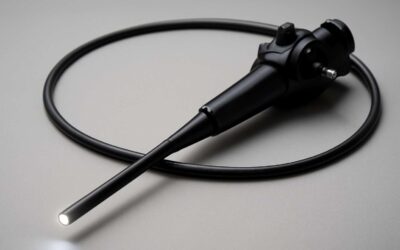
Light in medicine has learned to listen. In medical imaging and surgical delivery systems, light-based optics thread precision through minuscule spaces, turning ambiguous shadows into sharp detail. Endoscopes, catheters, and light-delivery threads choreograph a quiet ballet of photons—guiding diagnoses and guiding hands with real-time clarity.
- Real-time imaging during minimally invasive procedures
- Fluorescence-guided diagnostics and therapies
- Compact endoscopes for delicate anatomy
- Precise laser and light delivery for targeted ablation
Across South Africa, hospitals and research labs lean on this gentle glow to extend care beyond urban centers. The result is a more accessible, resilient thread of medicine—fibre optic tech lighting paths to better outcomes.
Industrial sensing and automation
In South Africa, the factory floor measures time in nanoseconds and downtime in memory. Factories report up to 30% less unplanned downtime thanks to fibre optic tech quietly watching what you can’t see—the hum of machines, the steady glow along critical lines.
Industrial sensing and automation rely on light-based threads to monitor temperature, vibration, and alignment across harsh environments. A compact fibre optic system can replace bulky sensors, delivering a distributed field of vision along lengthy production lines.
- Real-time machine health monitoring
- Precision process control
- Predictive maintenance and energy optimization
From mines to packaging plants, the data from fibre optic tech informs operators with clarity and grace—boosting efficiency, reducing waste, and keeping critical lines running when the power flickers.
Broadcasting, data centers, and enterprise networks
In a media landscape where live broadcasts ride on milliseconds and audiences expect perfect clarity, fibre optic tech acts as the quiet backbone of connectivity. Recent data shows latency improvements of up to 40% in broadcast networks that switch to fiber. Across broadcast studios, data centers, and enterprise networks, speed and stability open doors to smoother workflows and new services.
- Broadcasting: pristine, low-latency delivery of live video and audio from studios to venues and streaming platforms
- Data centers: scalable, high-bandwidth links that carry bursts of traffic between servers, storage, and clouds
- Enterprise networks: secure, resilient campus and WAN connections that keep remote sites harmonised
These use cases illuminate how light becomes reliability—transforming budgeting, uptime, and energy efficiency for the South African digital economy.
Components and Network Architecture
Core components: fibres, cables, connectors, and splices
Across South Africa, fibre optic tech hums beneath cities and savannah alike, turning distant towns into connected communities. Light travels with patience and precision here, delivering speed that feels almost magical while keeping data secure and reliable.
- Fibres — ultra-pure glass or plastic threads guiding light
- Cables — protective sheaths that shield the path
- Connectors — precision joints minimizing reflection and loss
- Splices — fusion or mechanical joins that align fibres
Fibres, cables, connectors, and splices form the backbone of every network. They channel light from substation to desk with grace.
From backbone to edge, the arrangement of these parts sketches the network architecture: fibres within ducts, modular housings, and links that accelerate data toward data centres.
Transmitters, receivers and amplifiers
“Light travels faster than doubt,” a field engineer likes to say. In South Africa, fibre optic tech stitches towns into one luminous web, where milliseconds matter and data glides securely from screen to screen.
Transmitters, receivers, and amplifiers are the three gears shaping light from backbone to desk. Here’s how they perform their quiet magic:
- Transmitters turn electrical signals into light pulses.
- Receivers convert light back into electrical signals.
- Amplifiers boost faint signals over long runs.
Across ducts, modular housings, and links, light travels from substation to desk with predictable grace, underpinning data centres, enterprise networks, and remote sensing across the countryside and cities.
Network topologies: point-to-point, PON, and DWDM
“Speed isn’t a gimmick—it’s a business asset.” In South Africa, fibre optic tech stitches towns into a single, humming lattice where milliseconds decide deals and data whizzes from desk to data center in almost inaudible pulses.
Core components and network architecture hinge on three practical topologies that guide light from backbone to desk:
- Point-to-point: a clean, dedicated link that minimizes latency and maximises control.
- PON (Passive Optical Network): a shared fibre split to multiple homes or offices, balancing density and cost.
- DWDM (Dense Wavelength Division Multiplexing): stacking many wavelengths on one fibre to push capacity across long distances.
These configurations underpin SA data centres, enterprise networks, and rural sensing grids, delivering reliable, scalable transport for modern optical links in everyday operations.
Installation, safety, and maintenance best practices
Latency is the new currency in South Africa’s digital landscape. In fibre projects, installation, safety, and ongoing maintenance shape uptime as surely as design choices. fibre optic tech demands calm, clean environments, disciplined handling, and thoughtful routing from backbone to desk.
- Cleanliness and contamination control across splices and connectors
- Thoughtful routing, bend radius awareness, and secure termination
- Documentation, asset tracking, and change control for auditability
- Environmental safety and personal protection for field teams
Maintenance echoes through the network in quiet pulses—keeping services humming across SA towns! For SA operators, uptime translates to predictable service levels.
Testing, diagnostics and fiber inspection tools
In the SA digital landscape, downtime costs climb quickly; proactive testing shifts the odds in fibre optic tech, favouring uptime rather than regret, with up to 30% fewer outages reported. Inspecting splices, checking connectors, and validating routes from backbone to desk reveals the truth: reliability is earned, not assumed!
Diagnostics and network architecture testing rely on a compact toolkit that surfaces issues before they ripple.
- OTDRs map losses and locate faults across splice points
- End-face inspection microscopes catch contamination and micro-scratches
- Optical power meters and light sources verify loss budgets
- Fibre identifiers and polarity testers ensure correct routing
That discipline becomes the heartbeat of the network, turning every splice and connector into a traceable record that travels from city to town across South Africa, reinforcing trust and service levels!
Emerging Trends and Future Outlook
Photonic integration: silicon photonics and PICs
Light is rewriting the rules of connectivity—silicon photonics is turning chips into light-smart accelerators. In the realm of fibre optic tech, photonic integration—silicon photonics and PICs—offers denser, more energy-efficient interconnects that travel farther with less heat. For South Africa, where data centers are expanding and rural networks demand robust backhaul, this shift promises bigger bandwidths without ballooning power costs.
- Silicon photonics and PICs enabling CMOS-compatible manufacturing
- Heterogeneous integration to fuse optics with electronics on a single substrate
- On-chip lasers and compact WDM for highly integrated transceivers
Beyond the lab, the future outlook hinges on scalable packaging, robust testing, and resilient supply chains that can support SA’s expanding telecoms and data centers. Photonic integration promises not only speed but a quieter, more sustainable backbone for a country chasing digital inclusion.
Sustainability, cost reduction and energy efficiency
“Speed and savings can go hand in hand,” industry voices say as backhaul shifts to fibre optic tech. In South Africa, data centers are expanding and rural networks demand robust links that don’t burn through power. Photonic integration lowers heat and enables denser interconnects, turning long-distance runs into lean, nimble lanes for information.
Key shifts enabling sustainability and cost reduction include:
- Smarter transceivers with on-chip components to cut idle power
- Heterogeneous integration that fuses optics with electronics on one substrate
- Compact WDM and on-chip lasers to pack more channels into less space
Beyond the lab, the future hinges on scalable packaging, robust testing, and resilient supply chains to support SA’s expanding telecoms and data centers. Photonic integration promises not only speed but a quieter, more sustainable backbone for a country pursuing digital inclusion.
Security, standards and interoperability
SA’s data appetite is growing at a pace many markets would envy—traffic across major corridors is rising fast, and fibre optic tech sits at the heart of that surge. The goal now is resilience, security, and scalable standards that travel with the demand.
Emerging trends point to photonic chips on shared substrates, automated testing, and compact packaging that keep dense interconnects cool and reliable. We are witnessing a shift toward interoperability as a design principle, with open interfaces and cross-vendor validation becoming routine.
- Open standards and cross-vendor interoperability
- Security by design and robust key management
- Independent testing, certification and supply-chain transparency
South Africa’s path blends local manufacturing, stronger supply chains and flexible deployment to serve both urban hubs and rural nodes.


0 Comments