
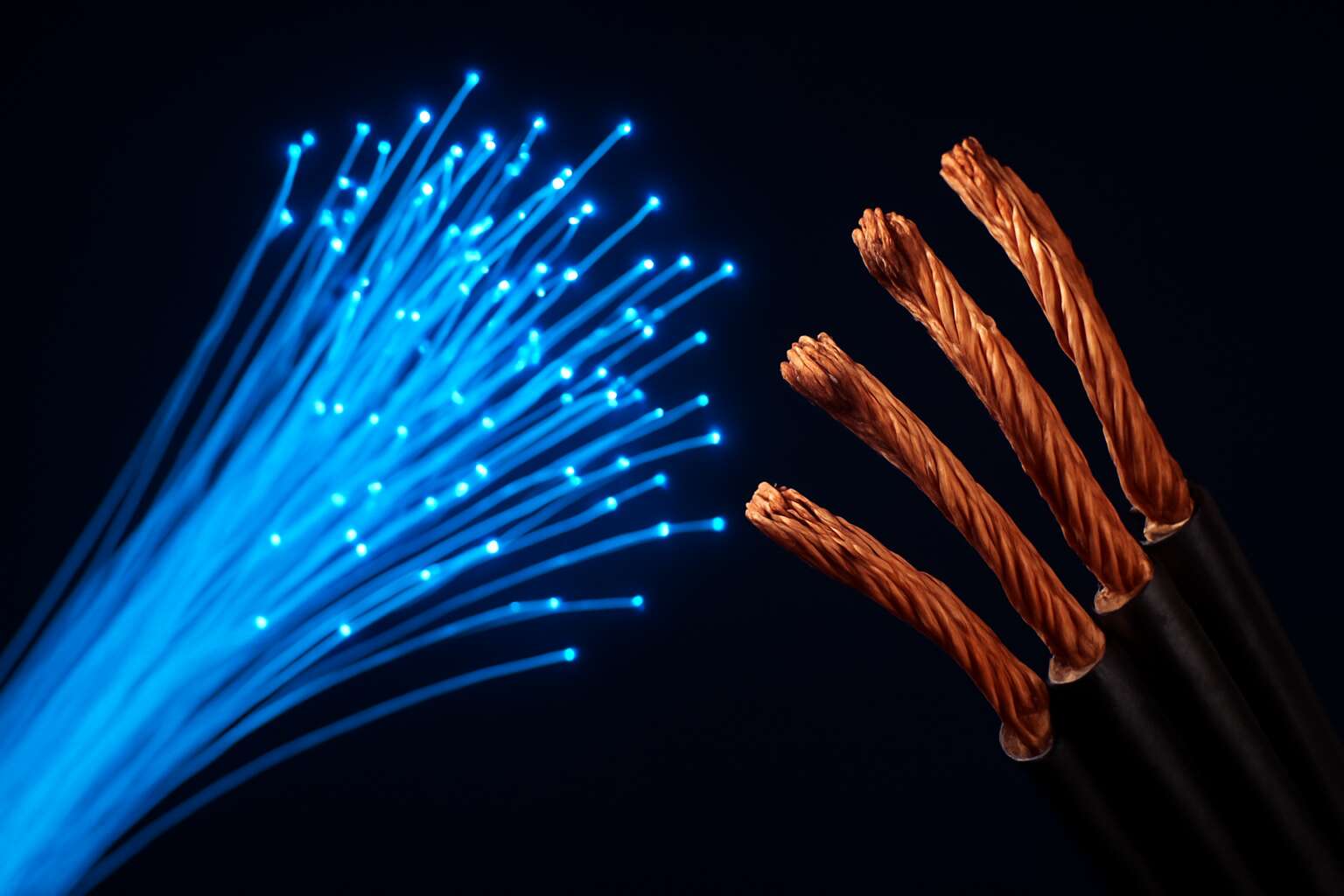
Foundational concepts in modern fibre optic and copper networking
What is fibre optic cable and how it compares to copper networking
In a world where bandwidth is a living currency, the choice between fibre optic cable vs copper carves the network’s fate before the trench is cut. “Bandwidth demand has doubled in the past five years,” a regional architect warns, and shadows sharpen as light travels through glass rather than electrons.
Fibre optic cable uses light to carry signals across glass; copper relies on electrical pulses through metal. Over distance, light sustains higher speeds with less degradation, while copper fades. In South Africa, long runs between hubs often favour backbone networks, while copper still serves legacy connections in quieter corners.
- Speed and capacity
- Distance and signal integrity
- Interference resilience
- Deployment and maintenance costs
These foundational concepts shape decisions from data centers to street cabinets, guiding engineers toward a future where light outpaces electrons and the city breathes with a steadier hum—the fibre optic cable vs copper balance.
What is copper networking cable?
Copper networking cable carries the old, reliable hum of local networks; a braided skin around a copper conductor, guiding electrical pulses through offices and suburbs. It’s the twisted-pair and coaxial workhorse of today’s urban spine, easy to terminate and forgiving of rough handling.
In practical terms, copper is affordable and simple to install, but its performance fades beyond a few hundred metres. In South Africa’s street cabinets and campus links, copper stays useful for legacy connections and short backhauls.
- Affordable for short, fixed routes
- Easy termination and testing
- Vulnerable to EMI and distance-related loss
When weighing fibre optic cable vs copper, readers balance future capacity against current practicality, a tension familiar to South Africa’s network planners.
Key differences between fibre optic cable and copper systems at a glance
In a country where digital dreams race ahead of infrastructure, a single fibre line can outpace a tangle of copper. “The quiet light carries louder futures,” a veteran engineer once said, and in South Africa that truth lands with thunder.
Foundational concepts in modern networking hinge on light versus electrons. fibre optic cable vs copper relies on glass for long-haul clarity, while copper contends with EMI and distance, demanding more repeaters and care.
- Bandwidth potential and growth
- Distance and attenuation tolerance
- Immunity to EMI and interference
- Installation, termination, and scalability
For South Africa, the balance between these paths guides campus links and street cabinets—where today’s practicality meets tomorrow’s capacity, shaping the spine of cities and towns alike.
When to consider upgrading to fibre optic cable vs copper
In South Africa’s digital landscapes, the choice between fibre optic cable vs copper shapes more than speed; it designs opportunity. “The quiet light carries louder futures,” a veteran engineer notes, and the data backs him: light travels farther with less noise, enabling truer horizons.
Foundational concepts in modern networking hinge on two stories: photons in glass and electrons through copper. Fibre thrives on minimal repeaters and high clarity, while copper demands shielding and tighter spacing due to attenuation and EMI—realities that grow harsher with distance.
- When runs stretch beyond a few hundred metres, uptime matters and fewer repeaters win.
- When EMI or electrical noise dominates the environment, copper struggles to keep clean signals.
- When you forecast rapid bandwidth growth and scalable needs, fibre becomes the quiet ally.
In South Africa, campus links and street cabinets guide today’s choices while whispering tomorrow’s capacity.
Common misconceptions about fibre optic cable vs copper
Foundational concepts in modern networking hinge on photons in glass and electrons through copper. fibre optic cable vs copper reveals how light travels farther with less noise, letting networks reach truer horizons; copper, by contrast, tightens shielding and spacing to fight attenuation and EMI. The line between them isn’t just speed—it’s reliability over distance. “The quiet light carries louder futures,” a veteran engineer notes, and the data backs him up: fewer repeaters, cleaner signals.
- Fibre is immune to all interference
- Copper can’t handle long distances at high speeds
- Fibre is always more expensive to install
- Upgrading copper will fix bottlenecks later
For South African networks, practical choices hinge on distance, environment, and cost—areas where understanding the fundamentals helps weigh current needs against future growth.
Comparative performance in fibre optic vs copper networks
Bandwidth capacity and data rates for fibre optic cable vs copper
“The quickest route to opportunity is through faster connections,” a network architect once said. When we compare fibre optic cable vs copper, the cadence of data reveals itself in milliseconds and a resilience that keeps growing as demand expands.
Bandwidth capacity is the clearest differentiator. In South Africa’s urban campuses and data centres, fibre optics carry larger, more stable data streams with far less signal loss over distance, while copper struggles as cable runs lengthen and electrical noise rises. The result is higher sustained data rates and smoother performance for enterprise workloads.
- Bandwidth capacity far exceeds copper, scaling with demand.
- Data rates stay high and stable over longer distances.
- Immunity to electromagnetic interference makes fibre more reliable in busy environments.
Latency and distance effects in fibre optic vs copper links
In the fibre optic cable vs copper landscape, latency is the quiet differentiator. Across SA campuses, fibre links routinely deliver sub-millisecond response times, while copper can creep into higher, unpredictable delays as distances grow. The result is snappier application performance, especially for real-time workloads and data centre interconnects!
Consider these latency and distance factors:
- Distance: copper signals attenuate with length; fibre keeps latency tight over greater spans.
- Interference: copper picks up electrical noise in busy environments; fibre remains pristine, so latency stays predictable.
- Network design: fibre scales with fewer repeaters, lowering jitter and maintaining consistent data flow.
Latency-sensitive apps reveal the fibre optic cable vs copper difference, with fewer delays from switch to server.
Interference and shielding: fibre optic vs copper
Interference is the quiet scorekeeper in the fibre optic cable vs copper debate. On SA campuses, fibre maintains sub-millisecond latency even in crowded data halls, while copper drifts toward erratic delays as noise climbs. Fibre carries light through glass, so EMI and RFI never become a factor, whereas copper picks up electrical whispers from motors, power supplies, and dense cabling.
- EMI vulnerability: copper lines pick up noise from nearby equipment, raising error rates and jitter.
- Shielding realities: copper relies on metal jackets and proper grounding; fibre has no electrical conductor to shield.
- Distance and stability: over long runs, fibre maintains consistent performance; copper degradation follows interference and length.
For South African campuses, this interference resistance translates into steadier data flows and more predictable performance for real-time workloads and inter-campus links.
Future-proofing and upgrade paths for fibre optic cable vs copper
Latency is the quiet deal-breaker in South African campus networks. Fibre sets a new ceiling for speed, turning heavy data halls into calm rivers of packets; copper, by contrast, drifts with noise and jitter as loads grow. When you compare fibre optic cable vs copper, the advantage is not just raw bandwidth—it’s consistency over time.
Future-proofing comes built in with fibre. Upgrades can scale within the same fibre plant: higher speeds, more users, denser campuses, without rewiring. Choice of optics and DWDM technologies widens the lane. For upgrade paths, consider modular transceivers, scalable backbones, and phased migrations that keep campuses online.
- Bandwidth headroom with scalable optics
- Lower long-term capex through phased migrations
- Hybrid designs that protect existing copper while fibre lands
Real-world benchmarks: fibre optic cable vs copper performance
Across South Africa’s campus networks, latency wears the hat of a quiet deal-breaker! Real-world benchmarks reveal that fibre consistently delivers lower latency and far less jitter than copper as loads surge—from classrooms streaming lectures to researchers pushing large data sets. In the edge, the difference compounds: fibre maintains steadier packet delivery over longer runs without boosting error rates.
When you compare fibre optic cable vs copper, the contrast isn’t just raw speed—it’s reliability in everyday use. Consider these benchmarks:
- Lower latency and stable jitter under heavy traffic
- Better distance tolerance with fewer retransmissions
- Reduced error rates in dense campus environments
On trial deployments, campuses have seen smoother video, faster cloud access, and a gentler lifecycle cost as optics scale with modular transceivers and DWDM. The math isn’t flashy, but it’s human: predictable performance where it matters most!
Cost and ownership considerations in fibre optic vs copper deployments
Initial costs and long-term savings: fibre optic cable vs copper
Dark corridors hum with potential as networks awaken. In South Africa, a telling statistic surfaces: total cost of ownership for fibre projects can be up to 40% lower over ten years than copper. The allure isn’t only speed; it’s reliability that quiets the noise of downtime. Observers report campuses and call centres rising from quiet to certainty when fibre hums to life.
When weighing initial costs, fibre optic cable vs copper can demand a larger upfront investment—ducting, termination, and skilled splicing. Yet longer lifespans, lower energy use, and fewer active components often shrink the long-term bill, especially in mixed urban and rural deployments.
Consider these ownership factors:
- Initial installation costs and logistics
- Operating and maintenance costs over time
- Upgrade paths and total lifecycle ownership
For readers in South Africa, the choice becomes less about immediate price and more about resilience against the long horizon.
Maintenance, reliability, and fault tolerance
Maintenance is where resilience earns its paycheck. In South Africa, uptime is king, and the fibre optic cable vs copper decision often translates into fewer headaches down the line. With fewer moving parts and calmer heat, fibre paths wear in, not out, delivering steadier service even when dust and power fluctuations loom.
- Lower maintenance footprint due to the passive nature of fibre
- Fewer connectors and active components reduce fault surfaces
- Better tolerance to heat and dust typical in SA deployments
That combination makes maintenance, reliability, and fault tolerance a differentiator more than price alone.
Security, resilience, and environmental considerations
In South Africa, uptime isn’t a luxury—it’s currency. When weighing fibre optic cable vs copper, the total cost of ownership often tips in favour of fibre in the long run. The upfront CAPEX is higher, but lower ongoing maintenance, longer lifespans, and energy efficiency keep operating costs low and downtime rare.
Security, resilience, and environmental considerations tip the balance. fibre optic cable vs copper typically offers stronger security against tapping, better EMI resistance, and fewer fault surfaces. It also handles SA’s heat and dust more gracefully, with a passive architecture that reduces cooling needs. That’s where fibre optic cable vs copper shines in long-term cost of ownership.
- Security: harder to tap; easier to monitor
- Resilience: fewer active components; simpler fault isolation
- Environmental: better tolerance to heat and dust; lower energy footprint
Total cost of ownership across different deployment scales: fibre optic vs copper
In South Africa, uptime is currency, and every rand counts. When weighing fibre optic cable vs copper, the total cost of ownership across deployment scales often tips toward fibre in the long run. The upfront CAPEX is higher, but lower ongoing maintenance, longer lifespans, and energy efficiency keep operating costs lean and downtime rare.
- Upfront CAPEX vs lifecycle OPEX: fibre optic cable vs copper costs more at start but saves later.
- Maintenance: fewer active components means fewer service calls and quicker fault isolation.
- Energy: passive fibre architectures consume less power and cooling over the network’s life.
Across deployment scales—from a single site to large networks—the total cost of ownership often tilts in favour of fibre as volumes rise, resilience improves, and retrofit costs disappear into the future.
Power consumption and energy efficiency differences
In South Africa, the cost of ownership tells a different story from the glitzy CAPEX headlines. With fibre optic cable vs copper, the real burden—and the real payoff—comes from maintenance, lifespan, and energy efficiency rather than the sticker price.
Power consumption and energy efficiency differences matter. Across deployments, fibre networks tend to sip power and shed cooling needs as volumes grow. The momentum toward a leaner energy profile is one reason the total cost of ownership often tilts in favour of fibre optic cable vs copper.
- Lower energy per transmitted bit on high-capacity links
- Fewer active components reduce service calls and heat
- Passive fibre architectures minimize cooling and idle consumption
As uptime becomes currency in SA, the long horizon favours fibre: longer lifespans, fewer fault-prone splices, and retrofit costs that vanish into the future—making fibre optic cable vs copper a quietly economical choice.
Deployment strategies and use cases
Deployment complexity and required expertise for fibre optic vs copper projects
Deployment strategies for fibre optic cable vs copper reveal more than speed — they map the project timeline, risk, and the training required. Every project tells a story of people and patience! In South Africa’s rural and fast-growing towns, the choice influences when customers go live, the complexity of splicing, and the long-term reliability teams can stand behind.
Use cases vary: MVPs in remote clinics might justify fibre in the long run, while small businesses often start with copper for quick wins. Complexity grows with distance, harsh environments, and the need for certified technicians.
- Pre-terminated assemblies for rapid site handovers
- Hybrid deployments: fibre backhaul, copper last mile
- Skilled technicians for fusion splicing and testing
Installation challenges: routing, connectors, and termination
Across South Africa’s rural towns, a single delayed connection can curb a clinic’s momentum and a SME’s pace. Deployment strategies for fibre optic cable vs copper go beyond speed—they map the project timeline, risk, and training needs. For rapid rollouts, consider a few proven approaches:
- Pre-terminated assemblies for rapid site handovers
- Hybrid deployments: fibre backhaul, copper last mile
- Skilled technicians for fusion splicing and testing
In remote settings, these choices tie to real-world use cases such as MVPs in clinics or quick wins for small businesses, with patience guiding every splice and joint.
When weighing fibre optic cable vs copper, installation realities tilt toward precision—careful routing, clean connectors, and robust termination. Plan routes through ducts, choose compatible connectors (SC/LC), and respect bend radii to protect signal integrity in SA’s varied environments.
Standards, compatibility, and connectors for fibre optic cable vs copper
Across rural South Africa, every connection plants a future a little more solid. The choice between fibre optic cable vs copper is not merely a speed race; it is a map of routes, crews, and patience that can cradle a clinic’s dawn and a SME’s ambition, and real use cases.
Deployment strategies for rapid rollouts lean on craft as much as on hardware:
- Pre-terminated assemblies for fast site handovers
- Hybrid deployments: fibre backhaul, copper last mile
- Skilled technicians for fusion splicing and testing
Standards, compatibility, and connectors guide the journey. In SA’s varied environments, choose reliable SC/LC interfaces, compatible patch panels, and clear documentation—allowing fibre optic cable vs copper backbones to mingle with copper terminations without discord, and keeping the network resilient to the night’s mysteries.
Best-fit use cases: data centers, campuses, and residential networks
Across SA’s rural corridors, fibre rollout surged 28% last year, a sign that the digital dawn is finally arriving. The choice between fibre optic cable vs copper isn’t merely about speed; it’s about resilience, reach, and long-term value for clinics, campuses, and households. Exciting times are here!
Deployment strategies for rapid rollouts prize planning as much as hardware. From the trenches, data centers and multi-building campuses benefit when pre-fabricated assemblies speed handovers and ease maintenance. For residential networks, a fibre backhaul with copper last mile keeps costs sane while delivering scalable capacity. Fusion splicing and testing validate every link.
When weighing fibre optic cable vs copper for these scenarios, the emphasis is on scale, maintenance footprint, and future upgrades.
Best-fit use cases include:
- Data centers needing ultra-low latency and high interconnect density
- Campuses and enterprise estates with distributed buildings
- Residential networks delivering consistent home broadband and small-office connectivity


0 Comments