
Understanding Core Fibre Optic Cables
Definition of Fibre Optic Cables – Overview of fibre optic technology
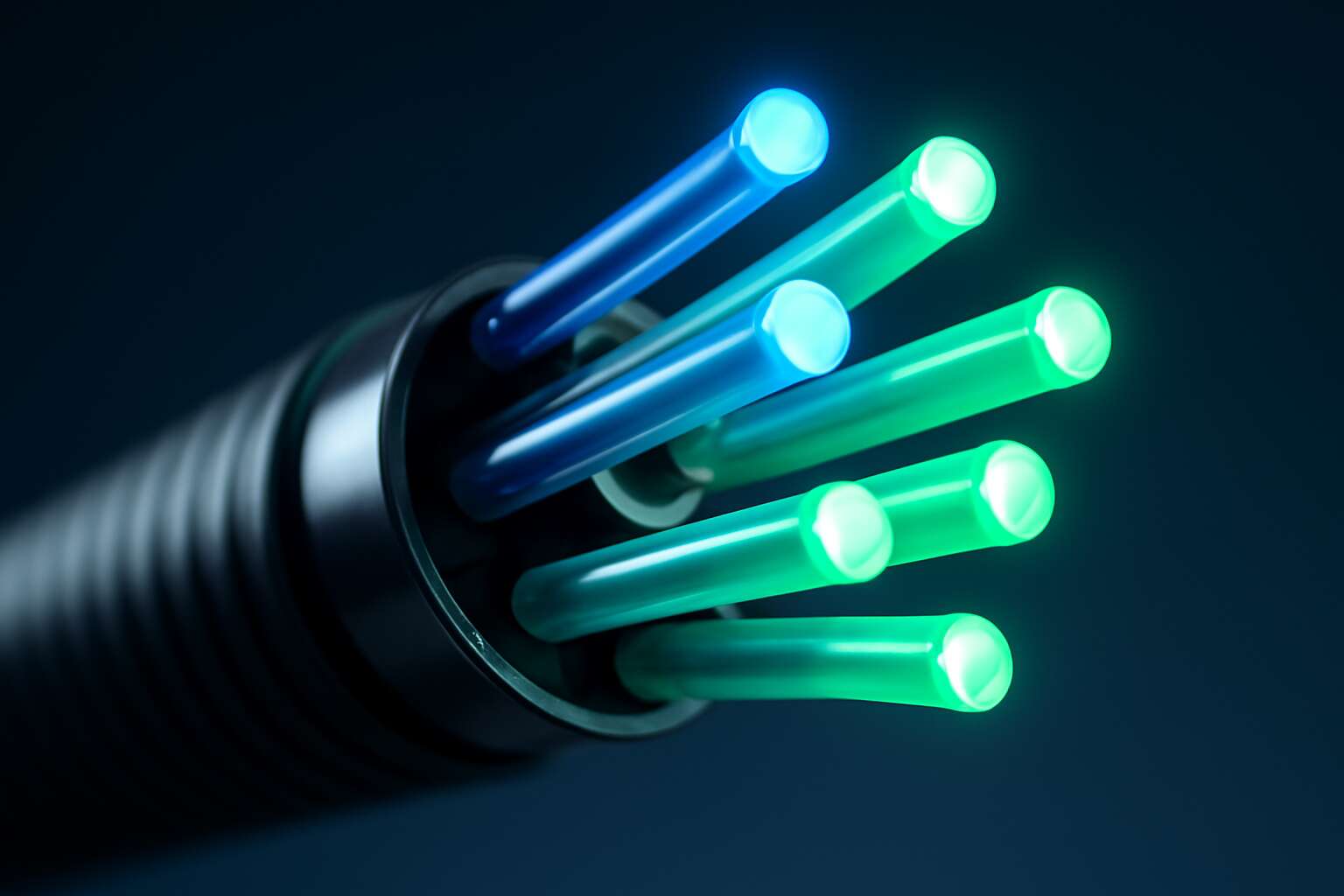
Fibre optic technology has revolutionised the way we communicate, with its ability to transmit vast amounts of data at lightning-fast speeds. At the heart of this innovation lies the core fibre optic cable—a slender strand of glass or plastic that acts as the conduit for light signals. When we talk about a 6 core fibre optic cable, we’re referring to a sophisticated configuration designed to handle multiple data streams simultaneously, ensuring seamless connectivity across complex networks.
Understanding core fibre optic cables involves recognising their layered structure, where the core is the central element that carries the light signals. These cores are surrounded by cladding, which reflects light inward, preventing loss and interference. For applications demanding higher capacity, such as data centres or high-speed internet infrastructure, a 6 core fibre optic offers an optimal balance of performance and durability.
For clarity, consider the key features of a 6 core fibre optic cable:
- Multiple channels for data transmission
- Enhanced resilience for demanding environments
- Versatile applications across telecommunications and enterprise networks
Components of Fibre Optic Cables – Core, cladding, buffer coating
Ever wondered what makes a 6 core fibre optic cable tick? Beneath its sleek exterior lies a fascinating world of specialised components, each playing a crucial role in transmitting data with spectacular efficiency. At the heart of it all is the core, a tiny glass or plastic filament that acts as the primary highway for light signals. These cores are meticulously designed to guide light with minimal loss, ensuring your high-speed internet or enterprise data stays swift and seamless.
Surrounding each core is the cladding—an optical barrier that reflects light inward, much like a mirror in a funhouse maze, preventing it from escaping and causing signal degradation. For durability and protection against the elements, the entire structure is coated in a buffer layer, which shields the delicate inner components from physical stress and environmental damage.
In a 6 core fibre optic cable, multiple channels are layered together, often with each core dedicated to a different data stream, making it an ideal solution for complex networks. This design not only amplifies capacity but also enhances resilience—so your data keeps flowing even in demanding environments.
Importance of Core Count – Role of core number in performance
In the realm of fibre optic technology, the number of cores within a cable can transform the entire landscape of data transmission. The core count isn’t just a number; it’s the heartbeat of performance, capacity, and resilience. A 6 core fibre optic cable, for instance, offers a symphony of channels, each dedicated to carrying its own stream of high-speed data. This multiplicity empowers complex networks to operate seamlessly, ensuring that multiple data streams coexist without interference.
The role of the core number becomes especially vital in environments demanding robust, high-capacity connectivity. More cores mean more pathways for light signals, reducing congestion and boosting overall efficiency. Imagine a city’s highway system—more lanes allow for smoother traffic flow even during rush hours. Similarly, a 6 core fibre optic cable provides a significant boost in bandwidth, making it ideal for enterprise-level applications and demanding technical infrastructures.
- Enhanced Data Capacity
- Greater Network Resilience
- Improved Signal Integrity
Ultimately, understanding the importance of core count in fibre optic cables reveals how a seemingly simple component can revolutionise connectivity. With each core acting as a dedicated conduit, a 6 core fibre optic cable becomes a marvel of modern data transmission, seamlessly merging power, speed, and durability into a single, elegant package.
What Are 6 Core Fibre Optic Cables?
Overview of 6 Core Configuration – Design and structure
Imagine a fibre optic cable that’s not just a one-trick pony, but a multi-talented performer with six channels of data dancing through its veins. That’s precisely what a 6 core fibre optic cable offers—six separate strands crammed into a single protective jacket, ready to handle an array of demanding network tasks with flair. This configuration isn’t just about increasing bandwidth; it’s about strategic versatility, enabling data transmission for multiple applications without needing a spaghetti of separate cables.
From a design perspective, the 6 core fibre optic is meticulously structured, with each core encased in its own layer of cladding to ensure optimal signal integrity. The cores are typically made from ultra-pure glass or plastic, designed to keep light signals bouncing along without losing their way. This thoughtful architecture allows for a robust, high-performance cable that can be deployed in complex networking environments. To visualise it better, consider this simple breakdown:
- Six individual cores, each acting as a dedicated pathway for data
- Surrounded by cladding that guides light efficiently, preventing cross-talk
- Encased in buffer coatings for durability and protection against environmental factors
In essence, the 6 core fibre optic is a marvel of modern engineering, seamlessly blending capacity and resilience into a compact design. Whether for enterprise data centres or high-speed internet backbones, this configuration delivers the performance needed in today’s hyper-connected world, all while maintaining a sleek, organised structure that’s easy to manage.
Advantages of Using Multiple Cores – Increased capacity and versatility
In the world of high-speed data transmission, 6 core fibre optic cables stand out as a game-changer. Their multiple cores not only boost capacity but also unlock new levels of network versatility. Instead of relying on several separate cables, a single 6 core fibre optic offers a streamlined solution that simplifies installation and maintenance. This configuration makes it easier to run different applications simultaneously, reducing clutter and complexity in busy data centres.
With six dedicated pathways for data, these cables optimise bandwidth utilisation and improve overall network performance. They are ideal for environments where multiple data streams are essential, such as enterprise networks or broadband backbones. The advantages of using multiple cores become clear: increased capacity, improved resilience, and the ability to handle diverse workloads efficiently. In today’s hyper-connected world, the 6 core fibre optic is a dependable choice for future-proofing communication infrastructure.
Applications of 6 Core Fibre Optic Cables – Industrial, telecommunications, data centers
What are 6 core fibre optic cables? These sophisticated conduits are the epitome of modern data transmission, featuring six dedicated pathways that carry vast amounts of information at the speed of light. Each core acts as a conduit for high-bandwidth signals, making the 6 core fibre optic an essential component in advancing digital infrastructure. Their intricate design allows for simultaneous data streams, ensuring that organisations can operate with unprecedented efficiency and resilience.
Applications of 6 core fibre optic cables span a broad spectrum, transcending traditional boundaries of connectivity. In industrial settings, they facilitate real-time data exchange for automation and control systems, where reliability is paramount. Telecommunication networks benefit immensely from their capacity to support multiple channels, enabling seamless voice, video, and internet services. Data centres, the nerve centres of our digital world, deploy 6 core fibre optic cables to optimise bandwidth utilisation and reduce clutter, ultimately enhancing overall network performance.
- Industrial automation and control systems
- Telecommunications infrastructure
- High-capacity data centres
In essence, the 6 core fibre optic is not merely a cable but a symbol of progress — a conduit through which the future of connectivity is woven with elegance and precision. Its applications continue to grow, promising an era where data flows effortlessly, and innovation knows no bounds.
Technical Specifications of 6 Core Fibre Optic Cables
Material and Construction – High-quality glass or plastic cores
Within the labyrinth of fibre optic technology, the material and construction of the cores whisper secrets of durability and efficiency. For a 6 core fibre optic cable, the choice of high-quality glass or plastic cores transforms mere transmission into a symphony of clarity and speed. These cores, meticulously crafted, serve as the heartbeat of the cable, guiding light with precision and minimal loss. The material’s purity and composition directly influence the cable’s capacity to transmit data over vast distances, ensuring that every pulse is delivered with unwavering fidelity.
Crucially, the construction of these cores is designed to withstand environmental rigours while maintaining optimal performance. The core’s core diameter, typically measured in microns, varies depending on whether glass or plastic is used, but both are engineered to optimise the total internal reflection essential for high-speed data transfer. This sophisticated design ensures that the 6 core fibre optic can support a multitude of applications—from high-capacity data centres to intricate industrial networks.
- High-purity glass cores for maximum clarity and minimal signal attenuation
- Plastic cores offering flexibility and cost-effectiveness without compromising performance
- Precision manufacturing to ensure uniform core diameter and concentricity
Data Transmission Rates – Speed capabilities
In the realm of fibre optic innovation, speed is the silent symphony that governs our digital universe. The technical specifications of a 6 core fibre optic cable reveal a breathtaking dance of light and precision, capable of transmitting data at staggering rates. With state-of-the-art design, these cables can achieve speeds exceeding 100 Gbps, a feat that transforms raw data into an effortless cascade of information. Such performance is not merely a numerical marvel but a testament to meticulous engineering that ensures minimal signal loss over vast distances.
The core’s dimensions and refractive qualities are engineered for excellence. Typically, the core diameter ranges from 8 to 62.5 microns, finely tuned to optimise total internal reflection, essential for high-speed data transfer. This intricate balance ensures robust performance whether in blazing data centres or intricate industrial networks. For those seeking versatility, the 6 core fibre optic structure offers a harmonious blend of speed and capacity, accommodating multiple data streams simultaneously.
- High-speed transmission capabilities, supporting multi-gigabit data rates
- Minimal attenuation to preserve signal integrity over long distances
- Enhanced bandwidth to enable future-proof network expansion
Such specifications elevate the 6 core fibre optic cable beyond mere connectivity, making it the backbone of modern digital infrastructure. As light weaves through these cores, it delivers not just data but the promise of progress—fast, reliable, and resilient.
Bandwidth and Signal Integrity – Performance metrics
In the realm of fibre optic technology, the true marvel lies in its ability to transmit vast quantities of data at blistering speeds, and the 6 core fibre optic cable exemplifies this mastery. Central to its performance are finely tuned bandwidth capabilities and unwavering signal integrity—essentials for sustaining the digital pulse of our modern world. These cables can support multi-gigabit data transfer rates, often surpassing 100 Gbps, ensuring seamless connectivity across even the most demanding networks.
To maintain such extraordinary performance, the technical specifications focus heavily on minimal attenuation and enhanced bandwidth. This means that the light signals travelling through each of the six cores experience negligible loss over long distances, preserving data fidelity. For high-stakes environments, these performance metrics are critical; they guarantee that information arrives intact, whether across a sprawling data centre or through complex industrial networks.
- High bandwidth capacity, supporting future-proof network expansion
- Minimal attenuation, ensuring signal integrity over extended distances
- Optimised core design for consistent, reliable performance
What makes the 6 core fibre optic truly exceptional is its ability to handle multiple data streams simultaneously without compromise—transforming raw light into a symphony of information that is both resilient and swift. This intricate balance of technical prowess and engineering finesse elevates the 6 core fibre optic into a cornerstone of modern digital infrastructure, delivering not just connectivity but a promise of progress that endures.
Benefits of 6 Core Fibre Optic Cables
Enhanced Data Capacity – Supports multiple channels
In the shadowed realm of fibre optics, where light dances through tiny glass corridors, the 6 core fibre optic stands as a marvel of modern engineering. Its ability to support **enhanced data capacity** transforms the digital landscape into an intricate web of boundless potential. With multiple channels woven into a single conduit, this configuration allows for simultaneous transmission of vast amounts of information—each core whispering secrets at astonishing speeds.
The true allure of the 6 core fibre optic lies in its capacity to support complex, high-demand networks. Imagine a fibre that not only carries data but sustains entire worlds of connectivity, enabling seamless communication across sprawling industrial complexes or labyrinthine data centres. This multiplicity of cores ensures that data flows unimpeded, preserving **signal integrity** even under the most oppressive conditions.
For those who dare to venture deeper into the dark arts of communication technology, the 6 core fibre optic offers a gateway—an elegant, resilient vessel for the relentless torrent of modern data demands.
Reduced Interference – Electromagnetic immunity
In the realm of high-speed data transmission, maintaining pristine signal quality is as vital as the data itself. The 6 core fibre optic cables excel in this area, thanks to their inherent electromagnetic immunity. Unlike traditional copper cables, which are susceptible to electromagnetic interference (EMI) from nearby electrical devices, the 6 core fibre optic’s glass or plastic cores operate independently of electromagnetic fields. This means that even in environments with heavy electrical noise—such as industrial plants or densely packed data centres—the integrity of your signals remains unscathed.
This immunity to interference ensures a consistent, reliable connection, reducing data errors and the need for costly signal repairs. The resilience of the 6 core fibre optic cables makes them especially suitable for critical infrastructure, where uninterrupted performance is non-negotiable. Whether transmitting sensitive information or supporting demanding applications, their ability to resist electromagnetic disruption stands out as one of the most compelling benefits of choosing fibre optic technology.
Furthermore, the robust construction of 6 core fibre optic cables offers an additional layer of protection against external electromagnetic forces. This natural resistance translates into fewer transmission disturbances, enhancing overall network stability and performance. In environments where electromagnetic interference could compromise data flow, the 6 core fibre optic remains an unwavering beacon of clarity—supporting seamless, high-speed connectivity for the most demanding modern applications.
Scalability and Future-Proofing – Preparation for future network demands
As network demands escalate at an unprecedented pace, future-proofing becomes more than a strategic choice — it’s a necessity. The 6 core fibre optic cables stand out as a beacon of scalability, seamlessly adapting to the evolving landscape of high-speed connectivity. Their versatile architecture allows for easy expansion, supporting burgeoning data loads without the need for complete infrastructure overhauls. This inherent flexibility ensures that investments made today remain relevant tomorrow, safeguarding your network against obsolescence.
For organisations eyeing long-term growth, the 6 core fibre optic offers a robust foundation. Its design accommodates multiple channels and increased bandwidth, paving the way for innovations in cloud computing, smart cities, and IoT. By choosing this technology, you’re not just meeting current requirements — you’re preparing your network to embrace future demands with confidence.
- Enhanced capacity to support higher data rates
- Ample room for additional channels as needs grow
- Compatibility with emerging high-speed standards
This adaptability makes the 6 core fibre optic an indispensable asset for those committed to building resilient, scalable networks. As the digital world evolves, choosing fibre optic technology that can grow with you ensures your infrastructure remains at the forefront of innovation and efficiency.
Installation and Maintenance of 6 Core Fibre Optic Cables
Installation Best Practices – Handling and placement
Handling and placing 6 core fibre optic cables requires a delicate balance of precision and care. These cables, with their intricate arrangement of multiple cores, demand meticulous installation to preserve their high-performance capabilities. Proper handling begins with avoiding excessive bending or twisting, which can compromise the fibre’s integrity and signal quality. Ensuring that the cables are supported and secured without undue tension prevents micro-bends that could lead to data loss.
Installation best practices also involve strategic placement—keeping the 6 core fibre optic cables away from sources of electromagnetic interference and physical hazards. When routing cables, consider the environment’s temperature stability and mechanical stressors. For complex setups, employing a structured cabling system can streamline maintenance and future scalability. Remember, a seamless installation not only optimises data transmission rates but also extends the lifespan of these sophisticated cables.
Maintenance Tips – Ensuring longevity and performance
Maintaining the performance and longevity of 6 core fibre optic cables hinges on meticulous installation and ongoing maintenance. Proper handling during installation prevents micro-bends and physical stresses that can degrade signal quality. After installation, routine inspections are essential to identify any signs of wear or damage, ensuring the cable’s integrity remains intact over time.
To optimise lifespan, consider implementing a structured maintenance plan. Regularly check for signs of environmental stressors—such as temperature fluctuations or exposure to chemicals—that could impair the cable’s performance. For added peace of mind, employ the following maintenance techniques:
- Use specialised cleaning tools to keep connectors free of dust and debris, preserving signal clarity.
- Ensure cables are supported properly, avoiding undue tension or sharp bends that could cause micro-bends.
- Periodically test the transmission capacity to detect early signs of degradation.
By prioritising these essential maintenance tips, network administrators can safeguard the high-speed data transmission capabilities of 6 core fibre optic cables, ensuring they continue to serve the demanding needs of modern infrastructure with unwavering reliability.
Troubleshooting Common Issues – Diagnosing and fixing problems
In the intricate dance of modern networks, a single misstep can unravel the delicate threads of connectivity. For those reliant on 6 core fibre optic cables, troubleshooting becomes a vital skill—an art of diagnosing the unseen forces that threaten performance. Often, issues stem from physical stresses, micro-bends, or contamination at the connectors, each capable of diminishing signal quality with quiet precision. Recognising these subtle signs is essential; a minor crack or dust particle can silently sabotage an entire system.
When problems arise, a systematic approach is crucial. Begin by inspecting the physical integrity of the cable—look for signs of wear, tension, or improper support. Next, employ specialised cleaning tools to meticulously remove dirt or debris from connectors, maintaining optimal signal clarity. If performance issues persist, it may be necessary to test the transmission capacity and evaluate potential interference sources that could be impairing data flow. Troubleshooting 6 core fibre optic requires patience and an eye for detail, as each fibre’s performance is a reflection of the network’s overall health.
Ultimately, addressing these issues swiftly preserves the high-speed capabilities and reliability that modern infrastructure demands—an ongoing commitment to excellence that underpins our digital world.
Comparing 6 Core Fibre Optic Cables to Other Configurations
2 Core vs 6 Core – Differences and use cases
When comparing 6 core fibre optic cables to other configurations, the distinctions become quite significant. Traditional 2 core fibre optic cables, for instance, are typically designed for straightforward point-to-point connections, making them ideal for basic data transmission but limited in capacity. In contrast, 6 core fibre optic cables offer a remarkable leap in versatility and performance, supporting multiple channels simultaneously and accommodating complex networking demands.
The core count directly influences the data transmission rate and bandwidth capabilities, with 6 core fibre optic cables providing a more robust foundation for high-speed applications. They are especially advantageous in environments where scalability and future-proofing are priorities. While 2 core cables serve well in simple setups, 6 core fibre optic configurations excel in demanding scenarios such as data centres and industrial networks, where handling increased data loads without interference is crucial.
8 or More Cores – When to choose higher core counts
When considering fibre optic cable configurations, the leap from 6 core fibre optic to higher core counts such as 8 or more cores marks a significant step in network capacity and complexity. While a 6 core fibre optic cable already offers impressive versatility, opting for cables with 8, 12, or even 24 cores can dramatically enhance your network’s scalability and performance.
Choosing a higher core count is especially vital in environments demanding extensive data handling, such as large data centres or industrial complexes. These setups require multiple simultaneous channels, minimising interference and maximising throughput. In essence, the decision hinges on the anticipated growth and evolving technological needs of your network infrastructure.
- Assess your current bandwidth requirements and future expansion plans.
- Identify the complexity of your network architecture—more cores often translate to more streamlined management.
- Ensure compatibility with existing equipment, as higher core count cables may necessitate specialised connectors and hardware.
In essence, while a 6 core fibre optic cable provides a robust foundation, higher core configurations unlock unprecedented levels of data transmission capacity, making them the preferred choice for those prioritising future-proofing and performance excellence in demanding applications.
Cost-Benefit Analysis – Investment versus performance
When weighing the investment in 6 core fibre optic cables against higher core configurations, the dance between cost and performance becomes a compelling narrative. Higher core counts, such as 12 or even 24 cores, often come with a steeper price tag. Yet, they unlock a universe of bandwidth that can transform an ordinary network into a robust digital artery. For organisations where data flow is the lifeblood, this investment can be a strategic manoeuvre, preparing the infrastructure for tomorrow’s demands.
Choosing a 6 core fibre optic cable often strikes a delicate balance—offering substantial capacity without the premium price of more complex configurations. It’s designed for versatility and efficiency, perfect for many medium to large-scale applications. But in environments where scalability and future-proofing are paramount, exploring higher core counts might be the right choice. Think of it as planting a seed that will grow into a mighty oak, ready to support the expanding canopy of your network.
- Assess current bandwidth needs to understand the immediate scope.
- Visualise future expansion plans—how much data growth do you anticipate?
- Compare the costs associated with higher core fibre optic options versus the performance gains they deliver.
In essence, the decision hinges on a careful cost-benefit analysis—evaluating whether the extra investment in a higher core count will translate into tangible benefits like increased data throughput, reduced latency, and long-term scalability. For those seeking a harmonious blend of performance and economy, the 6 core fibre optic remains a stalwart, yet the allure of higher core counts whispers promises of unbounded potential.
Choosing the Right 6 Core Fibre Optic Cable
Factors to Consider – Distance, environment, data requirements
Choosing the right 6 core fibre optic cable is akin to selecting a vessel capable of navigating an ever-changing digital ocean. The distance the cable needs to cover plays a pivotal role; longer runs demand cables with low attenuation and high signal integrity to ensure data remains pristine from source to destination. Equally, the environment where the cable will be deployed influences its construction—whether it’s a harsh industrial setting or a protected indoor corridor, selecting a cable that withstands temperature fluctuations, moisture, and physical stress is essential.
To determine the optimal configuration, consider these key factors:
- Transmission distance and signal loss tolerance
- Environmental conditions including exposure to chemicals, moisture, or electromagnetic interference
- Data transmission requirements such as bandwidth capacity and speed
By evaluating these elements, organisations can select a 6 core fibre optic cable that not only meets current demands but also offers scalability for future growth. Remember, the right choice enhances performance, reduces downtime, and maximises investment—fundamental for any thriving network infrastructure!
Standards and Certifications – Ensuring quality and safety
Choosing the right 6 core fibre optic cable is not merely a matter of matching specifications; it is an act of forging a resilient link between technology and tomorrow. The standards and certifications that underpin these cables serve as the guardians of quality and safety, ensuring your network remains steadfast amidst the chaos of electromagnetic interference and environmental extremes. Opting for cables that adhere to recognised standards—such as ISO/IEC 11801 or the Fibre Broadband Association’s certifications—can transform a simple connection into a dependable artery of data flow.
Certifications act as a lodestar, guiding organisations through the labyrinth of options, and guaranteeing compliance with industry benchmarks. When selecting a 6 core fibre optic, it’s wise to seek out those with robust testing for signal integrity, temperature resilience, and physical durability. This not only safeguards your investment but also ensures future scalability. After all, a cable that meets or exceeds these standards becomes a silent sentinel—ready to serve both present and future network demands with unwavering fidelity.
In a landscape where technology evolves at a lightning pace, verifying the quality and safety standards of your fibre optic cables isn’t just prudent—it’s essential. The right certifications are the promise of peace of mind, paving the way for a network that is as steadfast as it is swift. Remember, when it comes to 6 core fibre optic, quality isn’t an option; it’s the foundation upon which excellence is built!
Supplier Selection Tips – Finding reliable manufacturers
In a world driven by rapid technological evolution, selecting a reliable supplier for your 6 core fibre optic cable can make all the difference. With countless manufacturers vying for attention, how do you ensure your choice stands out in quality and consistency? The secret lies in meticulous evaluation—uncovering those hidden gems that prioritise standards, certification, and craftsmanship.
Start by assessing a manufacturer’s commitment to recognised industry standards—look for certifications such as ISO/IEC 11801 or those from the Fibre Broadband Association. These mark the manufacturer’s dedication to rigorous testing for signal integrity, temperature resilience, and physical durability. A supplier that consistently meets or exceeds these benchmarks is more likely to deliver a product capable of supporting your network’s current and future demands.
Additionally, consider the supplier’s track record and reputation. An established manufacturer with transparent quality assurance processes often provides better peace of mind. To streamline your evaluation, you might find it helpful to follow this simple process:
- Verify the supplier’s adherence to industry standards and certifications.
- Request detailed test reports on signal integrity and durability.
- Assess their capacity for customisation and scalability.
- Review customer feedback and case studies for real-world performance insights.
The landscape of fibre optic technology is intricate, but choosing the right 6 core fibre optic supplier is the first step toward building a dependable, high-performance network. When quality isn’t compromised, your data flows faster, safer, and more reliably—cementing the foundation for innovation and growth.


0 Comments