
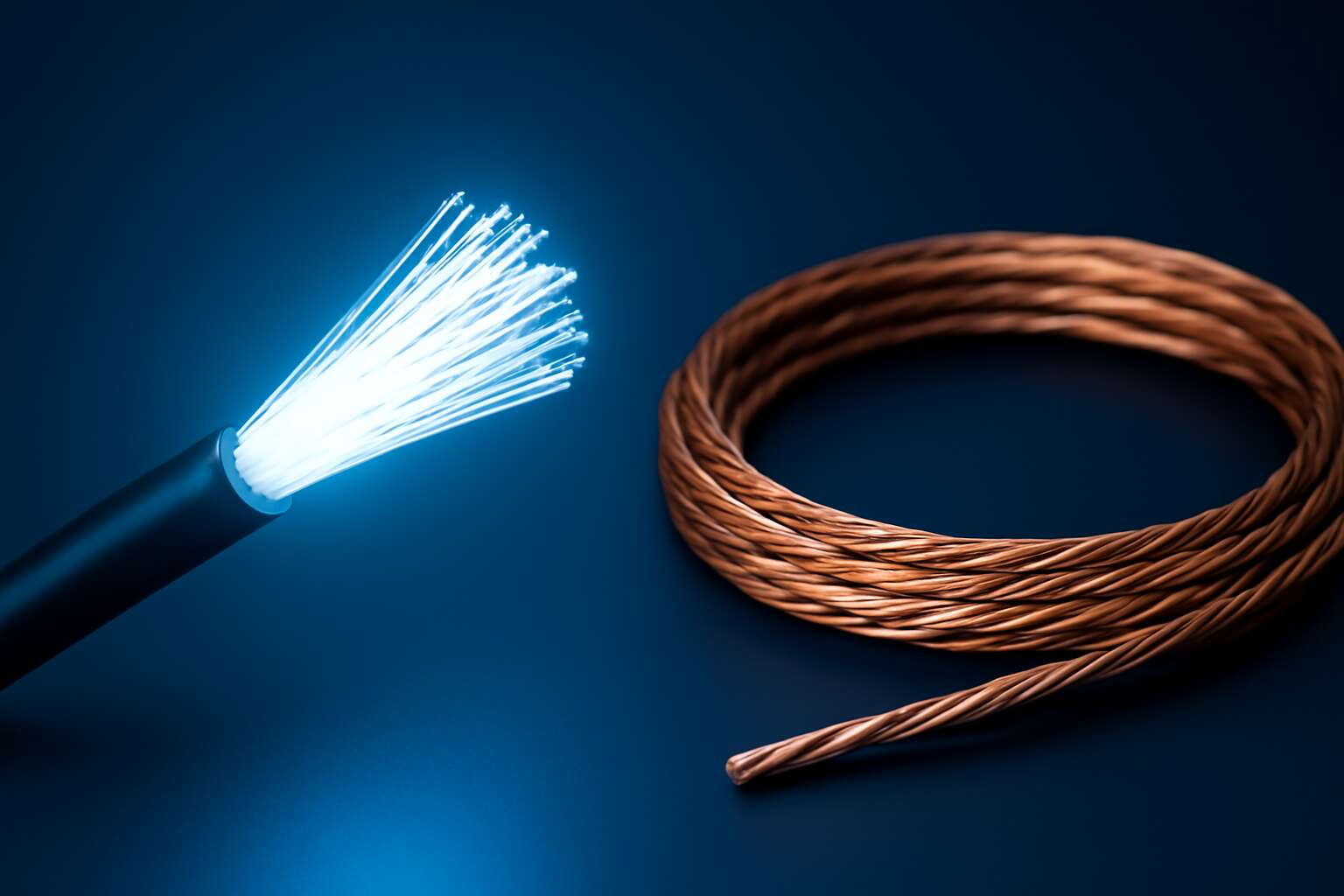
Overview of fibre optic and twisted pair technologies
What is fibre optic cable
In many metro deployments, latency drops by as much as 70% when moving from copper to fibre. This shift reshapes how businesses in South Africa rely on cloud services, video conferences, and real-time analytics. An overview of fibre optic and twisted pair technologies reveals a shared goal—move data efficiently—while using fundamentally different paths.
What is fibre optic cable? It uses a glass or plastic core to guide light, with a surrounding cladding that keeps the stream on track. Data travels as pulses of light, not as electrical signals, allowing signals to travel farther with less degradation. When comparing fibre optic cable vs twisted pair, the medium makes all the difference in speed, privacy, and resilience.
- Bandwidth potential
- Distance and signal integrity
- Immunity to EMI and cross-talk
- Installation considerations and cost
What is twisted pair and its common variants
Across South Africa’s digitising workplaces, networks that move data swiftly become a competitive edge. In this landscape, the choice between fibre optic cable vs twisted pair often feels like deciding between light and copper wire—one carries signals as photons, the other as electrons, across latency. Twisted pair uses copper conductors and electrical signaling, cheaper up front but more vulnerable to interference and distance limits. The result is faster, private data paths with fibre optics—the difference your cloud services notice.
What is twisted pair and its common variants for those charting the best network course? Twisted pair comprises copper conductors woven together to balance interference. Common variants include:
- Unshielded twisted pair (UTP)
- Shielded twisted pair (STP)
These options trade shielding and cost, while fibre optic solutions set a benchmark for speed and distance. In this context, fibre optic cable vs twisted pair hinges on installation, ownership costs, and resilience to factors.
Key design differences and how signals travel
Across South Africa’s digitising workplaces, latency is the new currency—cut it in half and a meeting becomes minutes faster. fibre optic cable vs twisted pair offers that leap: light-speed signals through glass versus copper’s electrical pulses. The difference isn’t merely about cables—it’s about how a network behaves under pressure, latency, and distance.
Design-wise, fibre uses a glass core with total internal reflection, guiding light with minimal loss over long runs. It thrives where EMI would mangle copper. In the debate of fibre optic cable vs twisted pair, it scales with bandwidth as easily as a river gathers tributaries. Twisted pair relies on copper and differential signaling—cheaper upfront but more susceptible to interference and attenuation over distance.
- Signal travel: photons in glass vs electrons in copper
- Distance and attenuation: longer, cleaner runs with fibre
- Cost and installation: fibre costs more upfront but reduces ongoing costs
When to consider each technology
Across South Africa’s growing towns, latency has become the practical currency of productivity. When weighing fibre optic cable vs twisted pair, the choice hinges on whether signals travel as light through glass or as electrons through copper.
Fibre optic paths rely on a glass core and total internal reflection, guiding light with remarkably low loss and standing up to EMI where copper stumbles. It scales with bandwidth and behaves calmly over long distances, a boon for schools, clinics, and rural towns expanding their networks.
Twisted pair uses copper wires and differential signaling, offering a friendlier upfront price and easier installation, but its reach is shorter and it pays in interference and attenuation as runs grow longer.
- Signal path: photons in glass versus electrons in copper
- Distance and attenuation: longer, cleaner runs with fibre
Performance characteristics and bandwidth
Bandwidth and data rate limits
A recent industry snapshot shows fibre optics can halve latency in typical office backbones. When weighing fibre optic cable vs twisted pair, the performance characteristics tell a clear tale, almost written in light. In South Africa’s cities and remote corridors, reliability matters as much as speed.
On bandwidth, fibre optic cable vs twisted pair diverge sharply. Fibre supports multi-gigabit to terabit scales with low loss, especially in single-mode deployments and DWDM. Twisted pair (Cat5e/6/6a) tops near 1 Gbps for Cat5e and 10 Gbps for Cat6a over 100 m. Distances in SA networks require robust fiber for longer runs.
- Higher data-rate potential and longer reach
- Lower signal degradation and interference
- Better scalability for future upgrades
What matters is matching bandwidth and distance to the right technology, as networks pulse across cities and rural links.
Distance and attenuation
In practical terms, fibre optic cable vs twisted pair unfolds as a tale written in light—quietly dramatic and relentlessly predictable. Across South Africa’s urban cores and sprawling rural links, the edge isn’t only speed; it’s consistency over distance and resistance to interference. When you compare fibre optic cable vs twisted pair, the choice becomes a matter of reach, reliability, and future-proofing.
Fibre optics deliver multi-gigabit to terabit potential, especially with single-mode deployments and DWDM, while copper tops out around 1 Gbps for Cat5e and about 10 Gbps for Cat6a over 100 meters. Distances in SA networks demand robust fiber for longer runs, where attenuation remains manageable and signal integrity holds up. In contrast, copper’s susceptibility to crosstalk and EMI grows with length, eroding margins and forcing repeaters. The result is a design space that favours fibre for backbone trunks and edge-to-edge links in both cities and remote corridors.
Latency and jitter
Performance threads through fibre optic cable vs twisted pair like a neon filament tracing the night. In South Africa’s urban sprawl and far-flung routes, latency becomes a measure of reliability and jitter the metronome that must stay true. Fibre optics whisper data with a steadier cadence; copper carries more noise and timing can drift as distances stretch. Bandwidth demands quietly shape how data moves, even as latency stays the visible heartbeat of the connection.
Key performance markers in latency and jitter:
- Propagation delay remains predictable over long spans
- Resilience to EMI and crosstalk
- Need for repeaters or buffering
- Steady performance under peak load
- Across varying temperatures
Across South Africa’s varied terrain, the dance of latency and jitter unfolds differently, a map written in light and echoed copper.
Interference and noise resilience
Light travels with patient certainty, and in South Africa’s sprawling urban corridors that certainty buys uptime. When weighing fibre optic cable vs twisted pair, the choice becomes a map of scale and reliability. Performance tilts toward fibre: abundant bandwidth, less distance-related loss, and a cadence that stays true as demand swells. Copper falters when many voices share the line!
- Higher sustained throughput on long routes
- Stronger resistance to EMI in dense urban cores
Bandwidth and data rate matter, and fibre opens doors copper can only peek through. Interference and noise resilience follow that arc: fibre’s glass shrugs off EMI and crosstalk, while copper invites whispers and timing drift. Across South Africa’s varied terrain, that difference shows up in steadier performance under peak load and fewer buffering surprises.
Comparison of real-world performance scenarios
Across South Africa’s bustling urban sprawl, performance isn’t a bet—it’s uptime you can measure. When weighing fibre optic cable vs twisted pair, the map points toward scale and reliability. Fibre serves up abundant bandwidth and lower attenuation over distance, keeping data rhythm steady even as demand climbs. Copper, by contrast, falters when many voices share the line, inviting slower bursts and more buffering in busy hours.
- High-density business districts and data centers needing predictable throughput
- Metropolitan backhaul and campus interconnects where latency matters
- Rural and regional links that must shrug off interference and weather
Real-world performance follows the arc: sustained throughput remains robust through peak loads, jitter stays low, and service quality feels more predictable. In conversations about fibre optic cable vs twisted pair, SA networks glimpse a future designed to scale with growth.
Reliability, durability, and environmental factors
EMI and crosstalk susceptibility
Reliability in the field isn’t a nice-to-have; it’s what keeps networks awake at night. When comparing fibre optic cable vs twisted pair, the optics win on long runs: light doesn’t degrade like voltage, and signal integrity stays steady despite heat, dust, or the occasional power hiccup.
I’ve seen copper wilt in a SA heatwave, while fibre keeps its cool. Durability matters—fiber optics resist corrosion and insulation wear far better than copper, which sags under vibration and moisture here.
- EMI resilience: fibre optic cables are immune to electromagnetic interference, unlike twisted pair.
- Low crosstalk and signal integrity: fiber carries light, so electrical crosstalk is nonexistent.
- Environmental robustness: less affected by humidity and temperature swings when properly installed.
All told, the fibre optic cable vs twisted pair debate in South Africa tends to settle in favor of optics for core and backhaul roles, where reliability and future-proof bandwidth trump copper’s budget-friendly appeal.
Physical durability and installation considerations
Reliability is the quiet sentry of South African networks, guarding data through heat waves and outages. When weighing fibre optic cable vs twisted pair, optics win on long runs—light holds its course while copper falters and noise accumulates. I’ve seen copper wilt in a SA heatwave; fibre stays cool.
Durability isn’t only corrosion; it’s resilience to vibration, humidity, and the rough realities of long runs. Installation matters: bend radii and protective conduits must be observed; copper often squeals under flex.
- Bend radius limits to protect the fibre
- Conduit protection and routing to shield from moisture and abrasion
- Connector longevity and environmental sealing at terminations
The night wears the city; the choice lingers between risk and future-proof bandwidth. fibre optic cable vs twisted pair remains a haunting refrain for SA networks.
Temperature effects and shielding
“Reliability is the quiet sentry of South African networks,” a sage of the city once proclaimed. In the debate of fibre optic cable vs twisted pair, long runs and heat waves favor optics—light keeps its course where copper sighs and noise accrues. The result is cooler, steadier data paths under the SA sun.
- Temperature swings stress copper more than fibre.
- Shielding matters: copper often needs extra EMI protection.
- Moisture and vibration challenge copper; fibre stays rigid and true.
Temperature fluctuations and shielding shape durability. Copper trembles in humidity and rough conduits; fibre resists moisture, vibration, and connector wear, keeping the path clear for the kind of reliability South African networks rely on in dawn-lit cities and rolling outages.
Costs, installation, and scalability
Capital and operating costs
When comparing fibre optic cable vs twisted pair, the decision isn’t just about raw speed—it’s a calculator. Fibre optics can carry up to 10x the bandwidth and typically cut energy use per link by up to 50% over the life of the network. The upfront capital for fibre, splicing, and trenching is higher, but operating costs often tilt the balance in fibre’s favour.
Installation for fibre demands careful route planning, fusion splicing, and trained technicians, which can extend timelines. In South Africa, outages and power costs intensify those considerations. Twisted pair slips into existing conduits with minimal downtime, making retrofit projects quicker but potentially more expensive to expand in the long run.
From a scalability angle, fibre is a future-ready backbone: upgrading speeds often means swapping transceivers, not ripping up cable. The fibre optic cable vs twisted pair debate tends to tilt in favour of fibre as bandwidth grows.
Installation time and skill requirements
Costs don’t just appear on a bill; they tell a story. Fibre optics demand higher upfront for cable, splicing, and trenching, yet operating costs often drop as energy per link falls and capacity expands—up to 50% lower over the life of the network. In South Africa, outages amplify these numbers.
Installation demands careful route planning, fusion splicing, and trained technicians; timelines can lengthen. In contrast, twisted pair slips through existing conduits with minimal downtime, making retrofit projects quicker, though future expansion may carry higher long-term costs.
- Deployment timelines
- Skill requirements
- Long-term scalability
From a scalability viewpoint, when weighing fibre optic cable vs twisted pair, the future tends to lean toward fibre as bandwidth grows. Upgrading capabilities then means swapping transceivers, not ripping out cabling.
Flexibility for upgrades and future-proofing
From the shadows of the budget, the cost narrative for fibre optic cable vs twisted pair reveals a paradox. Fibre optics demand higher upfront for cabling, splicing, and trenching, yet operating costs often drop as energy per link falls and capacity expands—up to 50% lower over the life of the network. In South Africa, outages magnify these numbers, turning reliability into currency.
Installation demands meticulous route planning, fusion splicing, and trained technicians; timelines can lengthen. Twisted pair slips through existing conduits with minimal downtime, making retrofit projects quicker, though future expansion may carry higher long-term costs.
From a scalability perspective, the future tends toward fibre as bandwidth grows. Upgrading capabilities then means swapping transceivers, not ripping out cabling. That flexibility for upgrades and future-proofing is the quiet promise of fibre optic cable in a landscape where demand sharpens and networks endure.
Maintenance and replacement planning
Costs shape every choice in South Africa’s rural networks. fibre optic cable vs twisted pair shows a paradox: fibre demands higher upfront for cabling and trenching, yet life-cycle costs drop as energy per link falls and capacity expands. In outages-prone environments, reliability is currency for clinics, schools, and small farms.
Installation demands careful route planning, fusion splicing, and trained technicians; timelines can stretch. Twisted pair slips through existing conduits with minimal downtime, easing retrofit work though long-term expansion may cost more. Key steps include:
- Route assessment
- Permits and trenching
- Splice planning
From a scalability stance, fibre is the future: upgrades swap transceivers, not cabling. Maintenance and replacement planning should align with predictable cycles, spare parts, and service levels—vital in the SA landscape where outages bite. In discussions of fibre optic cable vs twisted pair, future-proofing hinges on upgrades.
Applications, standards, and future trends
Ideal use cases for each technology
The perennial debate—fibre optic cable vs twisted pair—plays out where speed, distance, and reliability matter, and in South Africa that difference can mean uptime you can bank on. Data centers and backhaul networks ride on fibre’s high-capacity links with far fewer repeaters, while copper strain under modern workloads and cloud bursts. That’s where fibre shows its mettle—low latency, robust shielding, scalable capacity.
Standards keep the dialogue precise.
- IEEE 802.3 Ethernet standards
- ITU-T fibre recommendations (G.652, OM4, OM5)
These guardrails help designers align performance with procurement and installation cycles.
Future trends point to higher speeds, smarter fibre, and broader deployment in South Africa’s rural and urban corridors. Expect 400G/800G backbones, tighter integration with 5G backhaul, edge data centers, and more robust multi-mode performance as the standard.
Industry standards and compatibility
Applications across South Africa show that fibre optic cable vs twisted pair delivers backbone performance where it counts: data centers, regional backhaul, and rural connectivity. Fibre brings low latency and high capacity that keep cloud bursts moving, while copper strains under modern workloads and bursty traffic. When weighing fibre optic cable vs twisted pair, the choice hinges on scale, uptime, and upgrade cycles.
Standards guide the handshake between performance and procurement.
- IEEE 802.3 Ethernet standards
- ITU-T fibre recommendations (G.652, OM4, OM5)
Future trends point to 400G and 800G backbones, closer 5G backhaul, and the rise of edge data centers. In South Africa’s urban arteries and remote corridors, smarter fibre with easier upgrades and robust multi-mode performance will widen deployment. Standards evolve in lockstep, keeping compatibility a virtue rather than a hurdle.
Choosing the right solution for your network
Latency whispers like a ghost in the machine! Across South Africa’s corridors, data centers in Gauteng, regional backhaul, and rural links keep communities connected. When weighing fibre optic cable vs twisted pair, the choice hinges on scale, uptime, and upgrade cycles. Fibre delivers low latency and high capacity that keeps cloud bursts moving, while copper strains under modern workloads and bursty traffic.
Standards guide the handshake between performance and procurement.
- IEEE 802.3 Ethernet standards
- ITU-T fibre recommendations (G.652, OM4, OM5)
Future trends point to 400G and 800G backbones, closer 5G backhaul, and the rise of edge data centers. In South Africa’s urban arteries and remote corridors, smarter fibre with easier upgrades and robust multi-mode performance will widen deployment. Standards evolve in lockstep, keeping compatibility a virtue rather than a hurdle.


0 Comments