
Technology fundamentals and comparison
What is fibre optic technology
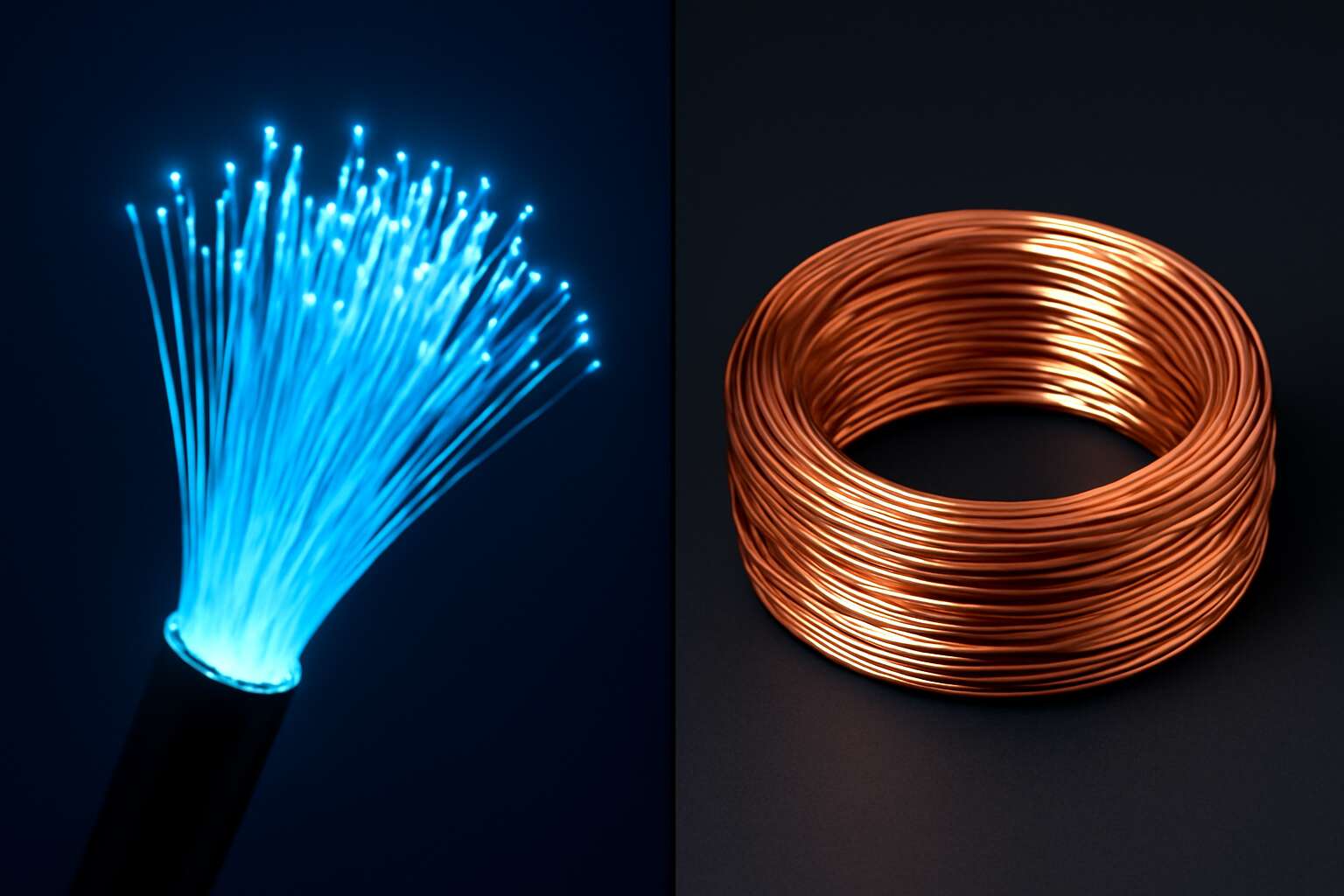
In South Africa’s urban networks, the choice between fibre optic vs copper wire often hinges on reliability as much as speed. A veteran engineer once said, “fiber is tomorrow’s copper,” and that premise still rings true. Fibre uses light in glass or plastic strands, delivering broad bandwidth with lower latency and less signal degradation as demand grows!
- Light signals travel farther with less attenuation than copper.
- Electromagnetic interference is minimal with fibre optics, improving stability in city ducts.
- Upgrading capacity tends to be easier and more future-proof than rewiring.
In practice, engineers balance cost, run length, and environment, mapping signal quality across both media and planning for future upgrades as demand climbs.
What is copper wired network technology
Urban South Africa is witnessing a quiet revolution in connectivity: in 2024, nearly two-thirds of new urban deployments favored fibre, signaling a shift toward fibre optic vs copper wire. As one veteran engineer reminds, “fiber is tomorrow’s copper.” Fibre carries light through glass or plastic, delivering broad bandwidth with lower latency and less signal degradation as demand grows!
- Copper wired network technology relies on electrical signals transmitted over copper pairs, making networks susceptible to electromagnetic interference and distance limits.
- The advantage is cost and ubiquity: existing copper in many city cores can keep initial CapEx manageable and leverage established wiring practices.
- Upgrades tend to be incremental, with longer runs requiring more repair, shielding, and complicated rewiring as demand climbs.
Across systems, cost, run length, and environment are weighed with care, mapping signal quality across media and planning for gradual, thoughtful upgrades as demand climbs.
Key differences in signal transmission
South Africa’s urban networks are rewriting the map: in 2024, two-thirds of new urban deployments favoured fibre, a dramatic tilt toward fibre optic vs copper wire. The image is poetic: light as a courier, threading through glass with near-zero latency, while copper fights a losing battle against noise and distance. In this fundamental battleground, signal transmission becomes less about speed alone and more about how you carry it.
Fibre transmits with photons, cruising long corridors with minimal loss; copper carries electrons that cling to interference and barriers, demanding repeaters and more shielding. The result: fibre offers greater bandwidth potential, enduring performance across longer runs, and resilience in busy urban cores, while copper remains a familiar, cost-efficient starter that scales gradually.
- Distance and loss: fibre scales farther with less signal decay.
- EMI resilience: fibre thrives in noisy city cores.
- Upgrade path: fibre unlocks higher bandwidth with simpler, future-proof upgrades.
In the quiet mathematics of transmission, these two media write a story of future-proofing—one that South African networks will continue to map with care.
Performance and reliability considerations
Bandwidth capacity and distance limitations
Across South Africa, the choice between fibre optic vs copper wire shapes how quickly teams move data. A single fibre link can deliver multi-gigabit speeds with latencies under 1 ms, turning cloud applications, video conferencing, and backups into a seamless rhythm that keeps pace with ambition.
Performance and reliability considerations favour fibre, delivering predictable throughput and fewer disruptions in busy SA offices and campuses.
- Lower latency and resistance to electrical noise
- Greater bandwidth capacity for future-proofing
- Better resilience in outdoor and long-haul runs
Bandwidth capacity and distance limitations highlight fibre’s edge. Copper struggles beyond short runs, especially as speeds climb beyond the gigabit range, while fibre spans kilometers with minimal loss, making it a robust backbone for SA networks, from city campuses to remote branches.
Latency and jitter under different loads
In South Africa’s busiest offices, latency under 1 ms isn’t a marketing line—it’s the real threshold fibre delivers. The choice between fibre optic vs copper wire isn’t merely technical; it’s about staying in cadence with cloud apps, video meetings, and backups when demand surges.
Under light loads, latency remains tight and jitter barely registers. As traffic climbs, copper shows its limits—jitter spikes and occasional retransmissions—while fibre keeps latency predictable and throughput steady. The difference rests on how each medium handles dispersion, shielding, and error correction during crunch time.
- Low latency under light load
- Deterministic jitter at high concurrency
- Robust resilience to electrical noise
For SA networks spanning campuses and remote branches, the longer reach and lower attenuation of fibre translate into fewer outages and room for future growth.
Interference and environmental factors
Uptime in South Africa’s busiest offices isn’t measured in megabits alone—it’s measured in the confidence that a video call won’t stall. When comparing fibre optic vs copper wire, the verdict hinges on resilience under pressure and bursty demand.
Interference and EMI pick copper’s pockets; motors, switchgear, and long cable runs invite jitter and rare retransmits. Fibre, meanwhile, rides light through glass, shrugging off electrical noise. Here are reality checks:
- EMI from motors, HVAC, and switchgear
- Crosstalk in copper runs
- Ground loops that cause sporadic errors
Environmental factors also tilt the scale. Copper is more prone to humidity, corrosion, and temperature swings; fibre resists moisture-induced faults and keeps runs tidy. In SA campuses and remote sites, fibre delivers steadier performance.
Cable design and shielding impact on performance
Uptime on a South African campus isn’t a luxury—it’s the backbone of every boardroom miracle. In a world where meetings glide across screens with a single heartbeat of stability, 99.9% uptime is the quiet boundary that separates pressure from poise.
Performance under bursty demand hinges on more than raw speed; it hinges on how the cable handles shielding and design. Copper’s conductors invite jitter when EMI slips in; fibre, with glass and a calm core, resists.
- Foil shielding to curb high-frequency EMI and preserve signal integrity
- Braided or combination shields to balance flexibility and noise rejection
- Armoured jackets for harsh environments without sacrificing link quality
In SA campuses and remote sites, the choice leans toward fibre optic vs copper wire for steadier performance under load and resilience in fluctuating climates.
Cost, installation and maintenance
Upfront costs and total cost of ownership
Reliability is the quiet treasury of modern business, especially in South Africa’s dynamic markets. When weighing fibre optic vs copper wire, the ledger tilts toward uptime, speed, and enduring value that keeps teams aligned with demand.
Upfront costs for fibre optic networks are higher—new cabling, transceivers, and skilled installation require a larger outlay. Copper often rides on existing infrastructure, easing the start. Yet the real calculus is how long the investment stays ahead.
- Upfront equipment and cable costs
- Installation and downtime considerations
- Maintenance frequency and lifecycle
- Longevity and upgrade potential
Installation demands expertise and measured downtime, but fibre’s maintenance cadence tends to be gentler: fewer interference concerns and longer intervals between checks.
Over the life of a network, total cost of ownership tilts toward fibre when bandwidth and reliability rise; as demand grows, the case for future-ready design becomes clear.
Installation complexity and downtime
Uptime is the currency of South Africa’s fast-paced business world, where a dropped link can derail a deal. ‘Uptime is king,’ a seasoned IT director quipped, and the sentiment holds across fibre optic vs copper wire debates. You pay more upfront with fibre, but you buy reliability that compounds.
Cost isn’t just sticker shock at the start. For fibre, upfront equipment and cable costs loom larger, and installation can demand specialized teams and measured downtime. Copper often rides on existing infrastructure, easing the initial hit. Here are the levers:
- Upfront equipment and cable costs
- Installation downtime considerations
- Maintenance frequency and lifecycle
- Longevity and upgrade potential
Over time, maintenance cadence matters: fibre often needs fewer visits and longer intervals between checks as demand climbs. In SA, design for scale tends to win when peak loads matter.
Maintenance, durability, and repairability
‘Uptime is king,’ a seasoned IT director quipped. In SA, that truth underpins the fibre optic vs copper wire choice, where reliability can land the deal.
Fibre carries a higher upfront bill for equipment and installation, but the payoff is fewer maintenance visits and longer life. Copper taps existing plant, easing the hit. From my experience in SA, the scale of demand makes that early saving look small when uptime is the real currency.
Consider these levers:
- Initial capex readiness
- Downtime planning
- Maintenance cadence
- Upgrade path
Beyond price, durability and repairability matter. Fibre’s immunity to EMI and noise keeps signals clean longer; repairs rely on precise fault location and rapid patching.
In SA, uptime isn’t just a metric—it’s a business rhythm. The fibre optic vs copper wire decision is a life-cycle choice.
Lifecycle, scalability, and upgrade paths
Across South Africa, the cost calculus for network upgrades hinges on lifecycle value, not sticker shock. fibre optic vs copper wire is a long-game decision: fibre typically carries a higher upfront capex, yet promises fewer maintenance visits and a longer service life. Copper leverages existing plant, easing the initial hit but inviting higher maintenance costs over time.
Installation and maintenance follow a deliberate rhythm. Consider these levers:
- Capital readiness
- Downtime planning
- Maintenance cadence
- Upgrade trajectories
Scalability and upgrade paths shape the long-term choice. fibre optic vs copper wire options differ in how they absorb future demand: fibre expands capacity readily and distances scale; copper can be upgraded in shorter cycles but hits ceilings. In SA, uptime often justifies the leap.
Applications, security and future trends
Industry use cases and deployment scenarios
Across South Africa’s rural towns and busy cities, connectivity is more than speed—it’s a lifeline for schools, clinics, and small businesses. The fibre optic vs copper wire debate shapes resilience, investment, and everyday chances for communities to thrive.
Fibre offers stronger security through resistance to interference and end-to-end encryption, but physical taps remain a risk mitigated by tamper-evident enclosures and diverse routing. Deployment often uses a layered approach; consider these applications:
- Remote farming networks and sensor data
- Municipal backhaul for clinics and schools
- Enterprise campuses and mining operations backhaul
In the fibre optic vs copper wire debate, future trends point to longer lifecycles, smarter upgrades, and edge-enabled services as SA expands 5G and cloud access.
Security considerations and data protection
Applications in South Africa hinge on reliability as much as speed. From remote farming sensors to municipal backhaul and campus networks, connections that stay up change lives. The fibre optic vs copper wire debate shapes not just bandwidth but how communities access education, healthcare, and opportunity when it matters most!
Security considerations and data protection: Encryption matters, but so does the physical layer. Fibre networks resist interference better, yet taps are possible; countermeasures include tamper-evident enclosures, diversified routing, and constant monitoring. When choosing between options, operators prioritise identity, access controls, and resilient architectures.
- Tamper-evident enclosures
- Diversified routing
- Regular security audits
Future trends hint at longer lifecycles, smarter upgrades, and edge-enabled services as SA expands 5G and cloud access. In the fibre optic vs copper wire equation, the future hinges on intelligent provisioning and automated failover that keeps communities connected even as demand spikes.
Future-proofing and technology roadmaps
Connectivity isn’t a luxury; it’s a lifeline,” a rural school principal once said. In South Africa, remote farming sensors to campus networks hinge on reliability as much as speed. When weighing fibre optic vs copper wire, communities gain bandwidth plus telemedicine, online education, and weather alerts that protect livelihoods. The debate is a test of future-proofing: longer lifecycles, smarter upgrades, and edge-enabled services as SA expands 5G and cloud access. I’ve seen how the choice shapes classrooms and clinics.
Future-proofing and technology roadmaps hinge on intelligent provisioning and resilient architectures.
- edge-enabled services near users to cut latency
- automated failover and diversified routing
- modular hardware that scales with community needs
This approach supports education and health networks in rural pockets, keeping links steady through harvests and exams.
Roadmaps in SA now prioritise interoperability, cost discipline, and partnerships that extend backbone reach, ensuring communities stay connected as demand spikes.
Vendor, standardisation and ecosystem landscape
“Connectivity isn’t a luxury; it’s a lifeline,” a rural principal once said. In South Africa, the debate between fibre optic vs copper wire tests resilience for classrooms, clinics, and farming communities. Reliability and speed aren’t abstract goals—they’re the difference between exams you can stream and weather alerts you can trust.
Applications stretch beyond simple connectivity. In rural pockets, edge-enabled services, automated failover, and modular hardware bring farms and campuses onto the same reliable backbone, supporting telemedicine, online exams, and sensor-driven farming insights.
- Telemedicine links to rural clinics for remote consultations
- Online education platforms that support exams and streaming lessons
- Weather and farming sensors that trigger alerts
Security and ecosystem dynamics are evolving at the same pace as technology. Encryption and resilient provisioning keep data safe as networks scale. The vendor landscape is maturing around standardisation bodies and open interfaces, with local integrators extending SA’s rural backbone.


0 Comments