
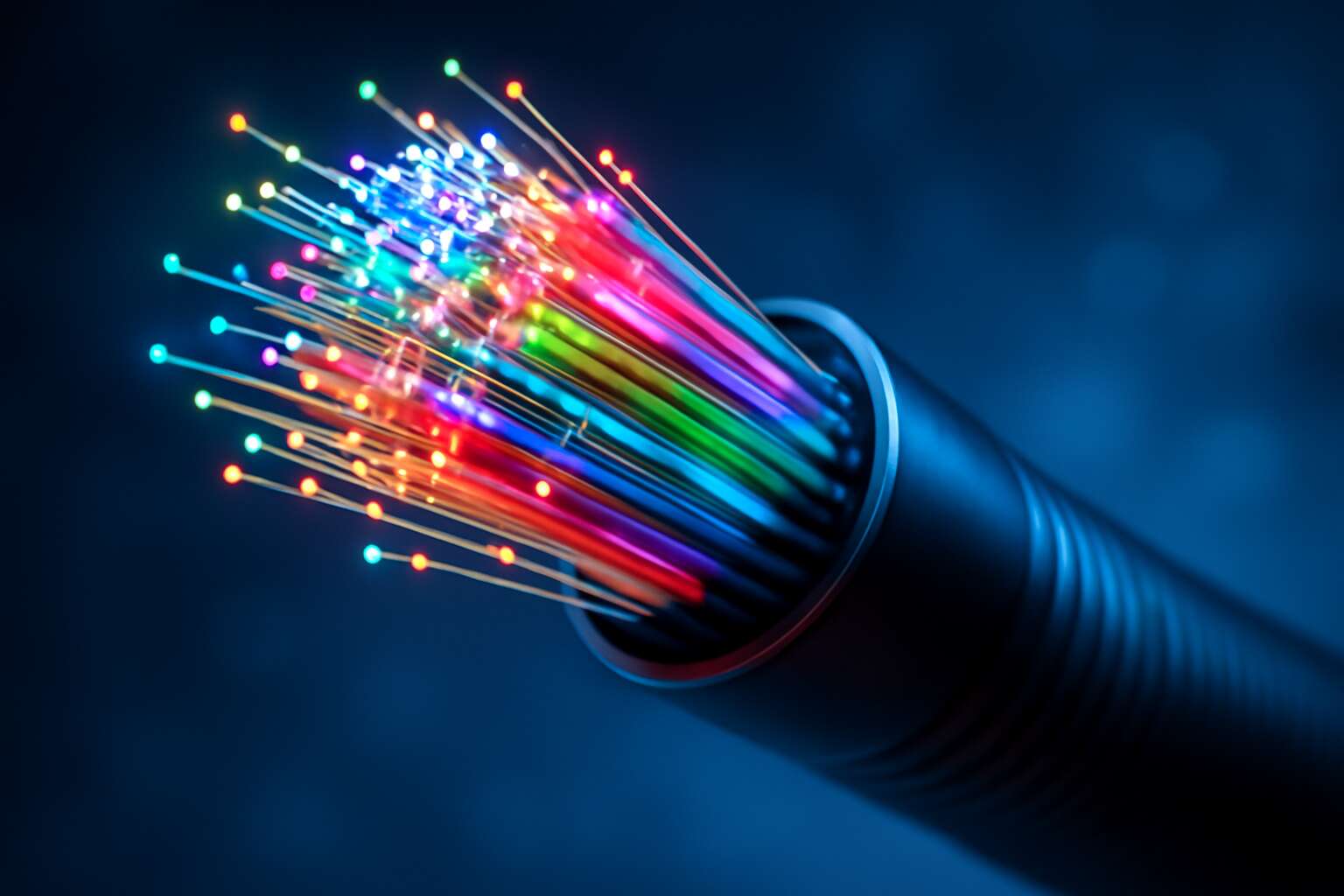
Basics of Fibre Optic Technology
Understanding Fibre Optic Cables – Overview of fibre optic cable structure and components
Fibre optic technology has revolutionized the way we connect across vast distances, turning light into a conduit of boundless information. At the heart of this marvel lies a delicate yet resilient structure, ingeniously designed to transmit data at the speed of thought. Understanding the intricate composition of fibre optic cables offers a glimpse into the magic behind modern connectivity.
Fibre optic cables are composed of core components that work in harmony to transmit light signals with minimal loss. The core, a slender strand of glass or plastic, is where the magic begins—guiding light through the principle of total internal reflection. Surrounding the core is the cladding, which reflects light back into the core, ensuring the signal remains pure over long distances. Encasing these elements is a protective jacket that shields the delicate inner components from environmental factors, making fibre optic cables both durable and flexible.
Within this delicate architecture, the technology used for fibre optic cable employs advancements such as laser diodes and photodetectors, which convert electrical signals into light and back again. This synergy of components allows for astonishing data transfer rates, essential for South Africa’s burgeoning digital landscape. The structure’s sophistication is a testament to the seamless blend of science and artistry, enabling high-speed internet, reliable telecommunications, and cutting-edge data centers to thrive across the nation.
Principles of Light Transmission – How light propagates through optical fibers using total internal reflection
Imagine transmitting data faster than a cheetah on energy drinks—sounds like sci-fi, right? Well, the technology used for fibre optic cable makes this a reality, harnessing the power of light to deliver information at blistering speeds. The core principle behind this marvel is total internal reflection, a fancy term that simply means light bounces around inside the fiber, never escaping until it reaches its destination.
At its heart, the process involves converting electrical signals into pulses of light—thanks to laser diodes—and then back again with photodetectors. This seamless conversion is what allows data to zip across continents and underwater cables with minimal loss. The way light propagates through the fibre optic cable isn’t just about bouncing around; it’s a carefully orchestrated dance that keeps signals pure and reliable over long distances.
To better understand, here’s a quick rundown of the key steps in the transmission process:
- Electrical signals are converted into light pulses by laser diodes.
- Light travels through the core via total internal reflection, bouncing along the length of the fibre.
- Photodetectors at the receiving end convert the light back into electrical signals.
This captivating technology used for fibre optic cable is what powers South Africa’s digital transformation, connecting cities, data centers, and remote communities alike. It’s a perfect example of science and innovation working hand in hand, turning the simple act of transmitting light into a symphony of bytes and bits—no magic, just brilliant engineering.
Advantages Over Traditional Cabling – Benefits of fibre optics such as high bandwidth and immunity to electromagnetic interference
Fibre optic technology has revolutionized the way we transmit information, offering a level of speed and reliability that traditional cabling simply cannot match. Unlike copper wires, which are vulnerable to electromagnetic interference, fibre optics harness the principles of light transmission to ensure data remains pristine and secure. This is the true power of the technology used for fibre optic cable: it transforms raw photons into the backbone of our digital age.
One of the most compelling advantages is the extraordinary bandwidth capacity. Fibre optic cables can carry vast amounts of data simultaneously, making them ideal for South Africa’s expanding digital landscape. This high capacity directly supports the growth of data centers, smart cities, and remote connectivity, fueling economic development and bridging digital divides. Additionally, fibre optics excel in environments with high electromagnetic interference, such as industrial zones or urban centers, where traditional cables struggle to maintain signal integrity.
Moreover, the durability and long-distance efficiency of fibre optic cables mean fewer signal repeaters are needed, reducing infrastructure costs and enhancing overall network resilience. As demand for faster, more reliable internet grows, the technology used for fibre optic cable stands out as a beacon of innovation—an unyielding conduit for progress in South Africa’s digital future.
Core Components of Fibre Optic Technology
Optical Fiber Core – The central part of the cable transmitting light signals
At the heart of every fibre optic cable lies the unsung hero— the optical fiber core. This tiny yet mighty component is responsible for transmitting light signals with astonishing precision, enabling the high-speed connectivity we often take for granted. Think of it as the highway for data, where photons zip along at near-light speed, carrying everything from critical business information to Netflix binge sessions.
The core is made from ultra-pure glass or plastic, meticulously engineered to maximize total internal reflection—the secret sauce behind the technology used for fibre optic cable. This phenomenon ensures that light signals bounce within the core, avoiding any pesky leaks or signal loss. To put it simply, it’s like a perfectly polished mirror maze, but for data!
- High-grade silica glass for minimal signal attenuation
- Core diameter varies based on application—single-mode or multi-mode
- Precision manufacturing for flawless light propagation
In South Africa, where reliable internet remains a priority, understanding the importance of the optical fiber core reveals why fibre optic technology is revolutionizing communication infrastructure. It’s not just about speed; it’s about creating a resilient, high-capacity backbone that keeps us all connected in this digital age.
Cladding Layer – Surrounds the core and facilitates light reflection
The cladding layer is the silent guardian of the fibre optic marvel. Encasing the core, it plays a pivotal role in guiding light with unwavering fidelity. This layer, crafted from specialized materials, surrounds the core to facilitate the critical process of light reflection. Its purpose is simple yet profound: to ensure photons remain within the confines of the core, bouncing internally with minimal loss. This delicate dance of light is what makes fibre optic communication so remarkably efficient.
Within the technology used for fibre optic cable, the cladding acts as a mirror, redirecting light signals back into the core whenever they try to escape. Its refractive index is carefully calibrated—less than that of the core—to create the perfect environment for total internal reflection. This phenomenon is the backbone of high-speed data transmission, enabling signals to traverse vast distances without degradation.
- Exceptional material composition for durability and minimal signal attenuation
- Precisely engineered thickness to maintain optimal light reflection
- Compatibility with various core types—single-mode or multi-mode—for diverse applications
In South Africa’s ever-evolving digital landscape, understanding the significance of the cladding layer illuminates why fibre optic technology is a cornerstone of modern communication infrastructure. It’s not merely about transmitting data but about safeguarding the integrity of every photon that journeys through this luminous highway. Truly, the cladding layer exemplifies the artistry woven into the very fabric of fibre optic technology used for fibre optic cable—turning light into a symphony of connectivity.
Buffer Coating – Protective layer enhancing durability and flexibility
The durability of fibre optic cables hinges on more than just the core and cladding. Buffer coating acts as a vital protective layer, shielding the delicate internal components from physical damage and environmental stress. This layer is engineered to enhance both durability and flexibility, making fibre optic cables suitable for diverse installation environments across South Africa’s evolving digital landscape.
Made from specialized materials, the buffer coating absorbs shocks and prevents cracks, which could otherwise cause signal loss. Its design allows for easy handling during installation, reducing the risk of damage. This protective layer is an essential part of the technology used for fibre optic cable, ensuring long-term performance and minimal maintenance.
- Enhanced resistance to moisture and chemicals
- Flexibility for bending around corners
- Additional mechanical strength to withstand pulling forces
Overall, buffer coating is a silent yet crucial component that preserves the integrity of fibre optic cables, ensuring they deliver high-speed, reliable data transmission across South Africa’s digital infrastructure. It’s a small layer with a big impact, exemplifying the meticulous engineering behind the technology used for fibre optic cable.
Types of Fibre Optic Cables and Their Technologies
Single-Mode Fibres – Designed for long-distance communication with a small core size
When it comes to the technology used for fibre optic cable, not all fibers are created equal. Enter the realm of Single-Mode Fibres—an elegant solution designed for long-distance communication where clarity and speed are paramount. These slender marvels boast a core diameter of about 8 to 10 microns, allowing light to travel with minimal dispersion. It’s as if they’re whispering secrets across continents, making them indispensable for transcontinental data links and undersea cables.
What truly sets single-mode fibres apart is their ability to carry light signals over hundreds of kilometers without significant loss. This is achieved through a finely tuned technology that ensures the light remains confined within the tiny core, thanks to a high-quality cladding layer. For those invested in the technology used for fibre optic cable, understanding the nuanced differences between these fibers illuminates why they dominate long-haul networks.
- Small core size for precise light propagation
- High bandwidth capacity for data-intensive applications
- Minimal signal attenuation over extended distances
In a world increasingly driven by data, single-mode fibres exemplify the pinnacle of fibre optic technology—delivering fast, reliable communication that keeps South Africa connected, no matter the distance. Truly, their sophistication is a testament to human ingenuity in harnessing the power of light for our digital age.
Multi-Mode Fibres – Suitable for shorter distances with a larger core
When exploring the vast universe of fibre optic technology used for fibre optic cables, one quickly encounters the fascinating realm of Multi-Mode Fibres. Unlike their slender single-mode counterparts, these fibres feature a larger core—typically around 50 to 62.5 microns—creating a more generous pathway for light to dance through. This design makes them ideal for shorter distances, where the focus is on high-speed data transfer within data centres, campuses, or metropolitan networks.
The core’s broader diameter allows multiple light modes to propagate simultaneously, but this freedom introduces a phenomenon known as modal dispersion, which can blur signals over longer stretches. To counter this, Multi-Mode fibres utilize advanced technology such as laser-optimized cores and innovative cladding layers, enhancing their performance within confined spaces. The technology used for fibre optic cable in these fibres is meticulously crafted to optimise data transmission rates, making them a key player in environments where speed and reliability are crucial.
- Enhanced capacity for high-bandwidth applications
- Cost-effective solutions for shorter distances
- Compatibility with LED and VCSEL light sources
In essence, Multi-Mode Fibres embody the magic of light’s versatility—offering a reliable, efficient conduit for data within the bustling infrastructure of modern South Africa, where rapid connectivity is no longer a luxury but an essential. Their technology used for fibre optic cable continues to evolve, pushing the boundaries of what’s possible in the realm of digital communication.
Specialized Fibre Types – Photonic crystal fibers, plastic optical fibers, and hybrid options
Within the ever-expanding universe of fibre optic technology, specialized fibre types have emerged as game-changers, pushing the boundaries of what’s possible in digital communication. These innovative fibres—such as photonic crystal fibers, plastic optical fibers, and hybrid options—are designed to meet unique demands across various industries. Their advanced technology used for fibre optic cable offers unparalleled versatility, making them indispensable in environments requiring tailored solutions.
Photonic crystal fibers, for example, utilize a lattice of microscopic air holes within the core, enabling precise control over light propagation. This breakthrough technology used for fibre optic cable results in enhanced signal stability and the ability to transmit multiple wavelengths simultaneously, crucial for high-capacity data networks. Meanwhile, plastic optical fibers serve as a cost-effective alternative for short-distance applications like home networking or automotive systems, thanks to their ease of installation and resilience.
Hybrid fibre options combine different core materials or core geometries, creating a composite that leverages the strengths of each component. These configurations are particularly valuable in complex network architectures, where flexibility and performance are paramount. By integrating these specialized fibres, the technology used for fibre optic cable continues to evolve, offering tailored solutions that meet the diverse needs of South Africa’s digital landscape.
- Photonic crystal fibers for high-capacity, multi-wavelength transmission
- Plastic optical fibers for cost-effective, short-range connectivity
- Hybrid options for adaptable, high-performance network setups
In essence, these specialized fibre types exemplify how the relentless pursuit of innovation in fibre optic technology used for fibre optic cable transforms not only our communication infrastructure but also our collective ability to connect, collaborate, and innovate in a rapidly digitalizing world.
Light Sources Used in Fibre Optic Technology
Laser Diodes – High-intensity light sources for long-distance transmission
In the realm of fibre optic technology used for fibre optic cable, the choice of light source is nothing short of a scientific ballet. Among the performers, laser diodes stand out as the prima donnas—delivering high-intensity light that can span thousands of kilometres without losing its composure. These tiny marvels operate at precise wavelengths, typically around 1310 nm and 1550 nm, which are optimal for minimizing signal loss over long distances.
What makes laser diodes so indispensable in fibre optic technology is their ability to produce a coherent, narrow beam of light—an essential trait for maintaining signal integrity. This coherence ensures that data can travel at blistering speeds across extensive networks, making them ideal for telecommunications and high-speed internet infrastructure. Their efficiency and power make them a cornerstone of modern fibre optic cable systems, especially in scenarios demanding robust and reliable data transmission.
- Wavelength precision
- High output power
- Compact size and energy efficiency
In essence, the technology used for fibre optic cable hinges significantly on laser diodes, which continue to evolve in sophistication, ensuring our global connectivity remains seamless and swift. As South Africa embraces its digital future, understanding these light sources becomes more than just technical jargon—it’s the backbone of our connectivity revolution.
Light Emitting Diodes (LEDs) – Cost-effective options for short-range applications
While laser diodes often steal the limelight in the realm of fibre optic technology used for fibre optic cable, Light Emitting Diodes (LEDs) remain an unsung hero—particularly in short-range applications. These humble yet highly dependable light sources offer a cost-effective alternative for data transmission over modest distances, making them ideal for local area networks and consumer electronics. Their affordability and simplicity mean that many a budget-conscious project in South Africa benefits from LED-powered fibre optic connections, ensuring reliable performance without the hefty price tag.
LEDs operate at longer wavelengths, usually around 850 nm or 1300 nm, which are suitable for short-distance communication. Although they lack the coherence and high power output of laser diodes, their robustness and energy efficiency make them a preferred choice for applications where ultra-long-distance transmission is not a priority. This practicality underscores the versatility of the technology used for fibre optic cable, highlighting that not every scenario demands the high-end sophistication of laser diodes.
For those curious about the specifics, here are some advantages of LEDs in fibre optic technology:
- Cost-effective production and deployment
- Lower power consumption and energy efficiency
- Ease of integration into existing systems
In the grand tapestry of fibre optic infrastructure, LEDs serve as the pragmatic workhorses—delivering dependable performance at a fraction of the cost. Their role in short-range communication exemplifies how the technology used for fibre optic cable can be tailored to fit diverse needs, balancing performance with economic sensibility. As South Africa’s digital landscape expands, understanding the nuances of these light sources becomes crucial—after all, not every fibre optic project requires laser diodes, but every one benefits from knowing your options.
Comparison of Light Sources – Performance, cost, and application suitability
When exploring the technology used for fibre optic cable, understanding the differences between light sources is crucial. Laser diodes and LEDs each bring distinct advantages, shaping how fibre optic networks perform across various applications. Laser diodes, with their high power and coherence, excel in long-distance, high-bandwidth scenarios, making them the backbone of international telecommunications. In contrast, Light Emitting Diodes (LEDs) shine brightest in short-range, cost-sensitive environments like local area networks and consumer electronics. Their affordability and energy efficiency have made LEDs a staple in many South African fibre optic projects, especially where budget constraints dictate the choice of technology used for fibre optic cable.
Performance-wise, laser diodes offer unmatched speed and reach, whereas LEDs are valued for their reliability and simplicity. Cost considerations often tilt the balance in favour of LEDs, which are easier to produce and deploy at scale. As a result, LED-based solutions are increasingly popular for local infrastructure, providing dependable data transmission without the hefty investment associated with laser diode systems. To illustrate, here are some key factors to consider:
- Performance: Long-distance vs. short-range transmission capabilities
- Cost: Initial investment and operational expenses
- Application suitability: High-bandwidth networks vs. budget-conscious deployments
In the grand landscape of fibre optic technology, both light sources have their place. The choice hinges on a nuanced balance between performance needs and cost efficiency, especially within South Africa’s expanding digital infrastructure. Whether deploying laser diodes for sprawling backbone networks or LEDs for local connections, understanding these distinctions unlocks smarter, more tailored fibre optic solutions for diverse applications. Indeed, the technology used for fibre optic cable is as much about strategic selection as it is about raw innovation, shaping the future of connectivity across the nation.
Optical Signal Transmitters and Receivers
Transmitter Devices – Convert electrical signals to optical signals
In the realm of fibre optic technology, the pivotal role of optical signal transmitters and receivers cannot be overstated. These devices are the silent architects behind the seamless flow of data, transforming electrical impulses into beams of light with precision and speed. The technology used for fibre optic cable hinges on these critical components, which act as the bridge between the digital world and the luminous pathways that crisscross our landscapes.
Optical transmitters, such as laser diodes and light-emitting diodes (LEDs), serve as the genesis of this luminous transmission. Laser diodes, with their high-intensity coherence, are tailored for long-distance communication, piercing through vast stretches of fibre with minimal signal degradation. Conversely, LEDs, as cost-effective alternatives, excel in shorter-range applications, providing reliable performance without exorbitant expense. Optical receivers, equipped with photodiodes, decode these transmitted light signals back into electrical impulses, ensuring data integrity and fidelity.
Understanding the interplay of these devices reveals a complex dance—one where the choice of light source, whether laser or LED, directly influences the overall performance, cost, and application of the fibre optic cable system. The technology used for fibre optic cable, therefore, is a sophisticated symphony of innovation, precision, and purpose, driving the digital age forward with luminous clarity.
Receiver Devices – Convert optical signals back to electrical signals
At the heart of every fibre optic communication system lies the sophisticated dance of light and electronics, where optical signal transmitters and receivers orchestrate the seamless flow of data. These devices are the unsung heroes, converting electrical signals into luminous pulses and vice versa, enabling high-speed connectivity across vast distances. The technology used for fibre optic cable hinges on these critical components—laser diodes, LEDs, and photodiodes—that embody innovation and precision.
Optical signal receivers, equipped with photodiodes, perform the crucial task of decoding the transmitted light back into electrical impulses. This process ensures that data arrives intact, maintaining the fidelity necessary for modern digital applications. The choice of the light source—whether laser diode for long-range, high-bandwidth transmission or LED for shorter, cost-effective links—directly impacts the performance of the fibre optic cable system. Each technology used for fibre optic cable is tailored to specific needs, balancing cost, distance, and data requirements.
When these components work in harmony, they create a complex yet elegant system capable of supporting the burgeoning demands of today’s interconnected world. From the backbone of global internet infrastructure to local enterprise networks, the technology used for fibre optic cable continues to evolve—pushing boundaries while ensuring reliable, luminous data transmission.
Modulation Techniques – Encoding data onto light signals for efficient transmission
In the intricate ballet of data transmission, the technology used for fibre optic cable performs a mesmerizing choreography—encoding light with precision, speed, and elegance. Optical signal transmitters, such as laser diodes and LEDs, serve as the maestros, converting electrical impulses into luminous pulses that traverse the delicate corridors of glass and plastic. These devices do more than emit light; they orchestrate a symphony of photons, each carrying a fragment of the digital world.
At the receiving end, optical signal receivers equipped with photodiodes decode these shimmering signals back into electrical impulses, preserving the integrity of information. The choice of modulation techniques—ranging from simple on-off keying to complex phase modulation—dictates how efficiently data is encoded onto light signals.
- Amplitude modulation
- Frequency modulation
- Phase modulation
Each method provides a different balance of speed, resilience, and complexity, aligning with the specific needs of long-haul or short-range fibre optic systems.
By leveraging these advanced modulation techniques, the technology used for fibre optic cable pushes the boundaries of what’s possible in high-speed, high-capacity data transmission—ensuring our interconnected world remains seamless, vibrant, and alive with luminous exchange.
Fibre Optic Signal Amplification and Repeaters
Optical Amplifiers – Boost signal strength without electrical conversion
In the realm of cutting-edge technology used for fibre optic cable, signal degradation is the nemesis that keeps engineers awake at night. Thankfully, optical amplifiers and repeaters swoop in like digital superheroes, boosting signal strength without the need for electrically converting the light signals. This remarkable feat is achieved through optical amplification, where the signal is invigorated directly within the fibre itself, preserving the high-speed advantage that fibre optics are renowned for.
Optical amplifiers, such as erbium-doped fibre amplifiers (EDFAs), operate by amplifying light signals at specific wavelengths, ensuring data travels long distances without losing its punch. Repeaters, on the other hand, serve as relay stations, regenerating the signal at intervals to mitigate the effects of attenuation. These devices are indispensable in modern networks, allowing for expansive coverage across South Africa’s sprawling landscapes while maintaining the integrity of high-bandwidth applications.
In essence, the technology used for fibre optic cable’s signal amplification is a marvel of modern communication engineering, seamlessly extending the reach of high-speed data transmission without the annoyance of constant electrical conversion. It’s the silent backbone that keeps our digital world spinning smoothly—more reliable, faster, and ever more efficient.
Types of Amplifiers – Erbium-Doped Fiber Amplifiers (EDFA), Raman amplifiers
Fibre optic technology has revolutionized how we communicate across great distances, especially in a country like South Africa where expansive landscapes demand reliable, high-speed data transmission. One of the most impressive aspects of this technology used for fibre optic cable is the ability to amplify signals without disrupting the light-based transmission. Optical amplifiers and repeaters are the silent heroes, ensuring data remains sharp and swift from Johannesburg to Durban and beyond.
Among the key players in fibre optic signal amplification are erbium-doped fibre amplifiers (EDFAs) and Raman amplifiers. EDFAs are particularly popular for long-haul networks because they amplify specific wavelengths—mainly around 1550 nm—without needing electrical conversion. This means less signal loss and higher bandwidth capacity. Raman amplifiers, on the other hand, utilize the principle of stimulated scattering within the fibre itself, allowing for flexible and distributed amplification along the cable length.
When it comes to the types of amplifiers used in the technology used for fibre optic cable, each serves a strategic purpose. EDFAs are often deployed at key relay points, while Raman amplifiers can be embedded directly into the cable for continuous signal boost. This combination enhances the robustness of fibre optic networks, making them more resilient against attenuation and interference.
Placement and Maintenance – Strategies for extending transmission distance
Extending the reach of fibre optic networks hinges on sophisticated strategies for signal amplification and the strategic placement of repeaters. Unlike traditional copper wiring, fibre optic technology used for fibre optic cable allows signals to travel hundreds of kilometers with minimal loss—if, that is, the right infrastructure is in place. Signal degradation—attenuation—remains an inherent challenge, but advanced optical amplifiers and repeaters turn this obstacle into an opportunity for resilience and scalability.
Effective placement of these amplification devices is crucial. Repeaters and optical amplifiers must be positioned at calculated intervals, often every 80 to 100 kilometers, to ensure the signal stays robust and clear. This careful planning minimizes the need for frequent maintenance and prevents costly downtimes. In high-capacity networks, distributed amplification—where Raman amplifiers are embedded directly into the fibre—provides continuous boost, reducing the number of repeaters needed along long stretches of cable.
Maintenance strategies should emphasize real-time monitoring, leveraging advanced diagnostics to detect early signs of signal weakness. This proactive approach extends the lifespan of the fibre optic cable and maintains optimal performance. The technology used for fibre optic cable demands a nuanced understanding; as the network grows, so too does the importance of precision in amplifier placement and ongoing maintenance—ensuring data flows seamlessly across South Africa’s vast landscapes, from Johannesburg’s urban core to the remote reaches of the Karoo.
Installation and Network Technologies
Cable Laying Techniques – Methods for installing fibre optic cables in various environments
Installing fibre optic cables is a delicate dance between precision and adaptability, especially across South Africa’s diverse environments. The technology used for fibre optic cable deployment must be resilient, whether threading through bustling urban landscapes or weaving beneath rural terrains. Each environment demands a tailored approach—sometimes a gentle aerial span between poles, other times a subterranean voyage through hardened conduits.
For outdoor installations, directional drilling and micro-trenching techniques are often employed to minimize disruption and protect the delicate fiber. In indoor settings, cable pulling and ladder installation ensure secure placement without compromise. The choice of installation method hinges on factors like terrain, accessibility, and the specific fibre optic cable type being used. Employing the right cable laying techniques not only preserves the integrity of the fibre but also extends its lifespan, ensuring high-performance connectivity even in challenging conditions.
As the backbone of modern communication, the installation process must be as innovative as the technology used for fibre optic cable itself. From aerial cable spans to underground ducts, each method embodies a balance of engineering ingenuity and environmental respect—making the invisible threads of our digital world both resilient and reliable.
Fusion Splicing Technology – Joining fibers with minimal signal loss
In the realm of fibre optic communication, the precision of the technology used for fibre optic cable can make all the difference between a fleeting connection and a reliable digital highway. One of the most critical innovations in this arena is fusion splicing technology, which ensures seamless joins between individual fibres with minimal signal loss. This process involves precisely aligning two fiber ends and fusing them with an electric arc, creating an almost imperceptible joint that preserves the integrity of the transmitted light signals.
Fusion splicing is favored for its superior performance in long-distance networks, especially across South Africa’s challenging terrains, where maintaining signal strength is paramount. The technique not only enhances bandwidth capacity but also extends the lifespan of the network infrastructure. For installations that demand durability and high fidelity, this technology used for fibre optic cable is indispensable. It’s fascinating how the meticulous fusion of tiny glass strands can support our vast digital ecosystem—testament to the ingenuity behind modern fibre optic network technology.
Furthermore, the process involves specialized equipment such as fusion splicers, which automate the alignment and fusion process, ensuring consistency and efficiency. The result is a joint that offers low optical attenuation and reflection, critical for high-performance data transmission. When paired with advanced optical fibers and powerful light sources, fusion splicing underpins the backbone of South Africa’s expanding fibre optic networks, making high-speed connectivity accessible even in remote areas.
In essence, the technology used for fibre optic cable, particularly fusion splicing, exemplifies the perfect marriage of engineering finesse and technological advancement. It’s this innovation that continues to push the boundaries of what is possible in fibre optic communication—delivering faster, more reliable internet connections that empower communities and businesses alike.
Connector Types and Standards – SC, LC, ST connectors and their compatibility
When laying the foundation for South Africa’s ever-expanding digital highways, the choice of installation and network technologies plays a pivotal role. Among these, the compatibility of connector types—such as SC, LC, and ST—determines the seamless flow of high-speed data across diverse environments. Each connector type embodies a unique design philosophy, optimized for specific applications and infrastructure standards. For instance, SC connectors, known for their robust push-and-pull design, are favored in data centers for their durability. Meanwhile, LC connectors, with their compact footprint, excel in high-density configurations, making them ideal for modern fibre networks.
It’s fascinating how these connectors adhere to international standards, ensuring interoperability and ease of maintenance. The compatibility between different connector types is crucial, especially when integrating legacy systems with cutting-edge fibre optic cable technology used for fibre optic cable. This harmony facilitates a versatile network capable of supporting long-distance communication and high-bandwidth demands.
- Understanding the standards—such as IEC and ANSI—guides installers in selecting the right connector for each unique environment.
- Ensuring compatibility between connector types minimizes signal loss and optimizes network performance, which is vital across South Africa’s challenging terrains.
- The precision of connector technology directly influences the efficiency of fibre optic splicing and overall network reliability.
In this realm of technological marvels, the marriage of connector standards with the sophisticated technology used for fibre optic cable exemplifies engineering finesse. It’s this intricate dance of components that crafts the resilient, high-capacity networks powering South Africa’s digital future. Truly, it’s a testament to how meticulous design and adherence to standards elevate fibre optic communication from mere infrastructure to a conduit of progress and connectivity!
Emerging Technological Innovations
Photonic Integrated Circuits – Miniaturization of optical components
Emerging technological innovations are revolutionizing the way we harness the power of fibre optic cable. Among these advancements, photonic integrated circuits (PICs) stand out as a game-changer. These tiny marvels enable the miniaturization of optical components, allowing complex optical functions to be integrated onto a single chip. This innovation not only reduces the size and weight of optical systems but also enhances their performance and reliability.
By shrinking the footprint of optical components, the technology used for fibre optic cable becomes more efficient and cost-effective. Photonic integrated circuits facilitate faster data transmission and lower power consumption, which is crucial for expanding broadband access across South Africa’s rural communities. As we push the boundaries of optical technology, these miniaturized solutions open new avenues for high-capacity, long-distance communication — making fibre optic infrastructure more accessible and sustainable for everyone.
Mode Division Multiplexing – Increasing capacity by using multiple modes
Emerging technological innovations are poised to redefine the limits of fibre optic cable capacity. One of the most exciting breakthroughs is Mode Division Multiplexing (MDM), a technique that transforms how data travels through optical fibers. By exploiting the different propagation modes within a single fiber, MDM allows multiple data streams to coexist simultaneously—dramatically increasing bandwidth without laying more cables.
This cutting-edge technology used for fibre optic cable offers a compelling solution to meet the surging demand for high-speed internet, especially in regions like South Africa where expanding digital access remains a priority. Unlike traditional single-mode or multi-mode fibers, MDM leverages the unique properties of each mode, creating a multi-lane highway for data. This innovation unlocks new possibilities for long-distance, high-capacity communication with lower latency and enhanced reliability.
- Enhanced spectrum efficiency
- Reduced infrastructure costs
- Superior scalability for future network demands
By harnessing the potential of mode division multiplexing, the technology used for fibre optic cable becomes more adaptable and resilient, paving the way for a new era of connectivity—one that is faster, more robust, and ready to meet the digital needs of tomorrow. It’s an exciting frontier where science and innovation converge to turn fibre optic networks into the backbone of our digital world.
Advanced Coatings and Materials – Enhancing performance and durability
In the relentless pursuit of durability and peak performance, emerging technological innovations in fibre optic cables are transforming the landscape of global connectivity. Advanced coatings and materials stand at the forefront of this revolution, offering a shield against environmental adversities and mechanical stress. These innovations extend the lifespan of fibre optic cables, ensuring they continue to deliver unparalleled bandwidth and reliability even in harsh conditions.
By utilizing specialized materials such as ultra-low loss polymers and impact-resistant coatings, the technology used for fibre optic cable now provides superior protection against moisture, temperature fluctuations, and physical abrasions. For regions like South Africa, where infrastructure often faces diverse environmental challenges, such enhancements are vital. They enable fibre optic networks to operate seamlessly over long distances without degradation, fostering digital growth and access.
Furthermore, innovative manufacturing techniques incorporate nanomaterials that improve signal integrity and reduce attenuation. These advancements create a resilient foundation for high-capacity data transmission, making fibre optic cables more adaptable and scalable. As the demand for faster, more reliable internet grows, the role of cutting-edge coatings and materials becomes increasingly pivotal in driving the evolution of fibre optic technology used for fibre optic cable.
0 Comments