
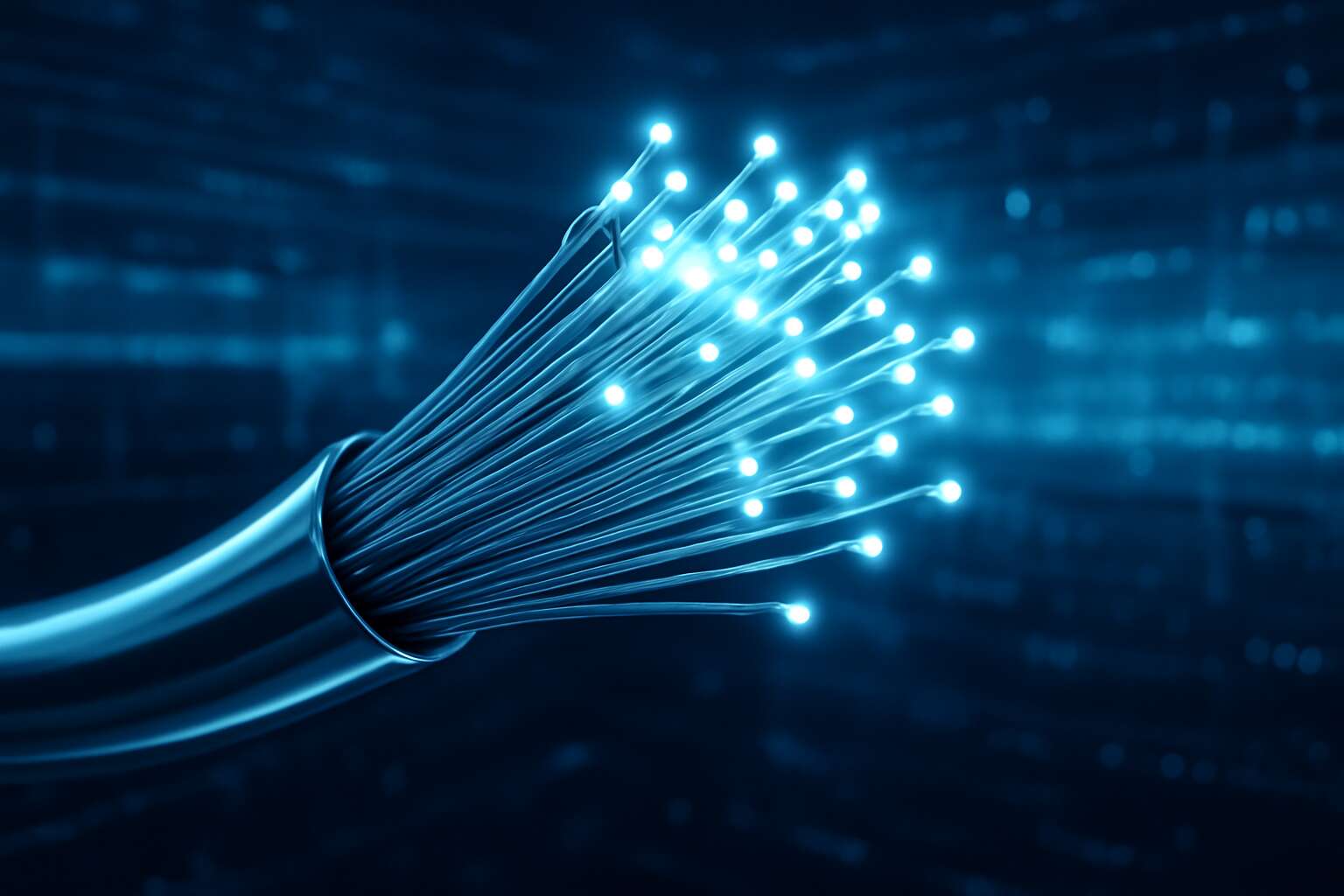
Understanding Fibre Optic Communications
Definition of Fibre Optic Communications – Explaining what fibre optic communications are and their role in modern telecommunications
In the intricate tapestry of modern telecommunications, fibre optic communications stand out as the luminous threads that connect cities, industries, and individuals with unparalleled speed and clarity. Imagine a network so refined that it transmits vast oceans of information through slender strands of glass, shimmering with the promise of a brighter, more connected future. This is the essence of what are fibre optic communications—an elegant marvel that has revolutionized how data travels across the globe.
At its core, fibre optic communications utilize thin strands of high-quality glass or plastic to carry light signals over long distances. These light signals encode data at astonishing speeds, making it possible to stream high-definition content, facilitate real-time communication, and support the backbone of global internet infrastructure. Not only do they provide faster speeds, but they also offer enhanced security and reduced signal degradation compared to traditional copper wires.
Understanding what are fibre optic communications reveals a world where information flows like a shimmering river of light, seamlessly bridging gaps and shrinking distances. In South Africa, where connectivity is vital for growth, these systems are indispensable—propelling industries forward and empowering communities through robust digital infrastructure.
History and Evolution of Fibre Optic Technology – A brief overview of how fibre optic technology has developed over the years
Fibre optic technology has woven itself into the fabric of our digital world, transforming the way we connect and share information. Its journey began in the 1970s when researchers first discovered that high-quality glass could transmit light signals over long distances without significant loss. This breakthrough laid the foundation for what are fibre optic communications—an innovation that would revolutionize global telecommunications. Over the decades, the technology evolved from simple point-to-point links to complex networks capable of supporting the massive data demands of today’s interconnected society.
From early experimental setups to the sophisticated infrastructure we see now, the development of fibre optic systems has been marked by continuous innovation. The introduction of multi-core fibres and improved light sources enabled faster, more reliable data transmission. Today, fibre optic networks form the backbone of the internet, connecting continents and empowering industries across South Africa with unmatched speed and security. As we look to the future, advancements in fibre optic technology promise even greater capacity and resilience, ensuring that the question of what are fibre optic communications remains at the forefront of technological progress.
Importance of Fibre Optic Communications in the Modern World – Highlighting their significance in internet connectivity, data transfer, and global communication networks
In an era where digital connections pulse through the veins of society like lifeblood, understanding what are fibre optic communications becomes essential. These resilient threads of glass and light have transformed our world into a shimmering web of information, where data flows faster than the eye can see. They are the silent architects behind streaming services, cloud computing, and international financial transactions—powerful arteries that sustain global connectivity.
Fibre optic technology is the backbone of modern communication networks, seamlessly linking continents and cities alike. Its significance lies not just in speed, but in the reliability and security it offers—attributes vital to South Africa’s burgeoning digital economy. As the demand for high-capacity data transfer continues to surge, fibre optic networks stand resilient, promising a future where information travels at the speed of light, illuminating the path forward in our interconnected world.
How Fibre Optic Communications Work
Basic Principles of Fibre Optic Technology – The core concepts behind light transmission through optical fibres
Imagine a world where information zips across continents faster than a cheetah chasing its prey—this is the marvel of fibre optic communications. At its core, the technology hinges on the transmission of light through ultra-thin strands of glass or plastic. These fibres act as conduits, guiding light with remarkable efficiency. The basic principle? Total internal reflection. Light enters the fibre at one end and bounces along the walls, staying contained within the core. This process minimizes signal loss and allows data to travel immense distances without degradation.
To put it simply, the core components of fibre optic technology include the core, cladding, and buffer coating. The core, where the light travels, is surrounded by the cladding, which keeps the light contained through a phenomenon known as total internal reflection. This intricate dance of physics creates a highly efficient pathway for data transfer. When considering what are fibre optic communications, it’s essential to understand that their ability to transmit large volumes of data with minimal interference makes them the backbone of modern telecommunications—especially in South Africa, where connectivity innovation is accelerating at an astonishing pace.
Components of Fibre Optic Systems – Details of fibres, transmitters, receivers, and connectors
At the heart of fibre optic communications lies a sophisticated yet elegant ecosystem of components that work together to transmit data at the speed of light. These elements are the building blocks of a technology that has revolutionized global connectivity, especially across vast landscapes like South Africa’s diverse terrain. Understanding what are fibre optic communications involves exploring each element’s role in this intricate dance of physics and engineering.
The primary components include the fibre itself, transmitters, receivers, and connectors. The fibre is the conduit—a slender strand of glass or plastic that guides light through total internal reflection. Transmitters convert electrical signals into light pulses, effectively translating data into a form that can travel through the fibre. Receivers perform the reverse function, transforming light back into electrical signals ready for processing. Connectors ensure seamless joining of fibres, maintaining the integrity of the signal across different segments of the network.
- Fibre optic cables with multiple cores for high-capacity data transmission
- Laser or LED-based transmitters that generate precise light signals
- Photodetectors in receivers that interpret incoming light signals
- Specialized connectors designed for durability and minimal signal loss
All these components work synergistically, creating a resilient and efficient system capable of handling the ever-growing demand for fast, reliable internet and data services—an essential aspect of modern life and economic development in South Africa. Truly, understanding what are fibre optic communications reveals a marvel of human ingenuity embedded in daily connectivity.
Types of Fibre Optic Cables – Single-mode vs Multi-mode fibres and their applications
Understanding how fibre optic communications work reveals a marvel of modern engineering—one that has transformed how we connect across South Africa’s vast and varied landscape. At its core, this technology relies on transmitting light through thin strands of glass or plastic, enabling data to travel at the speed of light. This method ensures fast, reliable internet and data services, crucial for economic growth and everyday life.
There are primarily two types of fibre optic cables: single-mode and multi-mode. Each serves distinct applications based on their structural differences and performance characteristics. Single-mode fibres feature a tiny core—about 8 to 10 microns—and are designed for long-distance communication. They transmit laser light, which minimizes signal loss over hundreds of kilometres, making them ideal for telecommunications between cities or across countries.
In contrast, multi-mode fibres have a larger core—around 50 to 62.5 microns—allowing multiple light modes to travel simultaneously. These cables are better suited for shorter distances, such as within data centres or office buildings, where the cost of equipment and ease of installation are more critical considerations. They typically use LED-based transmitters, which are less expensive but have a higher attenuation rate compared to laser sources.
- Single-mode fibres excel in long-haul networks, supporting vast data streams with minimal signal degradation.
- Multi-mode fibres are optimized for shorter runs, making them cost-effective for local area networks.
Understanding what are fibre optic communications involves recognizing how these different cable types influence network design and deployment. Both types play a vital role in South Africa’s push toward a more connected and technologically resilient future, underscoring their importance in modern telecommunications infrastructure.
Advantages of Fibre Optic Communications
High Data Transmission Speeds – Exploring the fast data transfer capabilities
When it comes to high-speed data transfer, fibre optic communications leave traditional copper cables in the dust—think of it as upgrading from a bicycle to a jet engine. With data transmission speeds reaching up to 100 gigabits per second in some cases, fibre optics are the unsung heroes of our connected world. They make streaming, cloud computing, and real-time communication smoother than ever, even in the most demanding digital environments.
One of the standout advantages of what are fibre optic communications is their ability to handle massive amounts of data with minimal latency. Unlike electrical signals that degrade over distance, light signals in fibre optic cables can travel thousands of kilometres without losing strength or speed. This means faster internet connections for South African businesses and households alike. For those who crave instant connectivity, fibre optics deliver a reliable, high-capacity solution that keeps pace with our insatiable digital appetites.
- High Data Transmission Speeds
- Long-Distance Signal Integrity
- Enhanced Network Reliability
All these factors make fibre optics the backbone of modern telecommunications, especially as demand for bandwidth continues to skyrocket. In essence, understanding what are fibre optic communications is key to appreciating how our digital age keeps ticking at lightning speed.
Long Distance Connectivity – Understanding how fibre optics support extended distances without signal loss
Imagine a vast, shimmering highway where light races at breathtaking speeds, carrying the whispers of data across continents without losing momentum. That is the marvel of fibre optic communications—an elegant dance of photons traversing slender glass threads, supporting extended distances with unwavering fidelity. Unlike traditional copper cables, which falter and fade over long stretches, fibre optics excel at maintaining their signal strength, making them indispensable in South Africa’s rapidly expanding digital landscape.
The secret lies in their ability to transmit light signals with minimal attenuation, ensuring that data arrives intact, no matter the journey. This long-distance connectivity empowers businesses and households alike, bridging gaps that once seemed insurmountable. For instance, fibre optic cables can span hundreds of kilometres without significant signal degradation, thanks to their unique structure and the use of laser technology. This capacity transforms the way we connect, fostering a seamless flow of information across vast terrains and urban sprawls.
In essence, understanding what are fibre optic communications reveals a technology that not only supports extended distances but also elevates the reliability and speed of global networks. As demand for bandwidth surges, these resilient lifelines become the backbone of modern telecommunications—delivering clarity, speed, and resilience in a world that never stops demanding more.
Immunity to Electromagnetic Interference – How fibre optics outperform traditional copper cables
One of the most compelling advantages of fibre optic communications is their immunity to electromagnetic interference (EMI). Unlike traditional copper cables, which are vulnerable to external electrical signals that can distort or disrupt data transmission, fibre optics operate on a different principle entirely. They use light to carry information, making them inherently resistant to electromagnetic noise that is prevalent in urban environments like South Africa’s bustling cities.
This resilience ensures the integrity of data, even in electrically noisy settings such as factories, power lines, or areas with high radio frequency interference. As a result, fibre optic communications provide a stable, reliable connection that isn’t compromised by environmental factors. This attribute is essential for critical infrastructure, telecommunications, and high-stakes data transfer where accuracy and consistency are non-negotiable.
- Superior immunity to EMI
- Enhanced signal stability over long distances
- Reduced need for signal repeaters or boosters
In essence, understanding what are fibre optic communications reveals a technology that outperforms traditional copper wiring in every aspect of electromagnetic resilience. It is this robustness that makes fibre optics the backbone of South Africa’s expanding digital future, ensuring that data flows securely and seamlessly across vast and complex networks.
Enhanced Security Features – The security benefits of fibre optic data transmission
In an era where data breaches and cyber espionage are as common as a Johannesburg traffic jam, fibre optic communications shine like a beacon of security. Unlike traditional copper cables that can be easily tapped or eavesdropped on, fibre optics offer an inherent safeguard that makes hackers think twice. The reason? Fibre optic data transmission is incredibly difficult to intercept without disrupting the entire system, alerting security teams immediately.
Fibre optic cables transmit information as pulses of light, making it nearly impossible for unwanted eyes to access sensitive data covertly. This high level of security is a game-changer for financial institutions, government agencies, and businesses handling confidential information across South Africa. Plus, the physical security of fibre optics—being harder to tap—adds an extra layer of defence.
- Data encryption becomes more effective when combined with fibre optics, further deterring cyber threats.
- Any attempt at tampering is instantly noticeable, thanks to the sensitive nature of light-based transmission.
- Fibre optics’ immunity to electromagnetic interference also prevents signal hijacking or distortion.
In essence, understanding what are fibre optic communications reveals a technology that doesn’t just deliver speed and reliability but also fortifies your data with robust security features. It’s no wonder that South Africa’s digital infrastructure increasingly relies on this resilient, encrypted highway for safeguarding information against the ever-present cyber villains.
Applications of Fibre Optic Communications
Internet and Broadband Services – How fibre optics improve home and business internet
In a world where buffering is the modern-day villain, fibre optic communications step in as the hero wielding lightning-fast speeds and unmatched reliability. When considering what are fibre optic communications, it’s clear they revolutionize internet and broadband services, especially for homes and businesses in South Africa. These high-tech marvels deliver data at speeds that make traditional copper cables look like dial-up relics. Whether you’re streaming the latest series or managing a bustling enterprise, fibre optics ensure your connection remains seamless, even during peak hours.
Fibre optics have transformed the landscape of home and business internet. They support high data transmission speeds and long-distance connectivity without the dreaded signal loss. Plus, their immunity to electromagnetic interference means your internet stays stable, no matter how many appliances are firing up around you. For businesses, this translates into smoother operations, better customer experiences, and a competitive edge in the digital age.
- Enhanced security features protect sensitive data from prying eyes, making fibre optics a trusted choice for financial institutions and government agencies.
- Rapid deployment of broadband services allows for scalable growth, accommodating increasing data demands without the need for frequent upgrades.
- Efficient handling of large data loads supports cloud computing, video conferencing, and other bandwidth-intensive applications essential for modern South African businesses.
Telecommunications Networks – The backbone of global telecommunication infrastructure
Fibre optic communications are the unsung heroes behind our hyper-connected world. These high-tech marvels form the backbone of global telecommunication networks, seamlessly linking continents and countries with lightning-fast data transfer. In South Africa, they’re instrumental in transforming how businesses and homes stay connected, supporting everything from streaming binge-fests to critical financial transactions.
What are fibre optic communications? Simply put, they involve transmitting data through thin strands of glass or plastic fibers using pulses of light. This method offers unparalleled speed and bandwidth, making traditional copper cables look like relics from the dial-up era. As data demands skyrocket, fibre optics deliver long-distance connectivity without signal degradation, even over hundreds of kilometers.
- High-speed internet services
- Global video conferencing capabilities
- Secure financial data transmission
- Support for cloud computing and data centres
In essence, fibre optic communications are the digital highways of our time, ensuring that information flows swiftly, securely, and reliably across the world’s vast network of connections.
Medical and Industrial Uses – Applications in healthcare, industrial sensing, and automation
Beyond the digital highways powering our internet, fibre optic communications are revolutionizing industries with their incredible precision and speed. In healthcare, they enable real-time imaging and diagnostics, allowing doctors to perform minimally invasive procedures with enhanced accuracy. Industrial sensing also benefits immensely; fibre optic sensors detect temperature, pressure, and vibrations in machinery, preventing costly downtimes and ensuring safety.
Automation systems in factories leverage fibre optic communications for seamless control and monitoring, boosting efficiency while maintaining high security standards. Their immunity to electromagnetic interference makes them indispensable in environments where traditional cables falter. For example, fibre optic sensors are used in critical infrastructure, where precise data collection can mean the difference between safety and catastrophe.
In South Africa, these applications are transforming sectors such as mining, manufacturing, and healthcare, illustrating just how vital fibre optic communications are for modern industry and innovation. As technology continues to evolve, understanding what are fibre optic communications reveals their crucial role in shaping a smarter, safer future.
Military and Space Communications – Use in secure and advanced communication systems
In the high-stakes world of military and space exploration, secure and reliable communication systems are nothing short of mission-critical. Enter fibre optic communications — the technological marvel that ensures classified messages stay classified and signals reach their destination faster than you can say “encrypted transmission.” Unlike traditional copper cables, fibre optics provide a level of security and clarity that makes eavesdropping nearly impossible, thanks to their immunity to electromagnetic interference and the difficulty of tapping into an optical fibre without detection.
For space missions, where every millisecond counts and data integrity is vital, fibre optic communication systems are a game-changer. They support real-time data transfer from spacecraft to ground stations, enabling scientists and engineers to monitor space vehicles and satellites with unparalleled precision. This technology is also used in military radar and surveillance systems, where robust, secure communication channels are essential to national security. In essence, understanding what are fibre optic communications reveals their pivotal role in keeping our skies and borders safe, all while pushing the boundaries of exploration and defense.
Future Trends in Fibre Optic Communications
Emerging Technologies – Advancements like Photonic Integrated Circuits and Quantum Communications
The future of fibre optic communications is shrouded in a tapestry of groundbreaking technologies that promise to reshape how data traverses our digital landscape. As the demand for faster, more secure connectivity surges, emerging innovations like Photonic Integrated Circuits (PICs) and Quantum Communications are stepping into the spotlight. These advancements are not just incremental improvements; they represent a seismic shift in the capacity and security of global networks.
Photonic Integrated Circuits, often called the “brains” behind next-generation fibre optics, dramatically reduce the size and power consumption of optical components while increasing data throughput. Meanwhile, quantum communication leverages the peculiarities of quantum mechanics to create virtually unhackable networks—an essential development in an era where data security is paramount.
- Enhanced data transfer speeds
- Ultra-secure communication channels
- Extended reach with minimal signal degradation
These cutting-edge technologies are poised to unlock new potentials, making it clearer than ever that understanding what are fibre optic communications is crucial to grasping the future of connectivity in South Africa and beyond. As these innovations mature, they could revolutionize everything from internet infrastructure to global financial systems, all woven into the intricate fabric of our interconnected world.
Potential for 5G and Beyond – The role of fibre optics in supporting next-generation wireless networks
The future of connectivity pulses with an almost otherworldly promise—fibre optics stand at the precipice of transforming how South Africa and the world weave their digital fabric. As 5G networks extend their tendrils across urban landscapes, the role of fibre optics becomes ever more vital, supporting the insatiable hunger for speed and seamless data transfer. But what are fibre optic communications truly capable of in this new era?
In essence, they are the silent arteries of the modern world—transparent channels where pulses of light carry vast oceans of information across corridors of glass and plastic. These whispering threads support not just faster internet, but also the backbone of next-generation wireless networks, enabling 5G to deliver ultra-responsive services with minimal latency. The potential doesn’t end there. As the landscape evolves, fibre optic technology promises to unlock new realms of possibility, from the sprawling infrastructure of smart cities to the remote corners of the continent.
- Enhanced data speeds that dwarf traditional cables
- Extended reach without signal degradation
- Support for the burgeoning Internet of Things (IoT) ecosystem
In this shadowy web of progress, fibre optics serve as the unseen force propelling us forward—supporting not only today’s digital demands but also shaping the infrastructure of tomorrow’s hyper-connected world. The question remains: what are fibre optic communications if not the very lifeblood of our digital evolution?
Global Expansion and Infrastructure Development – Investments and plans for widespread fibre optic deployment
The future of connectivity hinges on the relentless expansion of fibre optic infrastructure around the globe, and South Africa is no exception. As nations invest billions into deploying widespread fibre optic networks, the goal is clear: to build a resilient, fast, and secure digital landscape capable of supporting the demands of tomorrow. This global push towards infrastructure development is driven by the need for higher data speeds, longer reach, and enhanced reliability—traits that fibre optic technology uniquely offers.
With continuous investments in fibre optic deployment plans, many countries are transitioning from traditional copper cables to these ultra-fast, light-based systems. Such initiatives are vital for supporting smart city projects, expanding broadband access in rural areas, and underpinning the burgeoning Internet of Things ecosystem. As we stand on the cusp of a new era, understanding what are fibre optic communications reveals their critical role in shaping future connectivity—more robust, expansive, and capable than ever before.
Challenges and Limitations
Installation and Maintenance Costs – Discussing the costs associated with fibre optic infrastructure
Implementing fibre optic communications isn’t just a matter of laying down sleek cables; it involves significant installation and maintenance costs that can challenge even the most ambitious infrastructure projects. These costs stem from the need for specialized equipment, skilled technicians, and precise installation procedures that ensure optimal performance. In regions like South Africa, where expanding digital connectivity is a national priority, understanding these financial implications becomes crucial.
The initial investment can be substantial, especially when deploying fibre optic infrastructure across vast rural areas or urban centers. Beyond installation, ongoing maintenance—such as regular inspections, cleaning, and repairs—adds to the total cost. This ensures the system remains reliable and capable of supporting high-speed data transfer and long-distance connectivity. For organizations contemplating the deployment of fibre optic systems, weighing these expenses against the long-term benefits of immunity to electromagnetic interference and enhanced security is essential. Ultimately, these costs are a vital aspect of understanding what are fibre optic communications and their role in shaping future connectivity.
Physical Vulnerability and Damage – Risks related to fibre optic cable fragility
While fibre optic communications revolutionize how data travels across continents, they are not invincible. One of the most significant challenges lies in their physical vulnerability. The delicate glass threads—thin as a human hair—are surprisingly fragile when exposed to the elements or mishandled during installation. A seemingly minor impact or accidental cut can cause catastrophic data loss, disrupting entire networks. This fragility underscores the importance of meticulous handling and robust protective measures, especially in regions like South Africa where infrastructure faces diverse environmental stresses.
Damage to fibre optic cables isn’t always obvious at first glance. External factors such as construction activities, natural disasters, or even rodent activity can compromise the integrity of these slender conduits. For example, a careless dig without proper caution can sever a crucial fibre link, leading to costly outages. To mitigate these risks, organizations often deploy protective armouring or bury cables underground—yet, even these precautions cannot guarantee immunity from harm.
In essence, understanding what are fibre optic communications extends beyond their impressive speed and security. It also involves acknowledging their physical limitations and the necessity for vigilant maintenance. After all, a fibre optic network’s strength isn’t just in its technology but in how well it’s protected against the unpredictable forces of nature and human error. Only then can the promise of high-speed, reliable connectivity truly be realized in a landscape as dynamic as South Africa’s.
Technical Limitations – Challenges in deployment and scalability
Fibre optic communications are the backbone of our hyper-connected world, but deploying these marvels of modern technology isn’t always a walk in the park. One of the biggest hurdles? Technical limitations that challenge scalability and ease of deployment. While these slender strands of glass or plastic can transmit data at lightning speeds, laying down a vast fibre optic network across South Africa’s diverse terrain can be a logistical labyrinth.
Building extensive fibre optic infrastructure requires significant investment—not just in the cables but also in skilled technicians and equipment. For instance, deploying fibre in remote rural areas often involves complex underground or aerial installation, which can be both costly and time-consuming. Additionally, the process of splicing and connecting fibre optic cables demands precision and patience—no room for mistakes or shortcuts if you want to avoid signal degradation or future outages.
To complicate matters further, scalability remains a challenge. Expanding a fibre optic network isn’t as simple as adding more cables; it involves upgrading existing infrastructure, managing increased bandwidth demands, and ensuring compatibility across various systems. For example, as South Africa embraces emerging technologies like 5G and the Internet of Things, the demand for higher data capacity will skyrocket, pushing current fibre optic systems to their limits.
- Costly infrastructure upgrades
- Complex installation processes
- Compatibility issues with legacy systems

0 Comments