
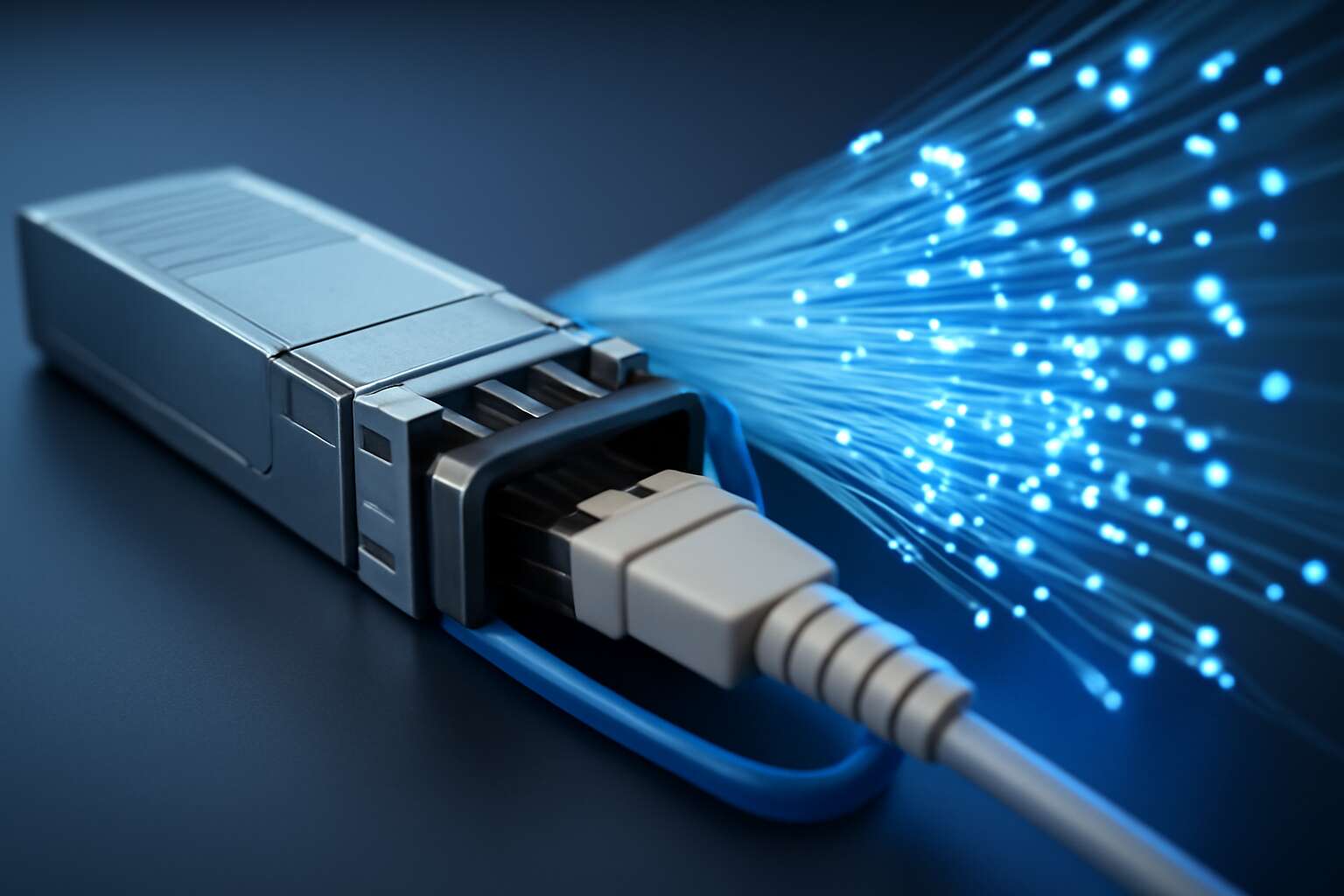
Understanding Fibre Optic Technology
What is Fibre Optic Technology?
Amidst the luminous dance of light within slender glass threads, fibre optic technology emerges as the silent hero of modern communication. It’s not just about transmitting data; it’s about weaving a tapestry of information with threads so fine, yet so powerful, that they defy the limitations of traditional copper wires. A fibre optic receiver stands at the heart of this marvel, transforming shimmering pulses into clear, intelligible signals capable of bridging continents and connecting minds.
Imagine a conduit where light is the messenger, carrying whispers of data through a labyrinth of transparent fibers. The fibre optic receiver is the vigilant guardian of this symphony, decoding the intricate dance of photons with precision and finesse. Its role is critical—ensuring that each pulse of light is translated into meaningful information, free from distortion and loss. As technology advances, these receivers become more sophisticated, capable of handling higher bandwidths and faster speeds, making the impossible seem almost inevitable.
Parts of a Fibre Optic System
Understanding the inner workings of a fibre optic system reveals a complex yet fascinating orchestration of components, each playing a vital role. At the core lies the fibre optic receiver, a device that transforms shimmering pulses of light into intelligible data. But what powers this transformation? It all begins with the other parts of the system working in harmony.
The main parts of a fibre optic system include the transmitter, the optical fibre itself, and the receiver. The transmitter converts electrical signals into light, launching them into the fibre. Inside the fibre, light travels through a labyrinth of transparent glass or plastic cores, bouncing along in a silent dance—until it reaches the fibre optic receiver. This critical component captures the light pulses and employs highly sensitive photodetectors to decode the signals.
Quality fibre optic receivers are engineered to handle high data rates with precision, ensuring that no detail is lost in translation. Their design often includes:
- Photodiodes for light detection
- Amplifiers to boost weak signals
- Filtering systems to eliminate noise
Each element works in concert, transforming the invisible dance of photons into the data we rely on—fast, clear, and reliable. As technology evolves, fibre optic receivers become more advanced, capable of managing the burgeoning bandwidth demands of today’s digital landscape. They are the silent guardians that keep the pulse of our interconnected world beating strong.
How Fibre Optic Data Transmission Works
In a world where digital data flows faster than ever, understanding how fibre optic data transmission works can feel like glimpsing into the heartbeat of our interconnected lives. Despite the shimmering simplicity of light traveling through glass, the behind-the-scenes process is a marvel of engineering and precision. When light pulses reach the fibre optic receiver, it’s akin to capturing fleeting whispers of information that need to be decoded quickly and accurately.
The fibre optic receiver plays a crucial role in this dance, transforming delicate light signals into electrical data that our devices can understand. This conversion process relies on highly sensitive photodetectors—tiny yet powerful elements that detect even the faintest light pulses. These detectors are paired with amplifiers and filtering systems to ensure that the data remains clear, even amid potential interference or noise.
- The light travels through the fibre, bouncing within the core with minimal loss, guided by the principle of total internal reflection.
- Upon arrival at the fibre optic receiver, the embedded photodiodes detect the incoming light pulses.
- The signals are then amplified and cleaned through sophisticated filtering mechanisms to preserve data integrity.
Such meticulous engineering ensures that fibre optic data transmission remains reliable, even over long distances or high bandwidth demands. The fibre optic receiver’s ability to manage these complex signals underpins the seamless digital experiences we often take for granted—yet rely on every day, from rural communities in South Africa to bustling urban landscapes.
What is a Fibre Optic Receiver?
Definition and Function
A fibre optic receiver is the crucial component in any high-speed optical communication system. Its primary role is to convert the light signals transmitted through fibre optic cables into electrical signals that can be processed by electronic devices. Without it, the data traveling at lightning-fast speeds would be useless once it reaches its destination.
Think of the fibre optic receiver as the endpoint that ensures smooth, accurate data transfer. It captures the incoming light and employs photodetectors—such as PIN diodes or avalanche photodiodes—to interpret the data encoded in the optical signals. This conversion process is vital for maintaining the integrity and clarity of the transmitted information.
- Amplifies weak signals for better processing
- Filters noise to improve signal-to-noise ratio
- Ensures compatibility with various network infrastructures
In essence, a fibre optic receiver acts as the bridge between light-based data transmission and electronic systems, making it indispensable for modern telecommunications, internet infrastructure, and data centres across South Africa. It’s the unsung hero behind the seamless connectivity we often take for granted!
Types of Fibre Optic Receivers
A fibre optic receiver is more than just a component; it is the silent sentinel at the heart of modern communication networks. It transforms delicate light signals into robust electrical data, ensuring that information flows seamlessly across vast distances. In South Africa’s expanding digital landscape, understanding what a fibre optic receiver truly does reveals its vital role in bridging the gap between light and electronic systems.
There are several types of fibre optic receivers, each tailored to different network demands. The most common are PIN photodiodes and avalanche photodiodes (APDs). PIN photodiodes are prized for their simplicity and speed, making them ideal for standard data transmission. Conversely, avalanche photodiodes amplify incoming signals, providing heightened sensitivity in low-light conditions—crucial for long-distance links or high-performance data centers.
- PIN photodiodes
- Avalanche photodiodes (APDs)
- Phototransistors
Choosing the right fibre optic receiver depends on the specific requirements of the network—be it speed, distance, or noise resilience. Each type plays a distinct role, but all serve as the vital link—converting light into the electrical signals that power our connected world. Without these sophisticated devices, the promise of high-speed fibre optic communication would remain unfulfilled, a testament to their indispensable nature in South Africa’s push towards digital excellence.
Importance in Optical Communications
A fibre optic receiver operates as the vital translator within the intricate dance of light and electronic signals that underpin modern communication networks. In the vast digital expanse of South Africa, where connectivity is no longer a luxury but a necessity, understanding the importance of this device becomes paramount. A fibre optic receiver’s primary role is to convert the delicate, high-speed light pulses transmitted through fibre optic cables into reliable electrical signals that can be processed by various devices.
This transformation is not merely a technical function; it embodies the very essence of seamless communication—bridging vast distances with precision and speed. Whether it’s supporting the burgeoning demand for high-bandwidth internet or enabling secure data transfer across sprawling urban centres, the fibre optic receiver is at the core of these advancements. Its importance in optical communications cannot be overstated, as it ensures data integrity, enhances network performance, and sustains the relentless march toward digital excellence in South Africa.
Key Components of a Fibre Optic Receiver
Photo Detector
Within the intricate dance of light and silence lies the heart of a fibre optic receiver—the photo detector. This vital component acts as the keen eye that captures the delicate whispers of transmitted data, transforming shimmering light pulses into electrical signals. It’s a marvel of precision, where quantum efficiency and response time intertwine to ensure that every bit of information is faithfully conveyed across vast distances.
At its core, the photo detector’s role is to detect the incoming optical signal with unwavering accuracy. It typically employs a photodiode—most often a PIN or avalanche photodiode—that converts photons into electrons, laying the groundwork for digital decoding. The performance of this component determines the overall fidelity of the fibre optic receiver, making it a critical element in optical communication systems.
To deepen its sensitivity and speed, a fibre optic receiver often features specialized circuitry, including transimpedance amplifiers, which amplify the minute electrical currents generated by the photo detector. The synergy of these elements ensures that data arrives sharp, clear, and swift, allowing modern communication networks to operate seamlessly. Whether through an integrated or external photo detector, the fibre optic receiver’s efficiency is what keeps our world connected in an instant.
Amplifier
Behind every seamless digital connection lies an intricate web of components, with the fibre optic receiver at its core. This device is more than just a passive element; it’s a vigilant sentinel, ensuring that light pulses—carrying our vital data—are accurately captured and converted. Its efficiency hinges on several key components working in unison to uphold the integrity of high-speed data transmission.
At the heart of the fibre optic receiver is the photo detector, which plays a pivotal role in transforming light signals into electrical ones. Complementing this is the transimpedance amplifier, a critical piece of circuitry that boosts the tiny currents generated by the photo detector. Together, these elements form a delicate yet robust system that guarantees speed and precision.
In many advanced fibre optic receivers, the synergy of these components is what enables the system to operate at remarkable distances and speeds. Whether employing a PIN photodiode or avalanche photodiode, the fibre optic receiver’s components work tirelessly behind the scenes to maintain data fidelity—an invisible guardian of our connected world!
Signal Processor
The fibre optic receiver is a cornerstone of modern optical communication systems, quietly ensuring our data travels swiftly and accurately across vast distances. It’s easy to overlook these vital components, yet they are what transform delicate light pulses into usable electrical signals. Understanding the key components of a fibre optic receiver reveals why it’s so reliable and efficient.
Central to its operation is the photo detector, which captures incoming light signals. This is paired with a transimpedance amplifier that amplifies the tiny currents produced by the photo detector. The synergy between these two parts is essential for maintaining high-speed data transmission without loss or distortion. In high-performance fibre optic receivers, components such as the photodiode, amplifier, and filtering circuitry work together seamlessly.
In many advanced systems, the performance of a fibre optic receiver depends on the precision of these elements. The ability to detect signals accurately over long distances hinges on the quality and integration of these components, making the fibre optic receiver an indispensable part of optical communication networks today.
Output Interface
The output interface of a fibre optic receiver is a vital link in the chain of optical communication. It’s where the converted electrical signals are prepared for further processing or distribution. A well-designed output interface ensures minimal signal degradation and optimal data integrity. This is especially critical in high-speed networks across South Africa, where reliable data transfer can make the difference between success and failure.
Key components of the fibre optic receiver’s output interface include the digital-to-analog converter, signal buffers, and output connectors. These elements work together to maintain a clean, stable signal that can be easily integrated into existing network infrastructure. The choice of connectors—such as SC, LC, or ST—affects ease of deployment and compatibility with various systems.
- Digital Signal Processing: Ensures data is accurately formatted for output.
- Output Connectors: Facilitate seamless connection to other devices or systems.
- Buffer Amplifiers: Stabilize the signal for consistent performance across distances.
In essence, the output interface of a fibre optic receiver plays a crucial role in achieving high-performance optical communication. Its design influences overall system reliability, especially in demanding environments like South Africa’s expanding data networks.
Types of Fibre Optic Receivers
PIN Photodiode Receivers
In the shadowed corridors of optical communication, the fibre optic receiver stands as a silent guardian—transmuting ethereal light into tangible data. Among the myriad types of fibre optic receivers, the PIN photodiode emerges as an elegant yet formidable sentinel. Its crystalline structure, sensitive to the faintest flickers of light, allows it to detect signals with uncanny precision, even amidst the gloom.
The PIN photodiode receiver is revered for its rapid response time and low noise characteristics, making it ideal for high-speed data transmission. Its core strength lies in its simple yet effective design, featuring a wide depletion region that enhances its ability to capture photons. This makes the fibre optic receiver a cornerstone in modern telecommunication networks, especially in environments demanding unwavering reliability.
For those seeking versatility, the PIN photodiode receiver can be distinguished by its ability to operate across a wide spectrum of wavelengths. It’s no exaggeration to say that the fibre optic receiver, especially the PIN variant, is the heartbeat of the digital age—pumping pulses of information through the veins of South Africa’s expanding fiber infrastructure.
APD (Avalanche Photodiode) Receivers
While PIN photodiodes dominate the scene, Avalanche Photodiode (APD) receivers are rapidly gaining recognition for their extraordinary sensitivity. These sophisticated fibre optic receivers harness the power of internal gain—amplifying the faintest signals with remarkable precision. In environments where signal strength is compromised, APDs act as vigilant sentinels, detecting even the most elusive light pulses.
Unlike standard fibre optic receivers, APD variants operate with a higher bias voltage, creating an internal avalanche effect that boosts their responsiveness. This makes them ideal for long-distance communication links where every photon counts. For added versatility, APD receivers can be tailored to specific wavelength ranges, ensuring optimal performance within the expansive spectrum of fibre optic technology.
In essence, APD fibre optic receivers are the secret weapon of high-speed, high-reliability networks—crucial to South Africa’s expanding digital infrastructure. Their ability to deliver amplified signals transforms the way data travels across the country, turning fragile light into a robust conduit of connectivity. Whether in data centres or telecommunication hubs, these receivers exemplify the cutting edge of optical innovation.
Comparison of PIN and APD Receivers
When it comes to fibre optic receiver technology, choosing the right type can feel like selecting a superhero for your network. PIN photodiode receivers are the dependable workhorses—simple, reliable, and perfect for short to medium distances. Meanwhile, APD (Avalanche Photodiode) receivers are the daring adventurers, boasting extraordinary sensitivity that can detect even the faintest photon. They operate with a higher bias voltage, creating an internal avalanche effect that amplifies signals as if by magic.
For those who need to bridge vast distances in South Africa’s sprawling digital landscape, APD fibre optic receivers often steal the show. They excel in scenarios where signal degradation is a concern, turning fragile light pulses into robust data streams. To make things clearer, here’s a quick comparison:
- PIN photodiodes are cost-effective and straightforward, ideal for shorter links.
- APD receivers offer amplified sensitivity, making them indispensable for long-distance, high-speed networks.
Ultimately, the choice hinges on your specific needs—whether you prioritize affordability or cutting-edge performance. Both types of fibre optic receiver bring their unique strengths to the table, shaping the future of high-speed, reliable connectivity in South Africa’s vibrant digital ecosystem.
Factors to Consider When Choosing a Fibre Optic Receiver
Bandwidth and Data Rate
In the realm of optical communication, selecting the right fibre optic receiver is akin to choosing the perfect symphony for a grand performance. One of the most critical factors to consider is bandwidth — the capacity to carry a broad spectrum of signals without distortion. A fibre optic receiver with a higher bandwidth ensures that data flows seamlessly, supporting the ever-growing demand for faster, more reliable connections. Equally vital is the data rate, which determines how swiftly information can be transmitted and received. In South Africa’s increasingly digital landscape, understanding these nuances can make all the difference in optimizing your network infrastructure.
When evaluating a fibre optic receiver, it’s also essential to assess the compatibility with your existing systems and future scalability. As data demands escalate, a receiver that accommodates higher data rates without compromising signal integrity becomes invaluable.
- Bandwidth capacity
- Maximum data rate
- Compatibility with current and future systems
These factors, intertwined with your specific needs, will guide you toward a choice that balances performance with longevity, ensuring your fibre optic communication remains resilient and future-proof in a rapidly evolving digital landscape.
Sensitivity
In the intricate dance of optical communication, the sensitivity of a fibre optic receiver can be the subtle yet decisive factor that determines overall network performance. Sensitivity refers to the minimum light signal level required for the receiver to produce an accurate output, ensuring that even faint signals are detected reliably. This aspect becomes particularly crucial in long-distance or complex network configurations typical of South Africa’s expansive digital infrastructure, where signal degradation is inevitable.
A highly sensitive fibre optic receiver can effectively enhance the quality of data transmission, reducing errors and improving signal-to-noise ratio. When evaluating options, it’s essential to consider how sensitivity aligns with your network’s specific environment and future expansion plans. For instance, a receiver with superior sensitivity can support lower power budgets, which translates into energy savings and increased longevity of your optical components.
Moreover, compatibility with existing systems should not be overlooked. The ideal fibre optic receiver balances sensitivity with robustness, ensuring seamless integration without sacrificing performance. As data demands escalate across South Africa’s diverse sectors, choosing a receiver with optimal sensitivity isn’t just a technical decision—it’s a strategic move toward resilient, future-ready communication networks.
Wavelength Compatibility
Wavelength compatibility is a fundamental yet often overlooked aspect when selecting a fibre optic receiver. In the complex tapestry of South Africa’s expansive digital landscape, the ability of a fibre optic receiver to operate seamlessly across specific wavelengths can determine the success or failure of a network. Different fibre optic systems are designed to transmit at particular wavelengths—commonly 850 nm, 1310 nm, or 1550 nm—and mismatched compatibility can lead to signal loss or degraded performance.
Choosing a fibre optic receiver that aligns with your network’s wavelength ensures optimal sensitivity and minimizes signal degradation. This harmony not only preserves data integrity but also enhances overall network resilience. For instance, if your infrastructure relies on long-distance transmission, selecting a receiver compatible with 1550 nm wavelength can significantly extend your reach without sacrificing quality.
In the end, wavelength compatibility isn’t merely a technical detail; it’s a strategic choice that influences the longevity and robustness of your optical communication system. When evaluating options, consider the specific wavelengths your fibre optic system employs—this foresight can prevent costly upgrades and future-proof your network’s capacity to evolve.
Insertion Loss
In the intricate realm of fibre optic communication, insertion loss is a subtle yet powerful parameter that can dramatically influence network performance. A fibre optic receiver’s ability to minimize this loss ensures that the precious signal energy isn’t squandered during transmission, maintaining clarity and strength over long distances. When selecting a fibre optic receiver, understanding the ins and outs of insertion loss becomes essential—after all, every decibel counts in preserving data integrity.
Factors such as connector quality, cable cleanliness, and system alignment all contribute to insertion loss. It’s a delicate dance—each element must be optimized to prevent signal attenuation. For those operating within South Africa’s expanding digital infrastructure, paying close attention to the insertion loss specifications of your fibre optic receiver can mean the difference between a resilient network and one plagued by degradation. In essence, prioritizing low insertion loss in your fibre optic receiver selection underscores a commitment to longevity and efficiency in optical communication systems.
Cost and Efficiency
When navigating the landscape of fibre optic technology, cost and efficiency emerge as twin pillars that define the true value of a fibre optic receiver. Opting for a high-quality receiver isn’t solely about initial expenditure; it’s about long-term performance and resilience. A more efficient fibre optic receiver can process signals with remarkable precision, reducing the need for costly repairs and replacements down the line.
In South Africa’s burgeoning digital infrastructure, balancing affordability with performance becomes crucial. A well-chosen fibre optic receiver should harmonize these elements seamlessly. For instance, considering the system’s required bandwidth and data rate, a more sophisticated receiver may justify a higher investment by delivering superior sensitivity and lower insertion loss, thereby ensuring consistent, crystal-clear transmission even over extended distances.
- Evaluate the overall efficiency of the fibre optic receiver, especially in terms of how it handles signal attenuation.
- Compare the long-term operational costs associated with different models to gauge true value.
Ultimately, selecting a fibre optic receiver that aligns with both budget and performance expectations is an act of strategic foresight—one that safeguards the integrity of your network while optimizing expenditure. As the digital era deepens its roots across South Africa, this careful calibration becomes more than a choice; it becomes a necessity for those committed to excellence in optical communication.
Applications of Fibre Optic Receivers
Telecommunications Networks
In the interconnected landscape of South Africa’s burgeoning telecommunications infrastructure, fibre optic receivers stand as silent sentinels, ensuring the seamless flow of information across vast distances. These sophisticated components are pivotal in transforming light signals into electrical signals that modern networks rely on daily. Their application extends beyond simple data transfer, shaping the backbone of high-speed internet, cable television, and even emerging smart city initiatives.
Fibre optic receivers are integral to telecommunications networks, where they facilitate reliable, high-bandwidth communication. They are especially crucial in long-haul networks, satellite communications, and data centers, where the demand for speed and precision is relentless. The ability of a fibre optic receiver to operate efficiently across various wavelengths makes it indispensable in diverse settings, from urban hotspots to rural connectivity projects. As South Africa continues to embrace digital transformation, the role of advanced fibre optic receivers becomes more vital than ever.
Data Centers
In the bustling heart of South Africa’s data-driven landscape, fibre optic receivers emerge as the unsung heroes powering the digital renaissance. Their role in data centers is nothing short of revolutionary—transforming vast streams of light into the electrical signals that sustain our interconnected world. These marvels of optical technology enable lightning-fast data transfer, ensuring that critical information travels seamlessly across continents and through underground networks.
Within the sanctum of data centers, fibre optic receivers facilitate a symphony of high-bandwidth communication. They are vital for supporting cloud services, streaming platforms, and enterprise applications that demand unwavering reliability. As the backbone of modern digital infrastructure, fibre optic receivers are designed to operate across a spectrum of wavelengths, making them indispensable in environments where speed and accuracy are paramount. Their sophisticated sensitivity and efficiency unlock new realms of possibility for South Africa’s digital expansion, ensuring that every byte of data reaches its destination with pristine clarity.
Medical Equipment
Fibre optic receivers have found a remarkable niche in the realm of medical equipment, transforming the way healthcare professionals diagnose and treat patients. These sophisticated devices enable the transmission of high-resolution images and real-time data with unparalleled clarity. Imagine a world where a surgeon can peer into the human body through minimally invasive procedures, guided by the precise, light-based signals delivered by a fibre optic receiver. This technology not only enhances diagnostic accuracy but also accelerates the delivery of critical information.
In medical imaging systems, fibre optic receivers serve as the vital link between light signals and digital data. They ensure that microscopic details captured by endoscopes or optical probes are faithfully converted into electronic signals, facilitating clearer images and more effective interventions. Their ability to operate across a spectrum of wavelengths makes them ideal for delicate applications where precision is non-negotiable. Whether used in ophthalmology, dentistry, or advanced surgical equipment, fibre optic receivers are the silent champions behind many breakthroughs in modern healthcare.
Industrial Automation
In the relentless march toward smarter, more responsive industrial systems, the integration of fibre optic receivers has become a game-changer. These devices serve as the silent sentinels within complex automation networks, translating high-speed optical signals into actionable data with astonishing fidelity. Their precision and reliability are crucial in environments where milliseconds can determine success or failure.
Industrial automation relies heavily on the seamless flow of information, and fibre optic receivers excel in environments demanding ultra-fast data rates and immunity to electromagnetic interference. Whether monitoring manufacturing processes or controlling robotic systems, these receivers provide a resilient backbone for real-time communication. Their ability to operate across wide wavelength ranges ensures compatibility with diverse sensor arrays, making them indispensable in high-stakes settings such as automotive assembly lines or heavy machinery diagnostics.
Furthermore, with the inclusion of features like high sensitivity and low insertion loss, fibre optic receivers enable industrial systems to maintain optimal performance even in challenging conditions. For example, they can effectively process signals transmitted over long distances without signal degradation, ensuring consistent operation across sprawling factory floors. This robustness is why many industry leaders are adopting fibre optic technology as the backbone of their automation infrastructure.
Advantages of High-Quality Fibre Optic Receivers
Enhanced Signal Quality
High-quality fibre optic receivers are the backbone of reliable optical communication systems, especially in regions like South Africa where data demands are surging. When the fibre optic receiver is built with precision and superior components, it significantly enhances signal quality, ensuring data arrives intact and on time. This upgrade in signal fidelity reduces errors and the need for costly retransmissions, making networks more efficient and cost-effective.
Furthermore, an advanced fibre optic receiver can handle higher bandwidths and faster data rates, which are crucial for modern applications such as cloud computing, streaming, and IoT devices. The key lies in its ability to minimize signal degradation—even over long distances—by employing sensitive photodiodes and low-insertion loss technology. These features collectively bolster the robustness of fibre optic systems, making them resilient against interference and external disturbances.
In essence, investing in a high-quality fibre optic receiver isn’t just about faster connections; it’s about securing a future-ready communication infrastructure that supports growth, innovation, and connectivity for South Africa’s digital economy. It’s the silent hero that ensures your data stays clear, consistent, and dependable every step of the way.
Long-Distance Transmission
Long-distance transmission is a critical advantage of high-quality fibre optic receivers, especially in expansive regions like South Africa where connectivity often spans hundreds of kilometers. When a fibre optic receiver is engineered with precision and top-tier components, it can maintain signal integrity over these vast distances, ensuring data remains accurate and reliable. This capability minimizes the need for repeaters and signal boosters, reducing overall infrastructure costs while boosting network resilience.
Fibre optic receivers with enhanced sensitivity and low-insertion loss technology enable longer reach without sacrificing performance. These receivers can effectively handle the challenges posed by environmental interference and signal attenuation, which are common in large-scale telecommunications and data center applications. An optimally designed fibre optic receiver not only supports high bandwidths but also ensures data arrives intact, making it indispensable for modern digital infrastructure.
- Extended reach without significant signal degradation
- Reduced infrastructure costs due to fewer repeaters
- Improved network stability and data accuracy
In essence, the advantages of a high-quality fibre optic receiver are clear: they unlock the potential for seamless, long-distance data transmission that is both efficient and cost-effective. This is especially vital for South Africa’s growing digital economy, where reliable connectivity can be the difference between progress and stagnation.
Lower Power Consumption
In an era where energy efficiency is more than just a buzzword, selecting a high-quality fibre optic receiver becomes a crucial decision for modern networks. These advanced components are designed not only for superior performance but also for significantly lower power consumption. This dual focus on efficiency and reliability makes them indispensable for South Africa’s expanding digital infrastructure, where cost savings and environmental considerations intersect.
By optimizing the internal architecture, a fibre optic receiver reduces the energy required to convert optical signals into electrical data. This means less heat generation, lower cooling requirements, and diminished operational costs—a trifecta that appeals to network operators and decision-makers alike. Moreover, the reduced power draw extends the lifespan of network equipment, lessening the frequency of replacements and maintenance.
Implementing fibre optic receivers with lower power consumption also contributes to a greener footprint for your communication infrastructure. Here’s why it matters:
- Enhanced sustainability by decreasing energy use
- Increased operational uptime due to less thermal stress
- Cost-effective scalability, especially in remote or large-scale deployments
In South Africa’s evolving digital landscape, where infrastructure investments are scrutinized for both performance and environmental impact, the choice of a fibre optic receiver with lower power consumption isn’t just practical—it’s a moral imperative. The silent efficiency of these devices ensures that as networks grow, they do so responsibly, aligning technological progress with ecological stewardship.
Future-Proofing Communications Systems
In the shadowed corridors of tomorrow’s networks, the fibre optic receiver emerges as a silent sentinel—an unassuming guardian of data’s delicate dance across vast distances. As South Africa’s digital landscape evolves into a sprawling labyrinth of connectivity, choosing a high-quality fibre optic receiver becomes an act of foresight. These devices do more than transmit signals—they future-proof entire systems, ensuring resilience amid relentless technological upheaval.
By integrating advanced components tailored for optimal performance, a fibre optic receiver withstands the tumult of increasing data demands. It adapts to higher bandwidth requirements, maintains sensitivity across diverse wavelengths, and minimizes signal degradation—traits vital to future-proofing communications systems. This resilience guarantees that as the digital horizon expands, your infrastructure remains unshaken, prepared for the unseen challenges ahead.
Moreover, the inherent reliability of premium fibre optic receivers ensures long-term operational stability. This durability translates into fewer replacements and reduced maintenance costs—an invaluable asset in remote or expansive deployments where downtime is a silent predator. With each pulse of light, these receivers forge a path into the future, where efficiency and endurance intertwine seamlessly.
Maintenance and Troubleshooting Tips
Common Issues with Fibre Optic Receivers
Fibre optic receivers, despite their robustness, are not immune to the complexities of real-world environments. Maintenance becomes crucial when subtle issues threaten to compromise the entire transmission chain. Often, problems stem from environmental factors such as dust, moisture, or physical stress on the fibre optic cable, which can cause signal degradation or loss of data. Regular inspection and cleaning of the fibre optic receiver’s connection points can prevent many common issues before they escalate.
When troubleshooting a fibre optic receiver, it’s essential to approach the problem methodically. Common issues include inconsistent signal strength, high bit error rates, or unexpected fluctuations in data throughput. These symptoms may indicate misalignment, connector contamination, or even an aging photodiode. To diagnose effectively, technicians should consider performing a power meter test and inspecting for physical damage. In some cases, replacing the fibre optic receiver or its components, such as the PIN photodiode or avalanche photodiode, becomes necessary to restore optimal performance.
- Check for physical damage or misalignment.
- Clean all connection points meticulously.
- Test signal strength using appropriate measurement tools.
Understanding the intricacies of a fibre optic receiver’s operation allows for more precise troubleshooting. Remember, even the tiniest flaw can ripple through the system, affecting long-distance transmission and overall network integrity. Vigilance in maintenance ensures the resilience and longevity of fibre optic communication infrastructure in South Africa’s demanding environments.
Testing and Diagnostics
In the world of fibre optic communication, precision is paramount—especially when it comes to maintaining the integrity of your fibre optic receiver. Regular testing and diagnostics are essential to catch subtle issues before they escalate into costly downtime. Using a portable optical power meter, technicians can accurately measure the signal strength, revealing whether the fibre optic receiver is operating within optimal parameters. This simple yet powerful diagnostic tool helps identify misalignments or connector contamination that might otherwise go unnoticed.
Understanding how to troubleshoot effectively involves a methodical approach. Start with a visual inspection—look for physical damage, cracks, or misalignment of the connector ferrules. Clean all connection points meticulously using proper fibre optic cleaning kits. Dirty or damaged connectors are often the root cause of degraded signals. For more in-depth diagnostics, employing an optical time-domain reflectometer (OTDR) can pinpoint issues like insertion loss or breaks along the fibre route, ensuring your fibre optic receiver functions flawlessly across demanding environments.
- Test signal strength with a calibrated power meter.
- Inspect physical connections for damage or contamination.
- Use OTDR readings for detailed fault analysis.
This comprehensive approach to testing and diagnostics ensures the resilience of your fibre optic receiver, safeguarding long-distance transmission and overall network performance in South Africa’s challenging terrains. Vigilant maintenance and precise troubleshooting are the keys to unlocking the full potential of your fibre optic infrastructure, ensuring it remains reliable and efficient for years to come.
Best Practices for Longevity
Proper maintenance and troubleshooting are the cornerstones of extending the lifespan of your fibre optic receiver. In South Africa’s diverse terrain, where environmental factors can challenge network stability, adopting best practices ensures resilient performance. Regular inspections, coupled with meticulous cleaning of connectors using certified fibre optic cleaning kits, can prevent contamination that often leads to signal degradation.
Monitoring signal strength with calibrated power meters provides an immediate snapshot of your fibre optic receiver’s health. For more detailed diagnostics, deploying an optical time-domain reflectometer (OTDR) can reveal subtle faults—like insertion loss or fibre breaks—that might escape cursory checks.
A strategic approach involves understanding common issues—such as connector misalignment or physical damage—and addressing them proactively. Incorporating these practices not only prolongs equipment life but also guarantees optimal data transmission across long distances, even in challenging environments. Vigilant maintenance combined with precise troubleshooting transforms a fibre optic receiver from a fragile component into a robust pillar of your network infrastructure.
Future Trends in Fibre Optic Receiver Technology
Emerging Innovations
As the digital landscape evolves at a breathtaking pace, future advancements in fibre optic receiver technology promise to revolutionize how data is transmitted across South Africa’s burgeoning networks. Emerging innovations are focusing on enhancing sensitivity and increasing bandwidth, making high-speed data transfer more reliable than ever before. Experts predict that next-generation fibre optic receiver systems will leverage quantum dot detectors, unlocking unprecedented levels of precision and efficiency.
One of the most exciting trends is the integration of artificial intelligence with fibre optic receivers. This synergy enables real-time diagnostics, adaptive signal processing, and smarter error correction, significantly reducing latency and boosting overall network performance. Additionally, the development of ultra-compact, energy-efficient fibre optic receivers is set to transform applications in medical equipment and industrial automation, where space and power conservation are crucial.
To stay ahead, manufacturers are also exploring innovative materials and nanotechnologies that promise greater wavelength compatibility and lower insertion loss. These advancements will ensure that fibre optic receivers remain resilient and adaptable for future-proofing communications systems, fueling South Africa’s digital infrastructure with faster, more reliable connections.
Integration with 5G and Beyond
As South Africa’s digital horizons expand with relentless fervor, the future of fibre optic receiver technology emerges from the shadows like a spectral force—poised to redefine the very fabric of connectivity. With the proliferation of 5G networks, these receivers are evolving into sophisticated sentinels of speed and sensitivity, whispering promises of ultra-reliable data transmission across untamed landscapes and bustling cities alike.
Emerging trends suggest that the next-generation fibre optic receiver will harness quantum dot detectors, unlocking levels of precision once thought to belong to the realm of science fiction. This leap forward promises not only to amplify bandwidth but to do so with a grace that minimizes signal loss and maximizes efficiency. The integration of artificial intelligence further elevates these systems, enabling real-time diagnostics, adaptive signal processing, and error correction—making the transmission of data more resilient and smarter than ever before.
- Ultra-compact designs that merge seamlessly into space-constrained environments.
- Materials and nanotechnology innovations that push wavelength compatibility into uncharted territory.
- Energy-efficient architectures that lower power consumption without sacrificing performance.
In the shadows of these advancements, the fibre optic receiver becomes a vital conduit—an unseen guardian ensuring that South Africa’s networks remain resilient in the face of an ever-demanding digital landscape. As the boundaries of technological possibility continue to blur, these devices will be at the heart of a new era—where speed, reliability, and adaptability forge the path forward, illuminating the dark corridors of connectivity with a spectral glow that promises the future is brighter than ever before.
Improvement in Sensitivity and Bandwidth
As South Africa charts its course toward a more connected future, the evolution of fibre optic receiver technology stands at the forefront of this digital revolution. The next wave of innovation promises remarkable improvements in sensitivity and bandwidth, unlocking new possibilities for data transmission across both urban hubs and remote rural areas. These advancements are not just incremental; they are transformative, capable of supporting the burgeoning demands of 5G and beyond.
Emerging trends highlight the integration of cutting-edge materials like quantum dot detectors, which vastly enhance the precision of fibre optic receivers. This allows for higher data rates while reducing signal loss—a crucial factor in maintaining robust connections over long distances. Additionally, the adoption of artificial intelligence within these systems facilitates real-time diagnostics and adaptive error correction, ensuring that data flows seamlessly even under challenging conditions.
In the landscape of future fibre optic receiver development, several key innovations are shaping the trajectory. For instance, ultra-compact designs are now being engineered to fit into space-constrained environments, making them ideal for dense urban infrastructure and portable applications. Moreover, advancements in nanotechnology are enabling wavelength compatibility in previously uncharted spectral ranges, broadening the scope of fibre optic communication networks. These developments are complemented by energy-efficient architectures that lower power consumption without compromising performance, a vital attribute for sustainable growth.
0 Comments