
Understanding Fibre Optic Undersea Cables
What Are Fibre Optic Undersea Cables?
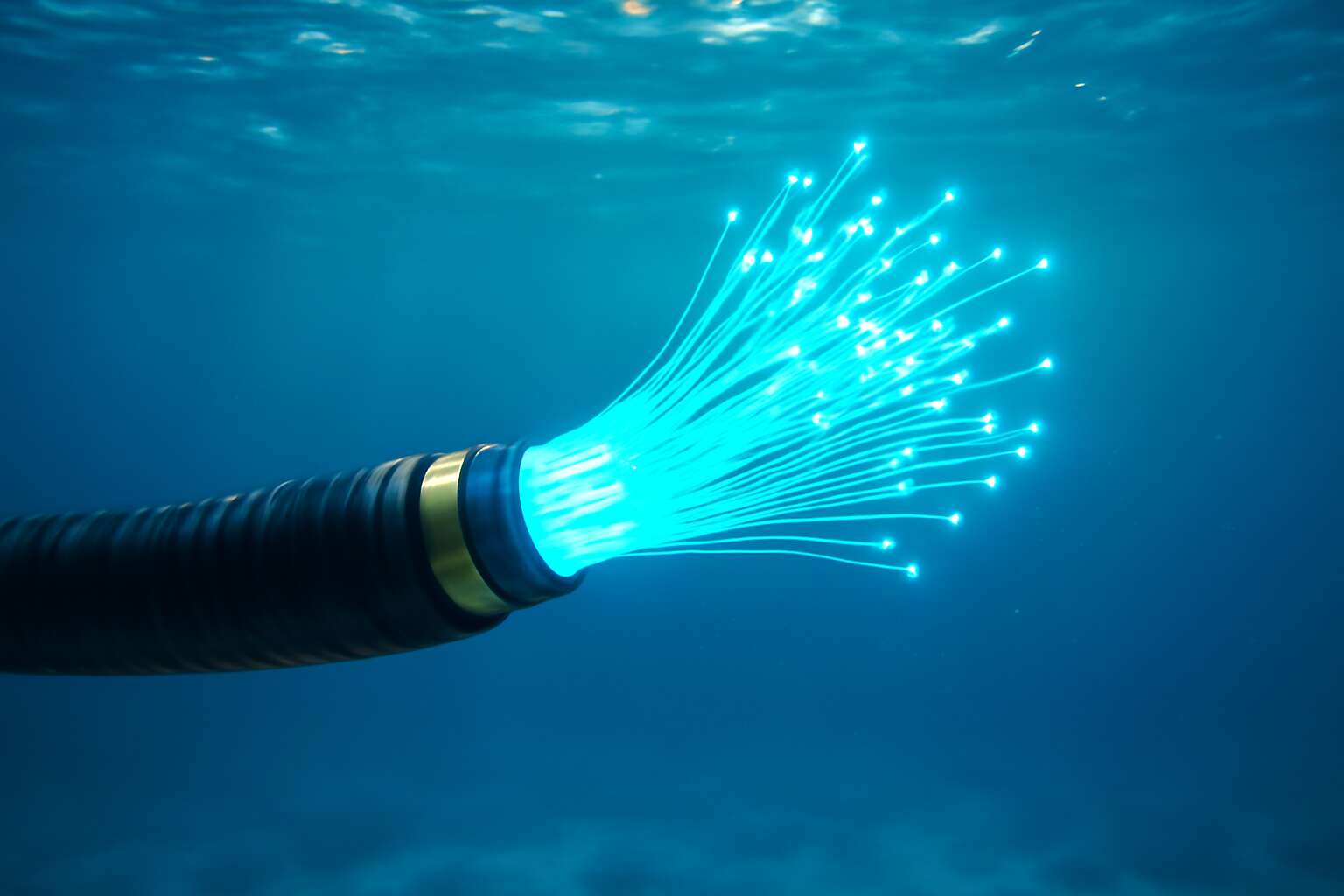
Under the vast, mysterious depths of our oceans lie an intricate web of connectivity—fibre optic undersea cables that carry over 95% of international data traffic. These silent giants are the backbone of global communication, yet their complexity remains largely unseen. What exactly are fibre optic undersea cables? They are specialised conduits that transmit information through pulses of light, harnessing the power of thin strands of glass or plastic to carry massive amounts of data across continents at near-instant speeds.
Constructed with remarkable precision, each fibre optic undersea cable is a marvel of engineering. They consist of multiple layers designed to withstand extreme pressure, corrosion, and the relentless motion of the ocean. Inside, tiny glass fibres are bundled together, each acting as a conduit for light signals that travel at speeds close to that of light itself. The real magic lies in their ability to transmit data with minimal loss over thousands of kilometres, making global connectivity seamless and reliable.
- High-capacity data transmission
- Resilience against harsh underwater conditions
- Critical infrastructure for international communication
History and Evolution of Undersea Cables
From the earliest days of undersea communication, the evolution of fibre optic undersea cables has been nothing short of poetic—a testament to human ingenuity and relentless pursuit of connection. The journey began with simple copper cables, their limited capacity akin to whispering across vast oceans. But as global demands swelled, the need for faster, more resilient infrastructure became undeniable.
In the late 20th century, the advent of fibre optic technology revolutionised this domain. These slender strands of glass or plastic, capable of transmitting data at near-light speeds, transformed undersea cable networks into the arteries of our digital world. The transition from traditional copper to fibre optic undersea cables marked a new era, characterised by increased capacity and unprecedented reliability.
Today, the intricate web of fibre optic undersea cables weaves through the ocean’s depths, connecting continents with a silent, shimmering promise of seamless communication. Innovations continue to emerge, extending their reach and resilience, ensuring that no matter how turbulent the seas, global connectivity remains steadfast. It’s a story of evolution—a dance of technology and nature entwined in a quest for boundless communication.
Importance of Undersea Communication Infrastructure
Within the vast, undulating blue expanse of our planet’s oceans lies an intricate web of connectivity—a silent symphony conducted by fibre optic undersea cables. These marvels of engineering are the lifelines that sustain global communication, powering everything from financial markets to social networks. Without them, our interconnected world would lose its pulse, retreating into isolation.
The importance of undersea communication infrastructure cannot be overstated. It’s the unseen backbone that ensures rapid data transfer across continents, enabling instantaneous exchange of information. As the backbone of the digital age, fibre optic undersea cables facilitate business, foster innovation, and bridge cultures in ways previously deemed impossible.
In this relentless quest for seamless connectivity, the resilience of these cables is paramount. Innovations like reinforced armouring and advanced routing help withstand the relentless forces of nature and human activity. Truly, the fibre optic undersea cable is not merely a conduit of data but a testament to human perseverance and our unyielding desire to connect.
Technical Aspects of Fibre Optic Undersea Cables
Design and Construction
Designing and constructing a fibre optic undersea cable is a marvel of modern engineering, combining precision with resilience. Each cable must withstand the relentless pressures of the deep ocean, where sunlight ceases and darkness reigns. Engineers employ advanced materials like high-strength steel armouring and specialised protective coatings to shield the delicate glass fibres from physical damage and corrosion. The process involves meticulous layering—each component serving a vital purpose in ensuring durability and performance.
To ensure optimal transmission, the core of the fibre optic undersea cable contains ultra-pure glass fibres that transmit data via light signals with minimal loss. Surrounding these fibres, a buffer and strength members provide flexibility and strength, allowing the cable to endure tectonic shifts and ocean currents. During manufacturing, precision technology is used to splice and test the fibres, guaranteeing seamless data flow across thousands of kilometres. This intricate interplay of design elements is what enables these cables to function reliably beneath the world’s oceans, acting as the silent arteries of global connectivity.
Types of Fibre Optic Cables
When considering the technical marvel that is the fibre optic undersea cable, one quickly realises that not all cables are created equal. These underwater arteries come in a variety of designs tailored to withstand the unforgiving ocean depths and seismic activity. The two primary types include the single-mode and multimode fibre optic undersea cables, each with distinct characteristics suited to specific transmission needs.
Single-mode fibres are the elegant high-speed sprinters, transmitting data via a solitary light mode over vast distances with minimal loss. In contrast, multimode fibres, resembling a bustling city street, carry multiple light modes simultaneously, suitable for shorter, high-capacity links. The choice between these types hinges on the desired data throughput and distance, ensuring the network remains resilient and efficient under the waves.
Additionally, some fibre optic undersea cables incorporate advanced features such as:
- Enhanced armouring to combat physical threats from fishing, anchors, or accidental damage.
- Specialised coatings for corrosion resistance, vital in the salty embrace of the ocean.
- Amplification systems embedded at intervals to boost signal strength over thousands of kilometres.
This nuanced variety of fibre optic undersea cable types exemplifies the ingenuity required to keep our interconnected world spinning smoothly beneath the surface. Truly, the complexity behind the scenes is as impressive as the technology itself—delivering data with grace and precision across the planet’s most formidable frontier.
Core Components and Materials
The backbone of global connectivity lies deep beneath our oceans, where fibre optic undersea cables form the silent arteries that carry the world’s data traffic at near-light speeds. The core components of these marvels are crafted with meticulous precision to withstand the relentless pressures and corrosive saltwater environment of the deep sea. At their heart, high-purity glass or plastic fibres serve as the medium for light transmission, enabling vast amounts of information to travel seamlessly across continents and oceans.
Surrounding these delicate fibres, robust protective layers ensure durability and resilience. Typically, a fibre optic undersea cable features multiple layers of materials, including polyethylene insulation, steel armouring, and specialised coatings that resist corrosion. These materials work in unison to shield the fibres from physical threats like fishing activity, anchor damage, and seismic vibrations.
Moreover, some cables incorporate advanced amplification systems at calculated intervals. These systems are essential for maintaining signal integrity over thousands of kilometres, ensuring data remains crisp and reliable across great distances. The integration of these components exemplifies the sophisticated engineering behind the fibre optic undersea cable, highlighting its role as an indispensable conduit in our interconnected world.
Bandwidth and Data Transmission Capabilities
The incredible bandwidth capacity of fibre optic undersea cables is truly a marvel of modern engineering. These cables can transmit terabits of data every second, powering everything from global financial markets to streaming services used by billions. Their ability to handle vast amounts of information with minimal latency makes them the backbone of our interconnected world.
To maintain such high data transmission capabilities over thousands of kilometres, fibre optic undersea cables incorporate sophisticated amplification systems at strategic intervals. These amplifiers boost the light signals, ensuring data remains clear and accurate across vast distances. The design intricacies, including the choice of core materials and protective layers, directly influence the capacity and reliability of these undersea lifelines.
In essence, the technical prowess behind fibre optic undersea cables is a testament to human ingenuity—an invisible network of resilience and speed that keeps our world turning. The seamless flow of information is what enables us to connect, communicate, and innovate without interruption.
Installation and Maintenance of Undersea Cables
Laying and Deployment Process
Installation and maintenance of fibre optic undersea cable is a complex process requiring meticulous planning and precision. Once the cable reaches the designated seabed area, specialised ships equipped with dynamic positioning systems gently lay the cable along pre-determined routes. This process minimises environmental impact and reduces the risk of damage from underwater currents or geological activity. During deployment, technicians continuously monitor the cable’s tension and position to prevent any undue stress that could compromise its integrity.
Regular maintenance is crucial to ensure the fibre optic undersea cable continues to operate optimally. This often involves remotely operated vehicles (ROVs) that inspect and perform repairs on sections of the cable in deep waters. When faults occur, they are swiftly located using advanced diagnostics, and repairs are carried out with minimal disruption. This seamless balance of deployment and ongoing maintenance underscores the importance of resilient infrastructure in global communications.
Cable Burial and Protection
The installation and maintenance of a fibre optic undersea cable demand meticulous attention to detail, especially when it comes to cable burial and protection. Once the cable reaches the seabed, specialists employ a variety of techniques to safeguard it from natural hazards and human interference. Proper burial is essential to minimise environmental impact and ensure the longevity of the infrastructure.
Undersea cables are typically buried beneath the seabed using specialised ploughs or remotely operated vehicles (ROVs). These tools gently dig trenches, allowing the cable to be laid securely within the sediment. This process not only protects the cable from fishing activities and ship anchors but also reduces the risk of damage from underwater currents and geological shifts.
- Advanced diagnostics help locate faults swiftly, enabling rapid repairs.
- Regular inspections using ROVs ensure the cable remains in optimal condition.
- Protective measures such as armouring or coating can be applied in vulnerable areas.
Effective cable burial and protection are crucial for maintaining the resilience of a fibre optic undersea cable, ensuring seamless global communication networks that underpin our digital world. The combination of innovative technology and careful planning continues to push the boundaries of undersea infrastructure resilience.
Challenges During Installation
The installation of a fibre optic undersea cable is a ballet of precision, patience, and resilience. Beneath the ocean’s surface, the challenges are not merely technical but existential—each step a test of human ingenuity against nature’s unpredictable temperament. The process demands meticulous planning and unwavering focus, yet unpredictable elements often threaten to derail even the most carefully orchestrated operations.
During installation, unforeseen obstacles such as shifting seabed terrain, underwater currents, and unpredictable geological formations can complicate progress. Specialists must navigate these hazards with advanced technology and adaptive strategies, often employing
- dynamic survey methods
- real-time data monitoring
- specialist remotely operated vehicles (ROVs)
to ensure the cable’s safe deployment. The delicate balance between technological precision and environmental sensitivity becomes a moral choice—protecting the fragile marine ecosystem while delivering vital connectivity.
Every fibre optic undersea cable installation becomes a testament to human resilience and innovation, revealing that beneath the ocean’s vast, indifferent expanse lies an unyielding pursuit of connection and progress. These challenges, daunting as they are, underscore the profound responsibility we bear in bridging worlds—one cable at a time.
Routine Maintenance and Repairs
While the initial installation of a fibre optic undersea cable is undoubtedly a feat of engineering finesse, maintaining its integrity over decades is an even greater challenge. Routine maintenance and repairs are vital to ensure uninterrupted global connectivity, especially as these cables traverse some of the most inhospitable environments on Earth. It’s a delicate dance, balancing technological prowess with environmental sensitivity, all while the world’s data keeps flowing.
Scheduled inspections often involve remotely operated vehicles (ROVs), which delicately examine the cable’s condition without disturbing the surrounding marine life. When damage occurs—be it from undersea earthquakes, fishing activities, or accidental trawling—repair missions are swift and precise. An ordered approach is crucial, often following a sequence such as:
- Locating the fault using specialised diagnostic tools
- Mobilising ROVs or specialised cable repair ships
- Carefully retrieving the damaged section
- Splicing and re-burial to restore the cable’s protective layer
These repair operations reinforce the resilience of the fibre optic undersea cable network, demonstrating that even in the face of nature’s unpredictability, human ingenuity remains steadfast. It’s a testament to both our technological advancements and our unwavering commitment to global connectivity—one repair at a time.
Global Network Connectivity and Impact
Major Undersea Cable Routes and Landing Points
In the vast and intricate web of global connectivity, fibre optic undersea cable routes form the backbone of our digital civilisation. These shimmering arteries crisscross the ocean floors, linking continents with astonishing speed and reliability. As the silent giants of communication, they enable everything from international financial transactions to real-time video conferencing, shaping the pulse of modern life.
Major undersea cable routes are strategically situated along key corridors, connecting economic hubs and underserved regions alike. Landing points—where these cables breach the ocean floor—serve as vital nodes, often nestled in coastal cities that blossom into technological centres. The precise placement of these points is no accident but a carefully orchestrated dance to optimise connectivity and resilience.
Consider the following critical undersea cable routes that underpin our global network:
- The Atlantic Crossing—linking North America and Europe, facilitating nearly half of the world’s international data traffic.
- The Asia-Pacific Corridor—stretching from Japan and South Korea to Southeast Asia and Australia, vital for regional commerce.
- The Trans-Pacific Route—spanning the Pacific Ocean, connecting the United States with Asian economies.
Each route and landing point embodies a story of engineering marvel and geopolitical strategy, woven into the fabric of our interconnected world. Their strategic positioning ensures that the fibre optic undersea cable network remains resilient against natural and man-made disruptions, perpetually expanding the horizon of global network connectivity.
Role in International Data Transmission
Global network connectivity is the invisible thread binding our digital world, yet beneath the ocean’s surface lies a marvel of engineering: the fibre optic undersea cable. These cables are the lifelines that enable rapid, reliable international data transmission, ensuring our financial markets, social platforms, and communication networks operate seamlessly across continents. Without them, the modern fabric of globalisation would unravel.
Every day, countless terabytes of information traverse these shimmering strands, connecting distant corners of the Earth in a dance of electrons and light. They serve as the backbone for essential services—banking, healthcare, emergency response—making the impossible possible. Because of this, the resilience and strategic placement of undersea cables are paramount; they withstand natural calamities and geopolitical challenges alike.
In fact, the importance of fibre optic undersea cables cannot be overstated. Their strategic routes—such as the Atlantic Crossing, the Asia-Pacific Corridor, and the Trans-Pacific Route—are carefully chosen to optimise global data flow.
- Ensuring uninterrupted communication
- Supporting economic growth
- Fostering international cooperation
It’s a network woven into the very fabric of our interconnected lives, shaping the future of global communication every second of every day. Truly, these silent giants are the heartbeat of worldwide connectivity.
Impact on Global Internet Speed and Reliability
In our hyper-connected era, the backbone of global network connectivity pulses beneath the waves, harnessed by the incredible marvel that is the fibre optic undersea cable. These shimmering arteries facilitate an astonishing flow of data—terabytes every second—linking continents with a precision that borders on the mythical. The impact on global internet speed and reliability is profound; messages that once took days now arrive in milliseconds, transforming how we conduct business, share knowledge, and foster international cooperation.
The strategic placement of these cables ensures that data traverses the shortest, most efficient routes—be it across the Atlantic Crossing or through the Asia-Pacific Corridor—optimising the entire ecosystem of global communication. The resilience of fibre optic undersea cables against natural calamities and geopolitical turbulence guarantees that our digital world remains uninterrupted, enabling everything from emergency responses to international stock exchanges to operate seamlessly. Truly, these silent giants are the invisible threads weaving our interconnected universe into a cohesive, vibrant tapestry.
Economic and Strategic Significance
Global network connectivity hinges on a web of fibre optic undersea cables that stretch across the planet’s most treacherous waters. These aquatic highways are the backbone of international communication, enabling instant data transfer between continents. Without them, the seamless flow of information that modern society relies on would grind to a halt. From financial markets to diplomatic negotiations, the impact of these cables is profound and undeniable.
Strategically placed to optimise data routes, fibre optic undersea cables underpin our interconnected world. They ensure that critical information travels the shortest, most efficient paths—whether crossing the Atlantic or weaving through the Asia-Pacific region. Their resilience against natural disasters and geopolitical upheavals keeps the digital engine running smoothly, even when Mother Nature throws her tantrums. As a result, global economies benefit from uninterrupted data flow, fostering innovation and collaboration on an unprecedented scale.
- Enhanced international trade
- Strengthened diplomatic ties
- Boosted economic growth through reliable digital infrastructure
In essence, fibre optic undersea cables are the silent giants powering the strategic and economic vitality of our connected age. They are not just cables buried beneath the ocean floor—they are the lifelines of modern civilisation, weaving a tapestry of global unity and progress. Their strategic importance continues to grow, making them indispensable in the digital economy’s sprawling ecosystem.
Future Trends and Innovations
Emerging Technologies in Fibre Optic Cables
The horizon of fibre optic undersea cable technology is shimmering with possibilities that challenge our very understanding of connectivity. Emerging innovations are not merely incremental; they are revolutionary leaps that could redefine global communication. Advances in materials science and nanotechnology promise to enhance the durability and capacity of these cables, allowing them to withstand the relentless pressure and corrosion of the ocean’s depths. Such progress is vital as demand for bandwidth skyrockets, driven by the insatiable appetite for data in our digital age.
Future trends suggest a shift towards more intelligent and adaptive systems. For example, incorporating artificial intelligence into the management of fibre optic undersea cable networks could enable real-time fault detection and dynamic rerouting, minimising downtime and maximising efficiency. Moreover, innovative deployment techniques, such as self-healing cables and modular components, are on the horizon, promising to reduce environmental impact and lower maintenance costs. These technological marvels forge a path towards a more resilient, high-capacity undersea communication infrastructure that can meet the world’s growing need for swift, reliable data transmission.
- Increased bandwidth capacities to support global data traffic
- Enhanced durability for longer lifespan in harsh oceanic environments
- Integration of renewable energy sources for sustainable operation
- Deployment of smarter, self-monitoring fibre optic undersea cables
Advancements in Deployment Techniques
Future advancements in deploying fibre optic undersea cables are set to revolutionise global connectivity in ways we’ve only begun to imagine. Cutting-edge techniques are pushing the boundaries of what’s possible beneath the ocean’s surface, promising faster, more resilient networks that can withstand the relentless pressures of the deep. One of the most promising innovations is the development of self-healing cables, which can automatically repair minor faults without human intervention, significantly reducing downtime and operational costs.
Additionally, modular components are gaining traction, allowing for easier upgrades and maintenance. These clever designs not only streamline deployment but also minimise environmental impact—an increasingly vital consideration in today’s eco-conscious world. Deployment techniques are evolving rapidly, with some projects exploring autonomous underwater vehicles to lay and inspect cables with unprecedented precision.
- Self-healing cable technology
- Modular, upgradeable systems
- Autonomous deployment methods
These innovations are shaping a future where fibre optic undersea cables are smarter, more durable, and more adaptable than ever before.
Integration with Satellite and 5G Networks
As global data demands surge into the stratosphere, the future of fibre optic undersea cables is poised for a technological renaissance. Seamlessly integrating with satellite and 5G networks, these undersea marvels are evolving beyond mere conduits of light—becoming pivotal nodes in a hyper-connected world. The convergence of fibre optic undersea cable technology with satellite systems promises unprecedented coverage, bridging remote regions with lightning-fast internet speeds and bolstering resilience against terrestrial disruptions.
Innovative integration strategies include deploying hybrid networks that connect terrestrial fibre optic undersea cables with low-earth orbit satellites, creating a resilient and flexible ecosystem for international data transmission. This synergy not only enhances global connectivity but also reduces latency—a critical factor in supporting autonomous vehicles, IoT devices, and real-time applications. As these technologies intertwine, the landscape of undersea communication infrastructure is set to transform dramatically, ensuring faster, more reliable links across even the most challenging terrains.
Future trends also highlight the deployment of sophisticated systems such as modular upgradeable fibre optic undersea cables, which enable seamless enhancements without prolonged outages. These advancements are complemented by the rise of autonomous deployment methods, where remotely operated vehicles lay and inspect cables with extraordinary precision. Such innovations are instrumental in creating a future where fibre optic undersea cable networks are not only more resilient but also more adaptable to the rapidly changing demands of global data exchange.
Environmental Considerations and Sustainability
The horizon of fibre optic undersea cable technology is shimmering with promise, steering us towards a future where innovation and sustainability dance in harmony. As these marvels of engineering evolve, a wave of environmentally conscious design principles is gaining momentum, ensuring that the quest for faster connectivity does not come at the earth’s expense.
Emerging trends highlight the deployment of modular, upgradeable fibre optic undersea cables, which allow seamless enhancements without the disruptive need for overhauling entire systems. These advancements extend the lifespan of undersea networks and significantly reduce waste—an essential step in safeguarding our planet’s fragile ecosystems. Autonomous deployment methods, using remotely operated vehicles, are also revolutionising the process, laying and inspecting cables with minimal environmental footprint and greater precision.
Environmental considerations are at the core of modern fibre optic undersea cable projects. Developers increasingly prioritise sustainable materials and eco-friendly installation practices, recognising that preserving oceanic habitats is paramount. For instance, some projects incorporate biodegradable protective layers and employ less invasive cable burial techniques to minimise disturbance to marine life.
In this burgeoning era of innovation, the focus on sustainability is not merely ethical but strategic. As the demand for global data exchange intensifies, so does the urgency to craft resilient, environmentally harmonious infrastructure. The future of fibre optic undersea cable is undeniably entwined with a deep respect for our planet’s delicate balance—an enchanting blend of technological ingenuity and ecological stewardship that will shape the connective fabric of tomorrow.
Challenges and Security Concerns
Vulnerabilities and Risks
While fibre optic undersea cables are the backbone of global connectivity, they are not without vulnerabilities. These intricate networks face a range of security concerns that could have widespread repercussions. Physical threats, such as accidental damage from fishing or anchoring, remain significant, but deliberate sabotage or espionage are equally pressing issues. As undersea cable routes often pass through geopolitically sensitive regions, the risk of targeted attacks increases. Cyber threats can exploit vulnerabilities in the cable’s data transmission, potentially intercepting or disrupting sensitive information.
Security measures are crucial, yet the risks persist. For example, the potential for cable tapping or tampering poses a real danger, especially since these fibre optic undersea cables carry vast amounts of data daily. To mitigate these risks, some organisations advocate for constant monitoring and advanced encryption techniques. Nonetheless, the challenge remains formidable — safeguarding these vital arteries of communication requires a mix of technological innovation and strategic resilience. If compromised, the impact can ripple across economies and governments, highlighting just how delicate our global information infrastructure truly is.
Environmental Hazards
While fibre optic undersea cables are marvels of modern engineering and vital to global connectivity, they face a raft of environmental hazards that threaten their integrity. These delicate structures are vulnerable to natural phenomena such as underwater earthquakes, tsunamis, and shifting seabed currents. An unexpected tremor can cause misalignment or rupture, disrupting communication networks that underpin financial markets, healthcare, and national security. The unpredictable nature of these environmental hazards makes safeguarding these cables an ongoing challenge.
In addition to natural threats, human activities pose significant risks to fibre optic undersea cables. Shipping lanes, fishing zones, and offshore construction often intersect with cable routes, increasing the chances of accidental damage. For instance, trawling and anchoring are notorious for snagging or severing cables, sometimes with devastating consequences. To address these concerns, some organisations advocate for detailed seabed mapping and the implementation of protective measures, such as cable burial and robust armouring. Nonetheless, the persistent threat of environmental hazards underscores the need for innovative strategies to preserve this fragile yet indispensable infrastructure.
Security Threats and Espionage
In the shadowy depths of our planet’s vast oceans, fibre optic undersea cables serve as arteries of global communication, silently connecting continents with whispering streams of data. Yet, behind the marvel of their engineering lies a complex web of security challenges that threaten their integrity. These cables are tantalising targets for cyber espionage, with potential adversaries seeking to tap into the vast reservoirs of information coursing beneath the waves. Such covert operations can compromise sensitive diplomatic communications, financial transactions, and classified military intelligence, making the security of fibre optic undersea cables a matter of national importance.
Threats to these submerged lifelines are not solely digital. Physical sabotage and espionage remain persistent concerns. Espionage agents, cloaked in the guise of benign maritime activity, have been suspected of attempting to intercept or damage fibre optic undersea cables to gather intelligence or destabilise critical infrastructure. The clandestine nature of these threats underscores the necessity for advanced surveillance and protective measures. Some organisations deploy sophisticated cable security systems, while others advocate for increased physical protection through cable armouring and secure routing.
Furthermore, the risk landscape includes deliberate attacks and sabotage, which can be executed with relative ease given the vastness of the oceanic theatre. An organised assault could sever vital links, causing widespread disruption across financial markets, emergency services, and internet services. To mitigate these risks, a layered approach combining physical security, cyber defence, and strategic routing is essential. As threats evolve and become more sophisticated, so too must the strategies to safeguard fibre optic undersea cable networks, ensuring the arteries of global connectivity remain resilient against unseen foes.
Measures for Protection and Resilience
Protecting our vital fibre optic undersea cable infrastructure is no trivial task; it’s a game of perpetual chess played beneath the ocean’s enigmatic surface. The sheer scale and complexity of these submerged networks expose them to a multitude of security concerns—ranging from cyber espionage to physical sabotage. As our reliance on seamless global connectivity intensifies, so too does the necessity for resilient safeguarding measures that can withstand both digital intrusions and clandestine attacks.
To bolster security, organisations deploy a layered approach, integrating advanced surveillance technologies with physical protection strategies. For example, some networks employ cable armouring—coating vulnerable segments with durable materials that resist tampering—while others opt for strategic routing designed to minimise risk exposure. Additionally, strategic geographical placement and monitoring at landing points serve as critical deterrents against sabotage. The deployment of robust cyber defence protocols is equally vital, ensuring that data flowing through these fibre optic undersea cables remains confidential and uncorrupted.
In the face of evolving threats, some experts advocate a systematic risk assessment process, prioritising the most vulnerable routes and implementing redundancy through multiple cable pathways. Here’s how protection measures typically unfold:
- Physical armouring and secure routing of cables
- Real-time surveillance and monitoring systems
- Cybersecurity fortifications to prevent hacking and interception
- Strategic cable landing points to mitigate sabotage risks
- Regular maintenance and rapid response protocols for repairs
Such comprehensive measures are indispensable, for the security of fibre optic undersea cable isn’t merely a matter of safeguarding data—it’s about preserving the very arteries of modern civilisation’s digital heartbeat. As threats grow bolder and more sophisticated, so must our commitment to resilient, adaptive protection—because in the grand theatre of global communication, a single severed link can ripple into chaos across continents.
0 Comments