
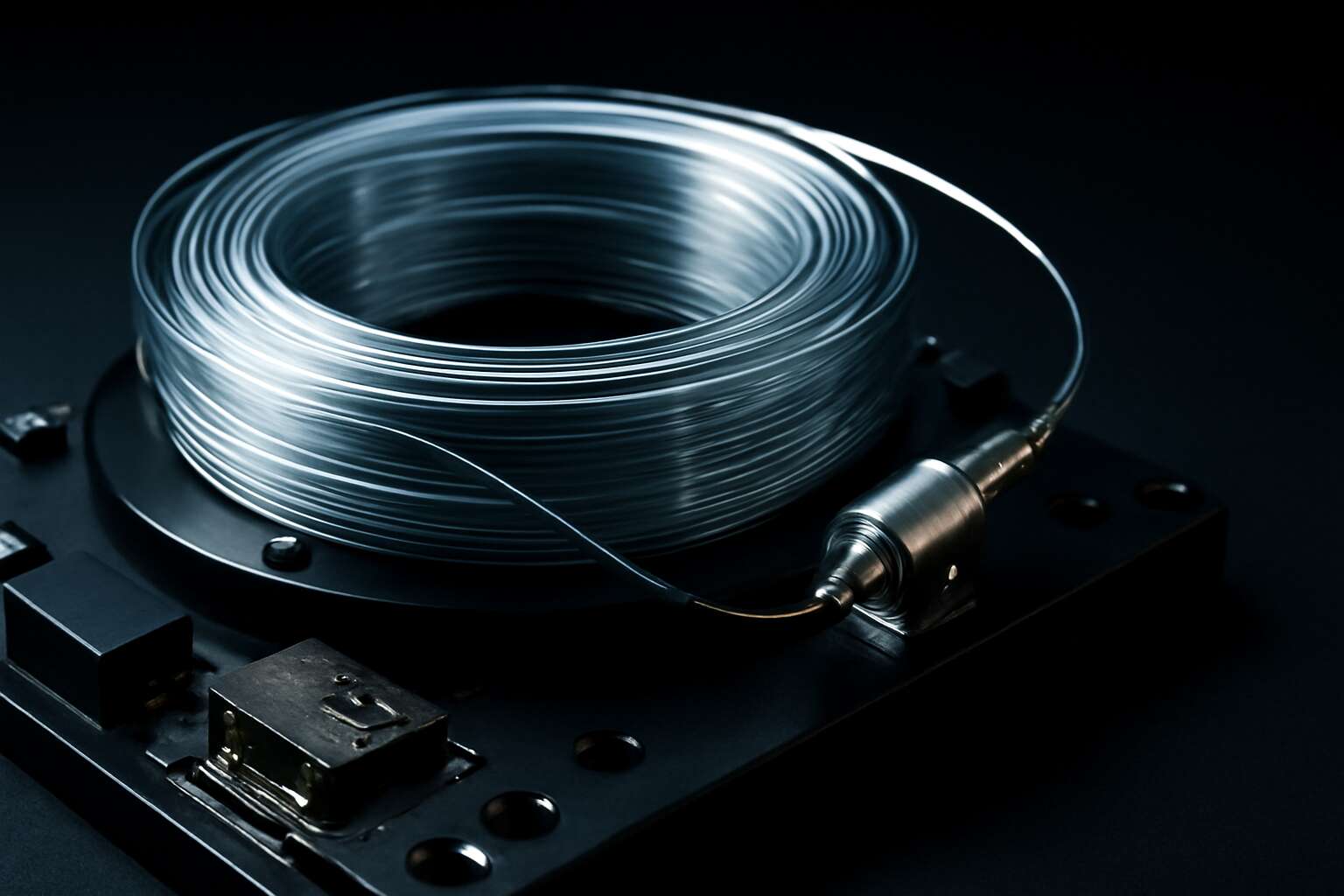
Understanding Fibre Optic Gyroscopes
Overview of Gyroscopic Technology
In the realm of modern navigation and precision measurement, fibre optic gyroscopes have emerged as the unsung heroes—quietly revolutionising how we perceive rotational motion. Unlike traditional mechanical gyroscopes, which rely on spinning parts, the fibre optic gyroscope leverages the intricacies of light to detect rotation with astonishing accuracy. This innovation is not merely a technological marvel but a testament to the elegance of physics in action.
At its core, the fibre optic gyroscope operates on the principle of the Sagnac effect, where light travelling in opposite directions within a coil of fibre experiences a phase shift when the device rotates. This subtle change, captured with remarkable sensitivity, allows for continuous, drift-free measurements—an essential feature for navigation systems in aircraft, submarines, and even space exploration.
What truly sets fibre optic gyroscopes apart is their resilience to environmental factors and the absence of moving parts. They are immune to vibrations and shocks, offering a durability that traditional systems often lack. For those keen to understand the technological landscape, here are the key benefits:
- High precision and stability over long periods
- Robustness against environmental disturbances
- Compact design suitable for space-constrained applications
- Low maintenance requirements, thanks to their fibre-based architecture
Principles of Operation
At the heart of the fibre optic gyroscope’s operation lies an elegant dance of photons, harnessing the profound principles of interference and phase shift. When light enters the fibre coil, it splits into two beams travelling in opposite directions — a process reminiscent of a delicate ballet, where each photon’s path is meticulously monitored. As the device rotates, the Sagnac effect subtly alters the phase relationship between these beams, creating a measurable interference pattern. This pattern shift acts as a precise indicator of rotational movement, enabling the fibre optic gyroscope to detect even the faintest of turns with astonishing fidelity.
To understand its core workings, consider the following sequence:
- Light is injected into a fibre coil, splitting into two counter-propagating beams.
- Rotation causes a phase difference between these beams, thanks to the Sagnac effect.
- The two beams recombine, producing an interference pattern that encodes the rotation data.
This interplay of light and physics exemplifies the fibre optic gyroscope’s remarkable capacity for continuous, drift-free measurement, without the need for moving parts — a feat that underscores its unparalleled robustness and precision in navigation technology.
Types of Fibre Optic Gyroscopes
Understanding the diverse landscape of fibre optic gyroscopes reveals a fascinating array of configurations, each tailored to specific applications and precision demands. Among the most prominent are the ring laser gyroscope and the interferometric fibre optic gyroscope, both of which leverage the subtle nuances of light’s behaviour to measure rotation with remarkable accuracy.
The **fibre optic gyroscope** can be categorised into two main types:
- **Intrinsically stabilised fibre optic gyroscopes**, which utilise advanced stabilisation techniques to minimise drift and enhance long-term stability.
- **Modular designs**, offering flexibility and ease of integration into various systems, from aerospace to submarine navigation.
While their operational principles remain rooted in the interference of light, these models differ in complexity, size, and robustness. The choice between them often hinges on the specific demands of the environment and the level of precision required, making understanding these types crucial for anyone seeking to harness the true potential of fibre optic gyroscope technology.
Key Components of Fibre Optic Gyroscopes
Optical Fibers
At the heart of every fibre optic gyroscope lies an intricate dance of light and precision—an orchestration that transforms the way we perceive rotation and motion. The core component, the optical fibre, is more than just a conduit; it’s a conduit of potential, meticulously engineered to carry light with unwavering stability. These optical fibres must meet exacting standards, ensuring minimal signal loss and high sensitivity, crucial for the fibre optic gyroscope’s performance. Their composition often involves ultra-pure silica, enabling the transmission of laser beams over long distances without distortion.
What truly sets the fibre optic gyroscope apart is how it utilises the interference of light waves to measure rotation with remarkable accuracy. Internally, the system employs components such as beam splitters, phase modulators, and detectors—each playing a vital role in interpreting the subtle shifts in light caused by rotational movement. This sophisticated assembly of key components makes the fibre optic gyroscope a marvel of modern sensing technology, capable of detecting even the faintest changes in orientation with unparalleled precision.
Interferometers
At the core of every fibre optic gyroscope lies a delicate symphony of light and shadow, orchestrated through a series of meticulously crafted components. These key elements—interferometers—serve as the silent sentinels, capturing the faint whispers of rotational changes with unnerving precision. An optical fibre, acting as the conduit of this spectral dance, must be engineered to maintain the purity and coherence of laser beams, ensuring the interference patterns remain unblemished by external disturbances.
Within the interferometric system, several vital components work in unison. Beam splitters divide the light into counter-propagating waves, while phase modulators subtly shift the wave’s phase to amplify the system’s sensitivity. Detectors then interpret the resulting interference pattern, translating the dance of photons into actionable data. The seamless collaboration of these elements is what makes the fibre optic gyroscope a marvel—an instrument capable of detecting even the most subtle twists in space.
- Beam splitters
- Phase modulators
- Photodetectors
Each component contributes to the mystical precision that defines the fibre optic gyroscope. It’s a ballet of light, where every element must perform flawlessly—because in the realm of high-stakes navigation and sensing, there is no room for error. The interferometer’s role is not merely functional; it is a testament to the finesse of modern optical engineering, weaving darkness and illumination into a tool that reveals the unseen movements of our world.
Light Sources and Detectors
At the heart of every fibre optic gyroscope are the light sources and detectors, vital components that breathe life into this sophisticated instrument. The light source, often a highly stable laser, must emit a coherent and monochromatic beam, ensuring that the interference patterns remain sharp and discernible. This laser’s purity directly influences the gyroscope’s ability to detect even the faintest rotational shifts, making it a cornerstone of high-precision navigation systems.
On the other end, photodetectors serve as the vigilant eyes, translating the intricate dance of photons into electrical signals that can be analysed. These detectors must possess exceptional sensitivity and low noise characteristics to faithfully capture the interference fringes—an essential feature for accurate measurement. Together, the light source and detector form a seamless duo, transforming optical phenomena into actionable data within the fibre optic gyroscope’s architecture.
- Laser diodes with narrow linewidths
- High-sensitivity photodiodes
- Stable power supply to minimise drift
This synergy ensures that the fibre optic gyroscope remains an unparalleled marvel of modern optical engineering, capable of delivering precise, reliable rotational data even in demanding environments. Their flawless interplay is what elevates a simple optical setup into a device capable of mapping the unseen movements that shape our world.
Signal Processing Units
At the core of every high-performing fibre optic gyroscope lies an intricate network of signal processing units, transforming raw optical data into precise rotational information. These units are the unsung heroes, tirelessly filtering noise and enhancing signal clarity, ensuring the device’s exceptional accuracy. Advanced algorithms scrutinise the interference fringes, discerning minute rotational shifts that might otherwise remain hidden. This meticulous process demands not only sophisticated hardware but also a deep understanding of the complex interplay between light and motion.
Within these processing units, specialised components work in unison:
- Digital signal processors (DSPs) that dynamically adapt to environmental variations
- Embedded control systems that stabilise the entire optical setup
- High-speed data converters translating optical signals into usable electronic data
This synergy is what elevates a simple optical fibre setup into a resilient fibre optic gyroscope capable of operating reliably in extreme conditions. As the device measures the unseen, the signal processing units serve as the vigilant custodians—ensuring that every whisper of rotational change is captured with unwavering precision. It’s this elegant harmony that exemplifies the true marvel of fibre optic gyroscopic technology, bridging the gap between optical phenomena and human understanding of motion’s subtle dance.
Advantages of Fibre Optic Gyroscopes
High Precision and Accuracy
In the realm of advanced navigation and sensing, the fibre optic gyroscope stands out as a beacon of precision. Its ability to deliver high accuracy in detecting rotational movements has transformed industries where even the slightest deviation could spell disaster. With an impressive resilience against environmental factors such as magnetic interference and vibrations, the fibre optic gyroscope offers unparalleled stability—an essential trait for aerospace, defence, and submarine applications.
The secret behind this extraordinary accuracy lies within its intricate design, harnessing the interference of light within a fibre optic loop. This technology ensures that measurements are not only precise but also remarkably consistent over time, making the fibre optic gyroscope an invaluable tool for critical systems. Its high degree of precision can be broken down into key advantages such as:
- Exceptional sensitivity to rotational changes
- Minimal drift over extended periods
- Robust performance in harsh environments
Such features make the fibre optic gyroscope a symbol of technological excellence, opening new horizons in navigation and motion sensing where accuracy is everything. Its high precision and reliability have made it the gold standard in cutting-edge sensor technology, proving that sometimes, light truly does pave the way to perfection.
Resistance to Magnetic Fields
In a world where magnetic fields are as unpredictable as your morning coffee preferences, the fibre optic gyroscope (FOG) shines as a beacon of stability — literally. Unlike traditional sensors that throw a tantrum when magnetic interference crashes the party, FOGs remain serenely unaffected, thanks to their unique reliance on light rather than magnetic materials. This resistance to magnetic fields isn’t just an impressive feat; it’s a game-changer for high-stakes environments where even a tiny magnetic ripple can cause chaos.
What makes the fibre optic gyroscope truly stand out is its immunity to magnetic disturbances, allowing it to operate flawlessly in environments rife with electromagnetic noise. This robustness ensures that the device’s measurements stay consistently reliable, even under the most chaotic conditions. For industries like aerospace and defence, where precision and dependability are non-negotiable, this resistance translates into safer, more accurate navigation systems.
- It eliminates the need for complex magnetic shielding, reducing design complexity and cost.
- It maintains high sensitivity to rotational changes without succumbing to external magnetic influences.
- It offers enhanced longevity and durability, making it suitable for prolonged deployments in harsh environments.
In essence, the fibre optic gyroscope’s resistance to magnetic fields is not just an added bonus — it’s a fundamental advantage that elevates it above traditional gyroscopes, paving the way for more reliable, interference-proof navigation solutions. When accuracy is everything, light truly does pave the way to perfection.
Reliability and Durability
When it comes to reliability and durability, the fibre optic gyroscope (FOG) doesn’t just play in the minor leagues — it’s the heavyweight champion of stability. Designed to withstand the rigours of extreme environments, FOGs are immune to shock, vibration, and temperature fluctuations that would make traditional gyroscopes tremble in their boots. This robustness ensures continuous, accurate measurements even in the harshest conditions, making them ideal for aerospace, defence, and offshore applications where failure simply isn’t an option.
Unlike their more delicate counterparts, fibre optic gyroscopes boast an impressive lifespan, often exceeding decades without the need for recalibration or replacement. Their fibre optic cores are inherently resistant to corrosion and wear, turning what used to be disposable technology into a long-term investment. For industries that demand unwavering dependability, this durability translates into reduced maintenance costs and peace of mind.
- Exceptional resistance to environmental wear and tear
- Extended operational lifespan with minimal calibration
- Reduced need for protective shielding and complex maintenance procedures
In short, the fibre optic gyroscope’s combination of reliability and durability makes it a cornerstone of modern navigation systems. When precision and longevity are non-negotiable, light-powered technology outperforms traditional sensors every time — proving that in the world of motion detection, fibre optic gyroscopes truly stand the test of time.
Compact and Lightweight Design
In the realm of advanced navigation, the fibre optic gyroscope emerges as a marvel of engineering ingenuity, boasting a compact and lightweight design that belies its formidable capabilities. Imagine a device so streamlined that it seamlessly integrates into the most intricate systems without adding bulk or weight—perfect for aerospace and defence applications where every gram counts.
This diminutive stature does not compromise its performance; instead, it grants unparalleled flexibility and ease of deployment. The fibre optic gyroscope’s slender form allows it to be embedded into vehicles, ships, or satellites where space is at a premium. Its lightweight nature also significantly reduces the strain on supporting structures, ensuring longevity and stability across various operational environments.
For those seeking efficiency, here are some key advantages:
- Enhanced manoeuvrability due to reduced weight and size
- Simplified installation processes, saving time and resources
- Greater adaptability in compact or mobile platforms
In essence, the compact and lightweight design of the fibre optic gyroscope unlocks new horizons in precision navigation, proving that power and elegance can coexist within the smallest of packages—truly a testament to the transformative potential of light-powered technology.
Low Maintenance and Cost-Effectiveness
Fibre optic gyroscopes are renowned for their low maintenance requirements and cost-effective operation. Unlike traditional mechanical gyroscopes, they have no moving parts that wear out over time. This means fewer repairs, less downtime, and reduced servicing costs. In demanding environments, this reliability is essential—less frequent maintenance translates into significant savings.
Additionally, fibre optic gyroscopes offer exceptional durability. They withstand harsh conditions such as extreme temperatures, vibration, and shock, making them ideal for long-term deployment. Their robust design minimises the need for regular calibration and troubleshooting, further lowering lifecycle costs.
In terms of affordability, fibre optic gyroscopes deliver a compelling value proposition. Their ease of integration and maintenance reduces overall system expenses. For industries prioritising cost-efficiency—like maritime navigation or aerospace—fibre optic gyroscope technology is truly transformative.
- Minimal upkeep due to no moving parts
- Long-lasting performance in tough environments
- Lower total cost of ownership over time
Applications of Fibre Optic Gyroscopes
Navigation and Inertial Guidance
Fibre optic gyroscopes are revolutionising navigation and inertial guidance systems, offering a silent yet steadfast compass in the most challenging environments. With their exceptional sensitivity, these devices can detect minute rotations, making them indispensable for both military and civilian applications. Imagine a vessel gliding through treacherous waters or an aircraft navigating through thick cloud cover — the fibre optic gyroscope provides unwavering accuracy without reliance on external signals.
In the realm of inertial guidance, fibre optic gyroscopes serve as the silent sentinels guiding missiles, submarines, and autonomous vehicles with unerring precision. Their ability to operate independently of GPS signals ensures continuous navigation even in GPS-denied zones. This robustness is vital in scenarios where signal interruption could have severe consequences.
For instance, the applications extend into:
- Submarine navigation, where GPS signals cannot penetrate water
- Aerospace guidance systems, ensuring precise trajectory control
- Autonomous vehicles, providing real-time orientation data
- Military missile systems, enhancing targeting accuracy
Each application benefits from the fibre optic gyroscope’s resistance to magnetic interference, high reliability, and compact form factor, creating a seamless fusion of technology and artistry. As the world’s reliance on precise navigation grows, the fibre optic gyroscope stands as a beacon of innovation, illuminating pathways through the unknown with silent grace.
Aerospace and Space Exploration
In the vast theatre of space exploration, where every whisper of movement is magnified and precision is paramount, fibre optic gyroscopes emerge as celestial navigators. Their ability to deliver unwavering orientation amidst the void’s silent expanse makes them indispensable for spacecraft venturing beyond Earth’s embrace. As astronauts reach for the stars, fibre optic gyroscopes serve as the steadfast compass guiding them through cosmic labyrinths, where external signals are swallowed by the infinite dark.
These marvels are not merely confined to terrestrial pursuits. In space agencies’ quest for interplanetary odysseys, fibre optic gyroscopes are woven into guidance systems that demand the highest fidelity. Their resistance to magnetic interference and resilience in extreme conditions ensure that even the most distant missions stay on course with unerring accuracy. From planetary rovers exploring alien terrains to satellites maintaining their orbital ballet, the applications of fibre optic gyroscopes are as boundless as the universe itself.
In essence, the fibre optic gyroscope’s luminous thread of innovation illuminates pathways through the cosmos, transforming celestial navigation from a distant dream to precise reality. Their role in aerospace and space exploration continues to expand, a testament to human ingenuity’s relentless pursuit of the stars.
Defense and Military Uses
Fibre optic gyroscopes are critical assets in defence and military applications, providing unmatched precision in navigation and targeting systems. Their resistance to magnetic interference and extreme environmental conditions makes them ideal for combat scenarios where reliability is paramount. These gyroscopes enable soldiers and military vehicles to maintain accurate orientation without GPS signals, which can be jammed or disrupted in conflict zones.
In missile guidance, fibre optic gyroscopes ensure precise trajectory control, increasing the effectiveness of modern weaponry. They are also integral to naval and submarine navigation systems, allowing vessels to operate silently and securely beneath the surface. Their compact design allows integration into space-constrained military hardware, such as drones and advanced fighter jets.
- Enhanced missile accuracy
- Stealthy submarine navigation
- Reliable land vehicle guidance
With their ability to deliver high fidelity, resistance to electromagnetic interference, and durability under harsh conditions, fibre optic gyroscopes are transforming military technology. They serve as silent sentinels, guiding forces through the fog of war with unwavering precision and dependability.
Marine and Submarine Navigation
In the shadowy depths of the ocean, where sunlight dares not penetrate and silence reigns supreme, the role of the fibre optic gyroscope becomes nothing short of legendary. These marvels of modern technology form the silent guardians of marine and submarine navigation, enabling vessels to chart their course with unwavering precision beneath the waves. Unlike traditional systems that can falter amidst magnetic interference, fibre optic gyroscopes harness the ethereal dance of light within glass fibres to deliver steadfast directional data—regardless of the surrounding chaos.
Such resilience is paramount in submarine operations, where stealth and accuracy are the keys to success. The fibre optic gyroscope’s immunity to electromagnetic disturbances ensures that vessels remain undetectable and on course, even amidst the electromagnetic echoes of the seabed. This reliability is vital for both military stealth missions and scientific explorations. In fact, these gyroscopes often serve as the backbone of underwater navigation systems, guiding submarines silently through the abyss with an elegance that defies the turbulence of the deep.
Moreover, the compact nature of fibre optic gyroscopes allows for seamless integration into space-constrained marine hardware. From autonomous underwater vehicles to surface ships, their versatility makes them indispensable in modern maritime technology. As the ocean’s mysteries beckon, the fibre optic gyroscope stands as an unyielding beacon—illuminating the path through submerged shadows with precision and grace. Their role in marine and submarine navigation continues to evolve, forging new horizons in our quest to master the final frontier beneath the waves.
Industrial and Commercial Uses
In the bustling realm of industry and commerce, the fibre optic gyroscope emerges as a silent sentinel—an invisible force steering progress with unwavering precision. These marvels of modern technology are increasingly woven into the fabric of vital applications that demand impeccable reliability and steadfast performance. From aerospace navigation systems guiding spacecraft through the void to the intricate machinery of autonomous vehicles, the fibre optic gyroscope continues to demonstrate its versatility and resilience.
One of the most compelling applications lies in surveying and seismic monitoring, where the sensitivity of fibre optic gyroscopes detects even the slightest terrestrial tremor. Their immunity to magnetic interference makes them invaluable in environments saturated with electromagnetic noise, ensuring data integrity under the most challenging conditions. Furthermore, in the realm of industrial automation, fibre optic gyroscopes facilitate precise control of robotic arms and machinery, elevating efficiency and safety standards. The technology’s low maintenance and durability make it a cost-effective choice for long-term deployment.
For sectors driven by relentless innovation, the fibre optic gyroscope acts as an anchor—delivering high-precision measurements that propel advancements forward. Whether in stabilising platforms for high-precision manufacturing or in the navigation of autonomous drones, their ability to operate seamlessly in diverse environments cements their status as indispensable tools in the modern industrial landscape. Truly, the fibre optic gyroscope is not merely a component; it is the heartbeat of progress, pulsing steadily beneath the surface of technological evolution.
Comparing Fibre Optic Gyroscopes with Other Gyroscope Technologies
Ring Laser Gyroscopes
Fibre optic gyroscopes (FOGs) have revolutionised navigation technology, often outperforming traditional methods. But how do they compare against other gyroscope types like ring laser gyroscopes (RLGs)? While RLGs have been the mainstay in high-precision applications, fibre optic gyroscopes excel in several areas. They are more resistant to environmental factors such as vibration and temperature fluctuations, making them ideal for demanding scenarios.
Fibre optic gyroscopes tend to be more compact and lightweight, which is a significant advantage in aerospace and marine navigation. Their immunity to magnetic fields also sets them apart from some solid-state alternatives. When selecting a gyroscope technology, consider these key factors:
- Size and weight
- Environmental robustness
- Cost-effectiveness over long-term operation
While RLGs have a longstanding reputation for stability, fibre optic gyroscopes are catching up fast in terms of durability and ease of integration. Both technologies have their place, but fibre optic gyroscopes are quickly becoming the preferred choice for modern, high-precision navigation systems.
MEMS Gyroscopes
In the landscape of modern gyroscopic technology, fibre optic gyroscopes (FOGs) stand out as a beacon of innovation. But how do they compare to other popular types, like MEMS gyroscopes? While MEMS (Micro-Electro-Mechanical Systems) gyroscopes are celebrated for their tiny size and low cost, they often fall short in demanding environments where precision and resilience are paramount.
MEMS gyroscopes typically excel in consumer electronics, offering compactness and affordability. However, their susceptibility to environmental factors like vibration and temperature variations can compromise accuracy. In contrast, fibre optic gyroscopes boast superior immunity to such external influences, making them ideal for applications requiring high stability and reliability, such as aerospace and defence sectors.
For those weighing options, it’s useful to consider the following aspects:
- Environmental robustness
- Long-term stability and accuracy
- Cost over the lifespan of the device
While MEMS gyroscopes have their place in everyday gadgets, the precision and durability of fibre optic gyroscopes continue to elevate them as the preferred choice in high-stakes navigation and inertial guidance systems. The evolution of fibre optic gyroscope technology is a testament to how optical innovation can redefine our understanding of motion sensing, blending science with a touch of philosophy about progress itself.
Advantages and Disadvantages
Fibre optic gyroscopes (FOGs) have revolutionised motion sensing, especially in environments where precision is non-negotiable. Unlike traditional gyroscopes, FOGs leverage the interference of light within optical fibres to detect rotation—offering a level of accuracy that can leave other technologies in the shadows. While MEMS gyroscopes are celebrated for their affordability and compact size, they often struggle with environmental disturbances, such as vibration or temperature fluctuations. This makes FOGs a game-changer in sectors demanding unwavering reliability, like aerospace or military navigation.
Choosing between fibre optic gyroscopes and other gyroscopic technologies hinges on a few critical factors. For instance, FOGs excel in long-term stability and resilience against magnetic interference, making them ideal for high-stakes applications. Conversely, their higher initial cost can be a limiting factor for some.
- Immunity to external environmental factors
- Superior long-term accuracy
- Higher upfront investment
These elements position fibre optic gyroscopes as a premium choice for those who refuse to compromise on reliability, even in the most challenging conditions.
Manufacturers and Market Trends
Leading Suppliers and Innovators
In the realm of fibre optic gyroscopes, the landscape is shaped by relentless innovation and strategic leadership. Leading manufacturers such as Honeywell, Northrop Grumman, and KVH Industries have established themselves as pioneers, pushing the boundaries of what this technology can achieve. Their commitment to refining optical fibres, enhancing interferometer configurations, and integrating cutting-edge light sources ensures that fibre optic gyroscopes remain at the forefront of precision navigation.
Market trends reveal a surge in demand for highly resilient and compact gyroscopic systems, especially within aerospace, defence, and maritime sectors. Leading suppliers are now focusing on miniaturising components without sacrificing accuracy, responding to the increasing need for lightweight and low-maintenance solutions. The competitive landscape is characterised by a handful of innovators who continuously harness advancements in photonics and signal processing, creating a dynamic environment where technological breakthroughs happen at an unprecedented pace.
Some of the most notable innovators include:
- Advanced fibre optic manufacturing techniques that improve durability and sensitivity.
- Integration of AI-driven signal processing units for real-time data analysis.
- Development of hybrid systems combining fibre optic gyroscopes with MEMS technology for versatile applications.
Emerging Trends and Innovations
As the demand for precision navigation accelerates across critical sectors, manufacturers of fibre optic gyroscopes are pushing the boundaries of innovation. Companies like Honeywell, Northrop Grumman, and KVH Industries are not merely refining existing technology—they are revolutionising it. Their investment in advanced fibre optic manufacturing techniques enhances durability and sensitivity, ensuring that these gyroscopes perform flawlessly even in the harshest environments.
Emerging trends reveal a shift towards miniaturisation—smaller, more resilient systems that do not compromise on accuracy. This evolution is driven by the necessity for lightweight, low-maintenance solutions in aerospace, defence, and maritime applications. Innovations such as AI-powered signal processing units are transforming real-time data analysis, while hybrid systems now combine fibre optic gyroscopes with MEMS technology for unparalleled versatility.
- Integration of photonics advancements
- Development of hybrid sensing platforms
- Enhanced durability under extreme conditions
In this landscape, the race is on to develop fibre optic gyroscopes that are not only more precise but also more adaptable—an enduring quest that reflects both technological prowess and the human desire to explore the unknown. The relentless pursuit of innovation keeps the field vibrant, promising a future where navigation systems are more intuitive, resilient, and profoundly reliable than ever before.
Future Outlook and Industry Growth
The market for fibre optic gyroscopes is experiencing an unprecedented surge, driven by relentless innovation and expanding application horizons. Industry leaders such as Honeywell, Northrop Grumman, and KVH Industries are spearheading a technological renaissance, reshaping the very fabric of precision navigation. Their investments in cutting-edge fibre optic manufacturing techniques are not merely incremental improvements—they are redefining the boundaries of durability and sensitivity.
Future market trends suggest a decisive move towards miniaturisation, where smaller, more resilient fibre optic gyroscopes are crafted to meet the demanding needs of aerospace, defence, and maritime sectors. As these systems become more compact, they retain, if not enhance, their accuracy and reliability. An intriguing development is the integration of photonics advancements, which promise to amplify signal integrity and reduce noise, thus elevating the performance of fibre optic gyroscopes in extreme environments.
- Increased adoption of hybrid sensing platforms that combine fibre optic gyroscopes with MEMS technology, expanding their versatility across diverse operational contexts.
- The utilisation of AI-powered signal processing units, transforming real-time data analysis and enabling more adaptive, intelligent navigation systems.
- Enhanced durability features that ensure fibre optic gyroscopes withstand the rigours of harsh conditions, from high-vibration zones to extreme temperatures.
As the industry anticipates explosive growth, a compelling realisation emerges: the future of fibre optic gyroscopes hinges on their ability to adapt—becoming more precise, lightweight, and resilient. This relentless pursuit of innovation fuels a vibrant ecosystem of technological prowess and human curiosity, promising a landscape where navigation systems are not only more reliable but also more intuitive and seamlessly integrated into the fabric of modern exploration.
Choosing the Right Fibre Optic Gyroscope
Factors to Consider
Choosing the right fibre optic gyroscope is a nuanced process that demands careful consideration of several critical factors. As technology advances, so do the capabilities of fibre optic gyroscopes, but not all models are suited for every application.
One of the foremost considerations is the level of sensitivity required. For high-precision navigation, especially in aerospace or military contexts, selecting a fibre optic gyroscope with ultra-low bias drift and high stability is essential. Conversely, industrial applications might prioritise durability and cost-effectiveness.
Additional factors include environmental resilience, such as temperature range and vibration tolerance, which can significantly impact performance. Understanding these parameters ensures the fibre optic gyroscope aligns with specific operational demands.
In some cases, it’s worthwhile to evaluate the following attributes:
- Signal processing capabilities
- Size and weight constraints
- Power consumption levels
Ultimately, the choice hinges on a delicate balance between precision, robustness, and practicality—an intricate puzzle that only a detailed assessment can solve.
Application-Specific Requirements
Choosing the right fibre optic gyroscope isn’t just a matter of picking the latest shiny gadget. Instead, it requires a keen eye for application-specific requirements—think of it as tailoring a bespoke suit, but for high-tech navigation. Whether you need ultra-low bias drift for aerospace precision or rugged durability for industrial environments, matching the fibre optic gyroscope’s capabilities to your operational demands is vital.
Environmental resilience plays a starring role—temperature range, vibration tolerance, and shock resistance can make or break performance in the field. For instance, a fibre optic gyroscope deployed on a submarine must withstand intense pressure and corrosive seawater, while a model designed for aerospace needs to maintain stability in extreme altitudes.
Sometimes, a straightforward list helps clarify priorities:
- Signal processing capabilities
- Size and weight constraints
- Power consumption levels
Balancing these attributes ultimately creates a harmonious synergy between precision, robustness, and practicality—transforming the complex puzzle of selection into a strategic decision. After all, not every fibre optic gyroscope suits every mission, and understanding these nuanced differences ensures optimal performance and longevity in your chosen application.
Cost-Benefit Analysis
Choosing the right fibre optic gyroscope involves more than just comparing technical specifications; it requires a meticulous cost-benefit analysis that aligns with your operational needs. The initial investment can vary widely depending on the complexity and durability of the device, but understanding the long-term gains often reveals their true value.
A fibre optic gyroscope that offers enhanced resistance to environmental factors, such as temperature fluctuations and vibration, might come with a higher upfront cost but can significantly reduce maintenance expenses and downtime. Conversely, a model with lower power consumption and compact design may be ideal for applications where weight and energy efficiency are paramount.
Balancing these factors demands a strategic approach—considering not only the immediate financial outlay but also the lasting performance and reliability. When evaluating options, reflect on the specific mission parameters and operational environment to ensure the selected fibre optic gyroscope delivers optimal performance while respecting budget constraints.

0 Comments